Schieoevers Schiedam
Schiedam, The Netherlands
Location | Schiedam, The Netherlands
Year | 2024 - ongoing
Client | Schiedam
Collaboration | Provincie Zuid-Holland, Hoogheemraadschap van Delfland
Status | Preliminary design for the public space
Commissioned by the Municipality of Schiedam, De Urbanisten is working on the redesign of the banks of the Schiedamse Schie river. The ambition of the project is for the banks of the Schie to form the central space that connects a healthy working environment with climate adaptation, biodiversity, and the historical identity of the Schiedamse Schie..
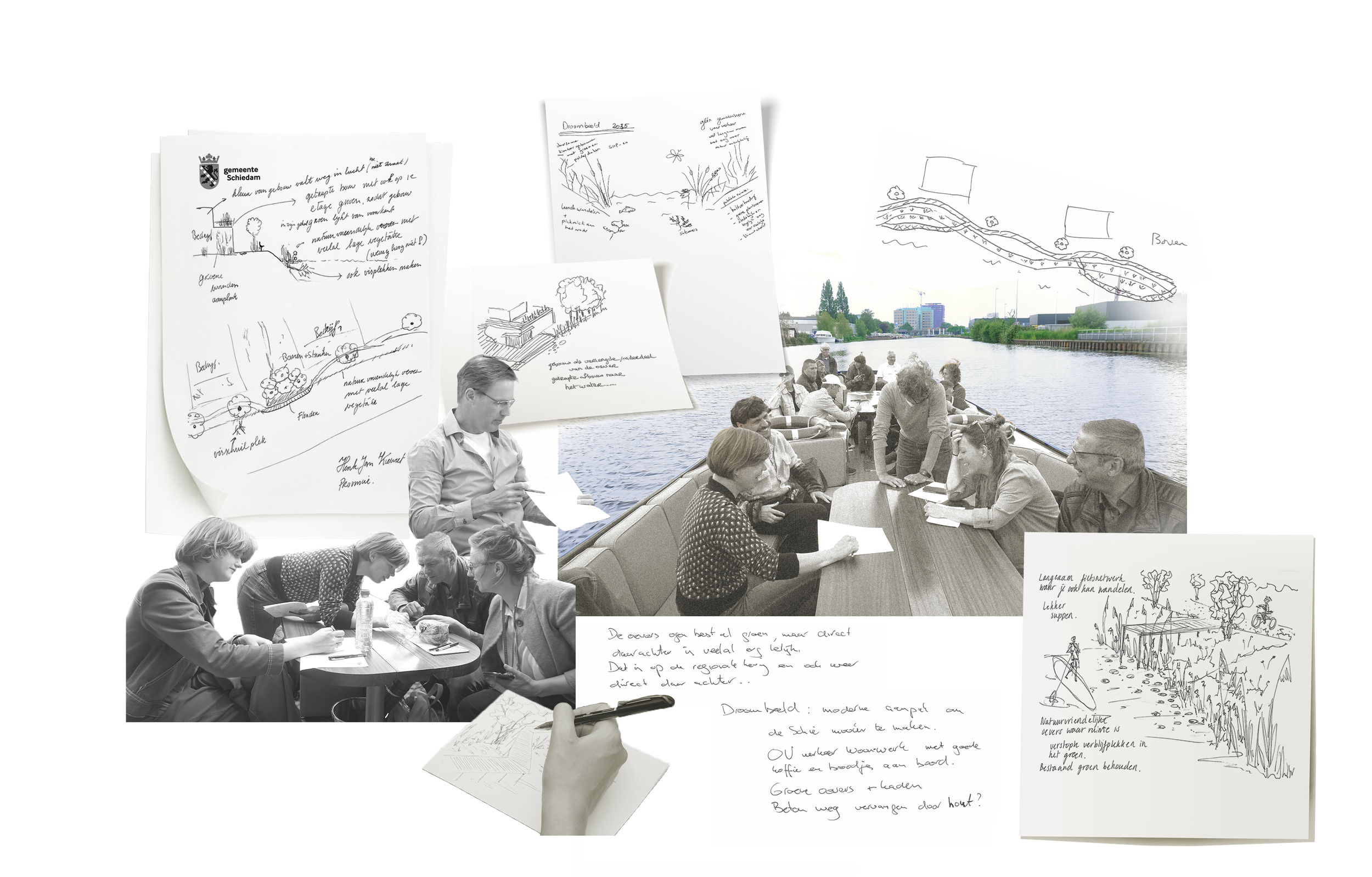
Current landscape
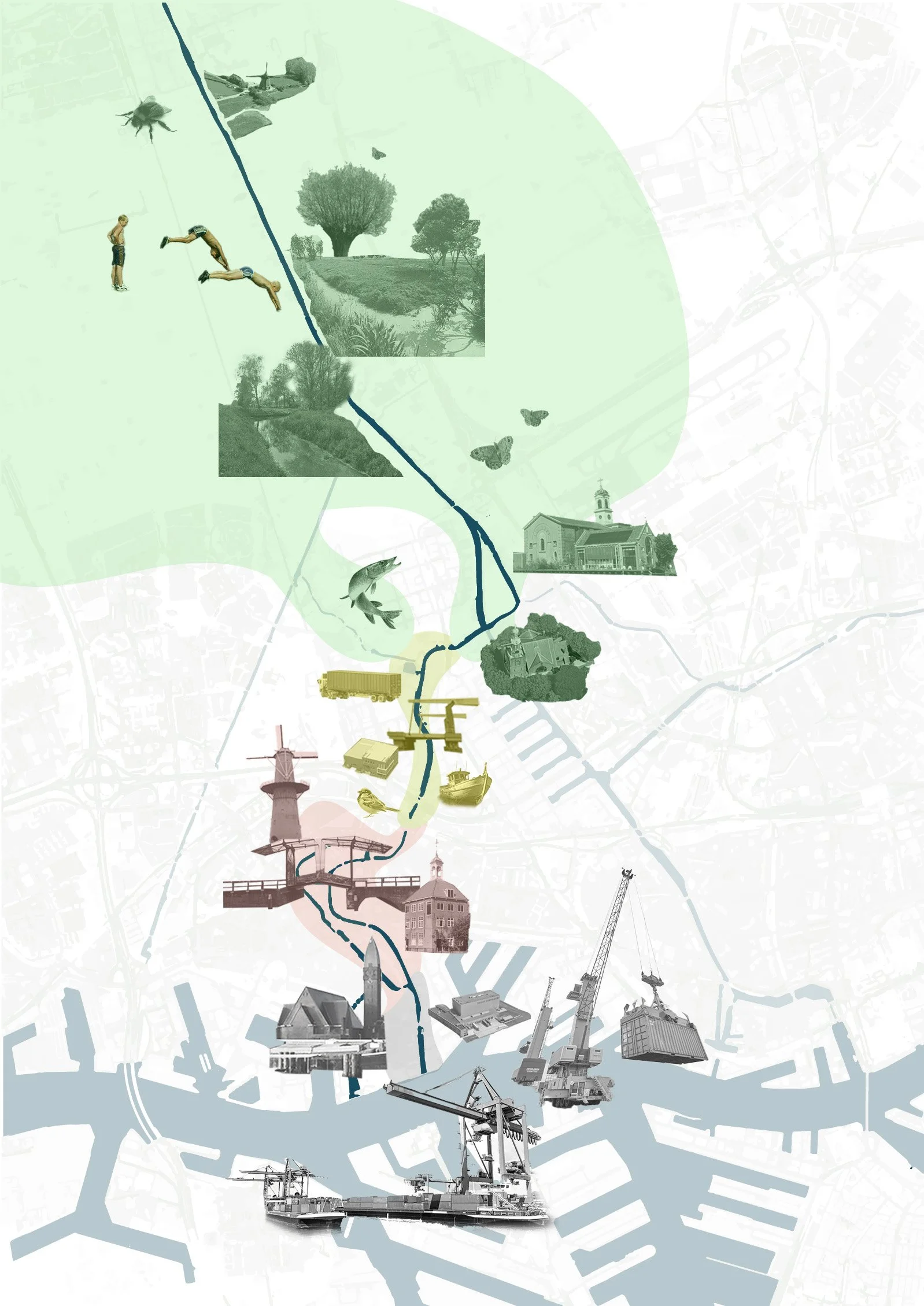
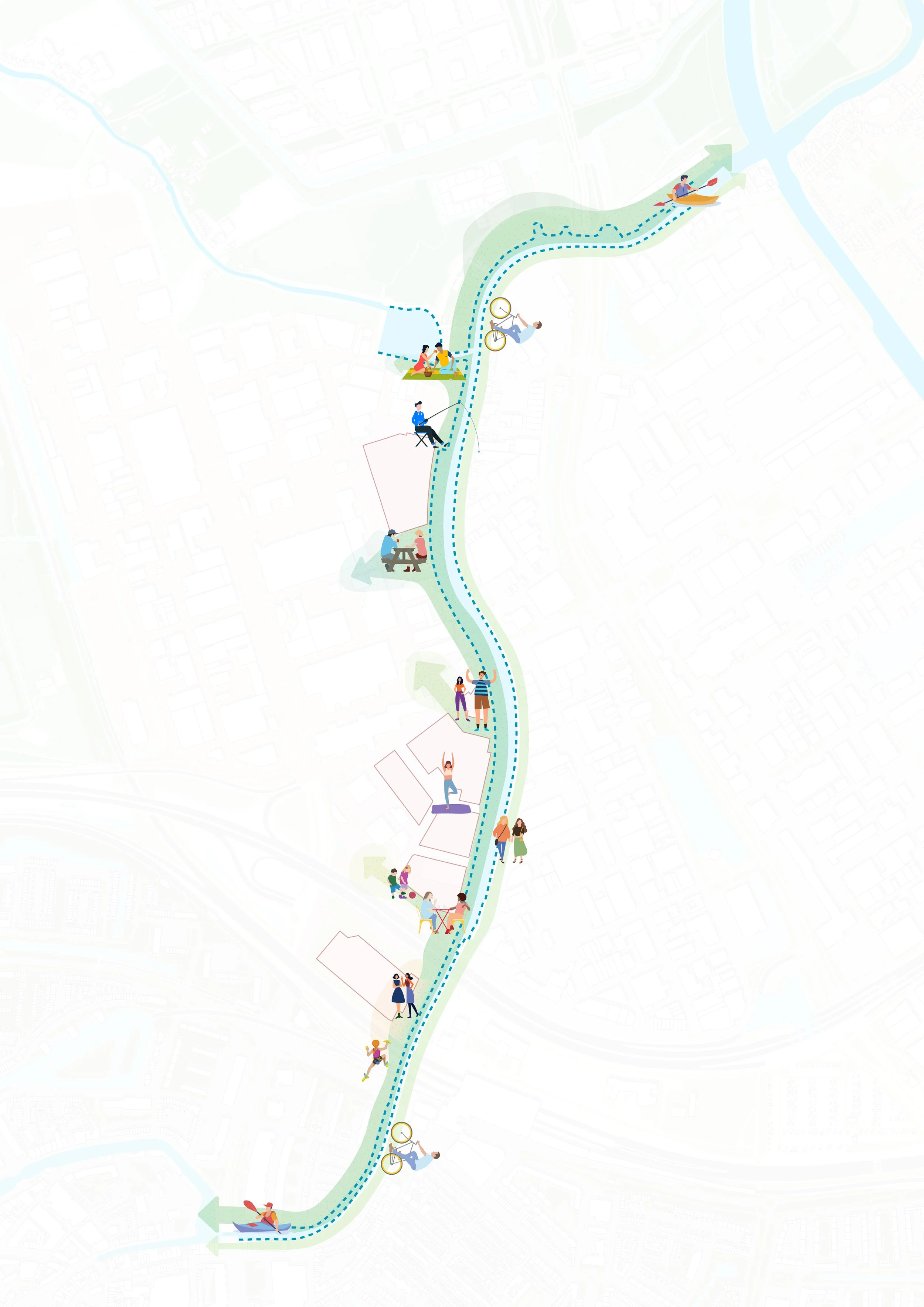
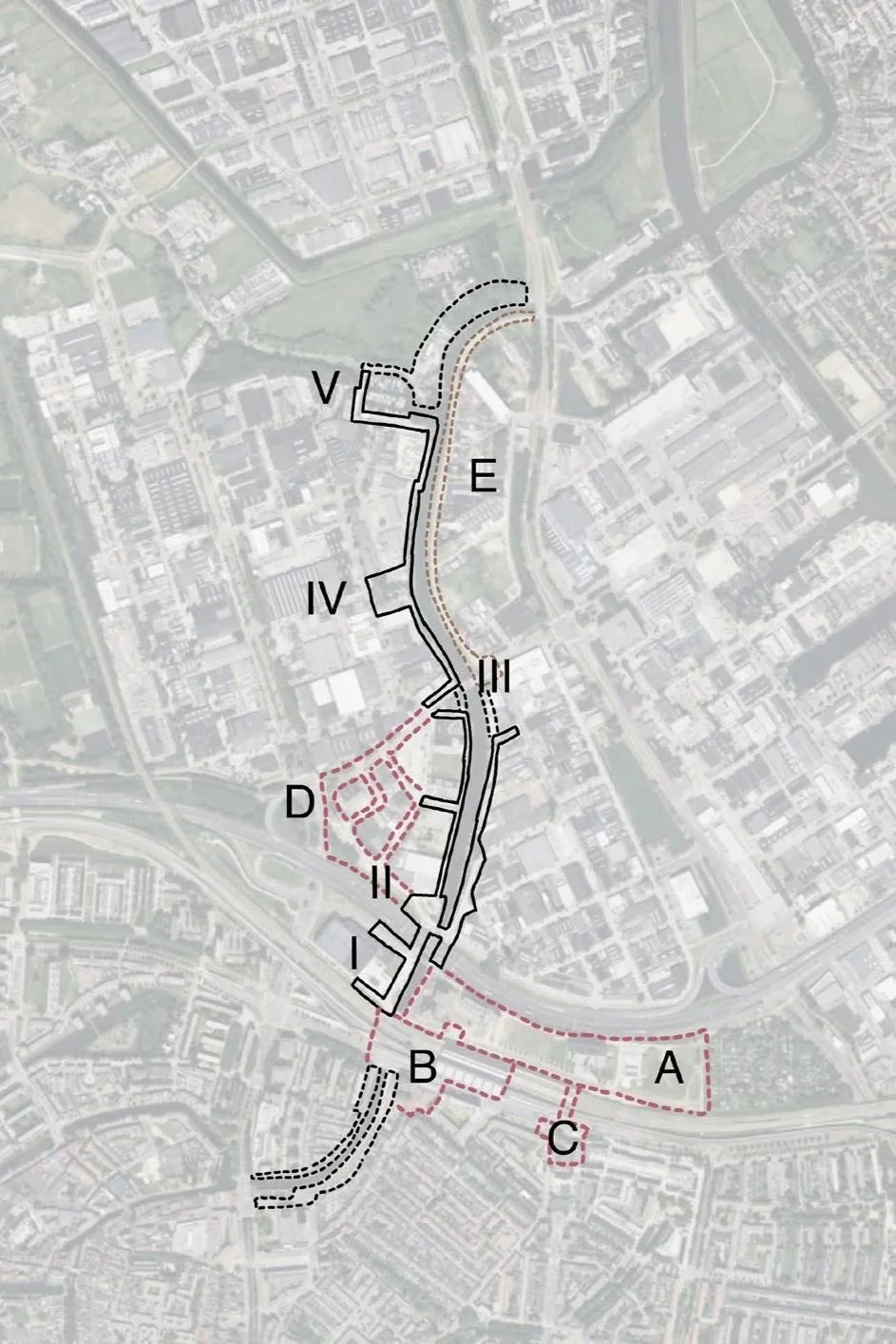
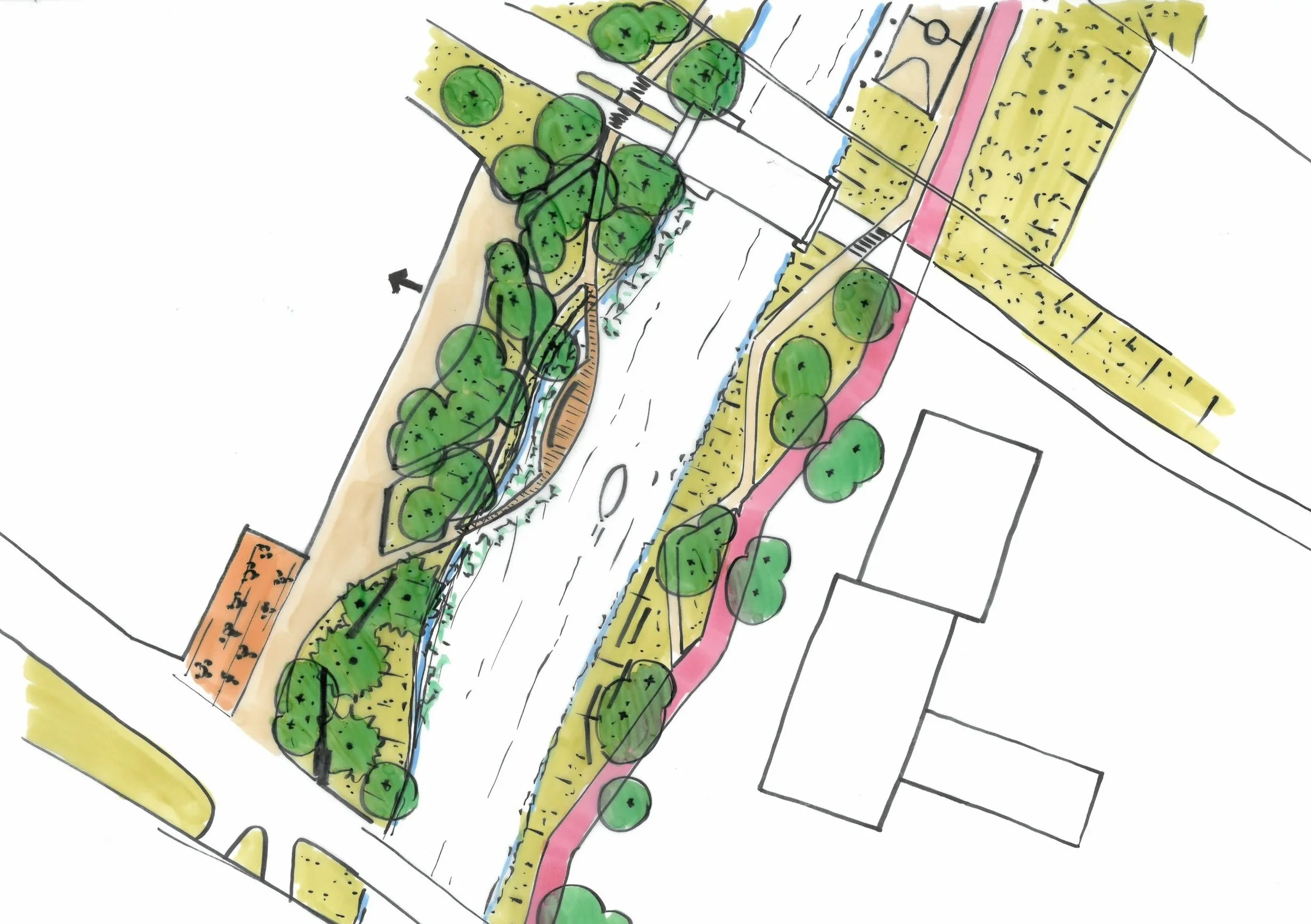
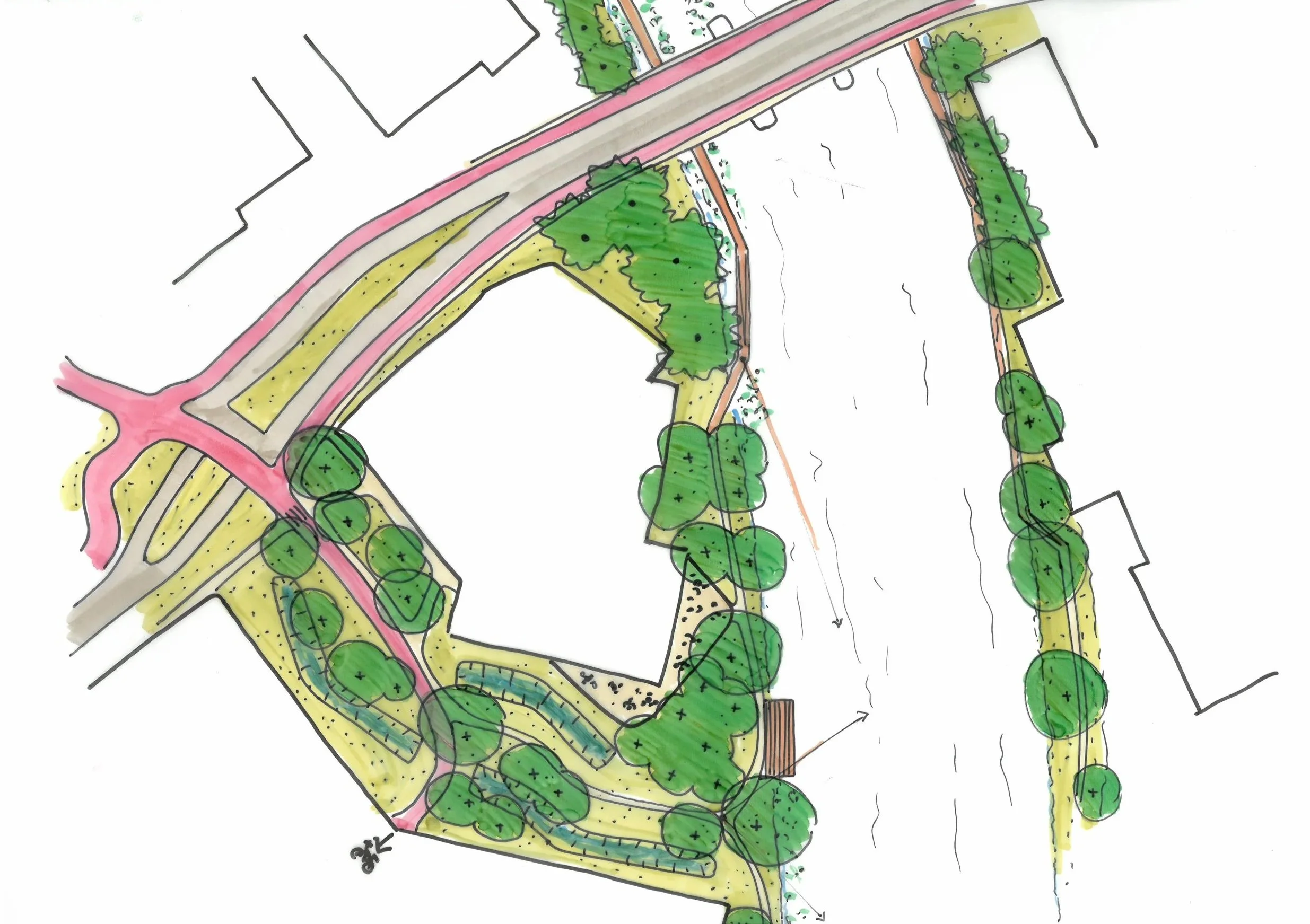
This project is located along the riverbanks of the Schieoevers in Schiedam, where the west bank unfolds as a sequence of distinct yet connected landscapes. A richly planted riverbank, framed by riparian forests, transitions into a public space near Hotel De Veste and continues along the new MICS (Mechatronica Innovatie Campus Schiedam) and the former ONS building, where it takes on the character of a business park. The existing spatial and ecological structure serves as the starting point for the design, ensuring minimal impact on natural values and reduced CO₂ emissions. Semi-paved paths and boardwalks are carefully integrated into the landscape to limit soil disturbance, while recreational additions are lightweight, use natural or bio-based materials, and build on existing structures, resulting in a design that strengthens public use while respecting the ecological character of the Schie.
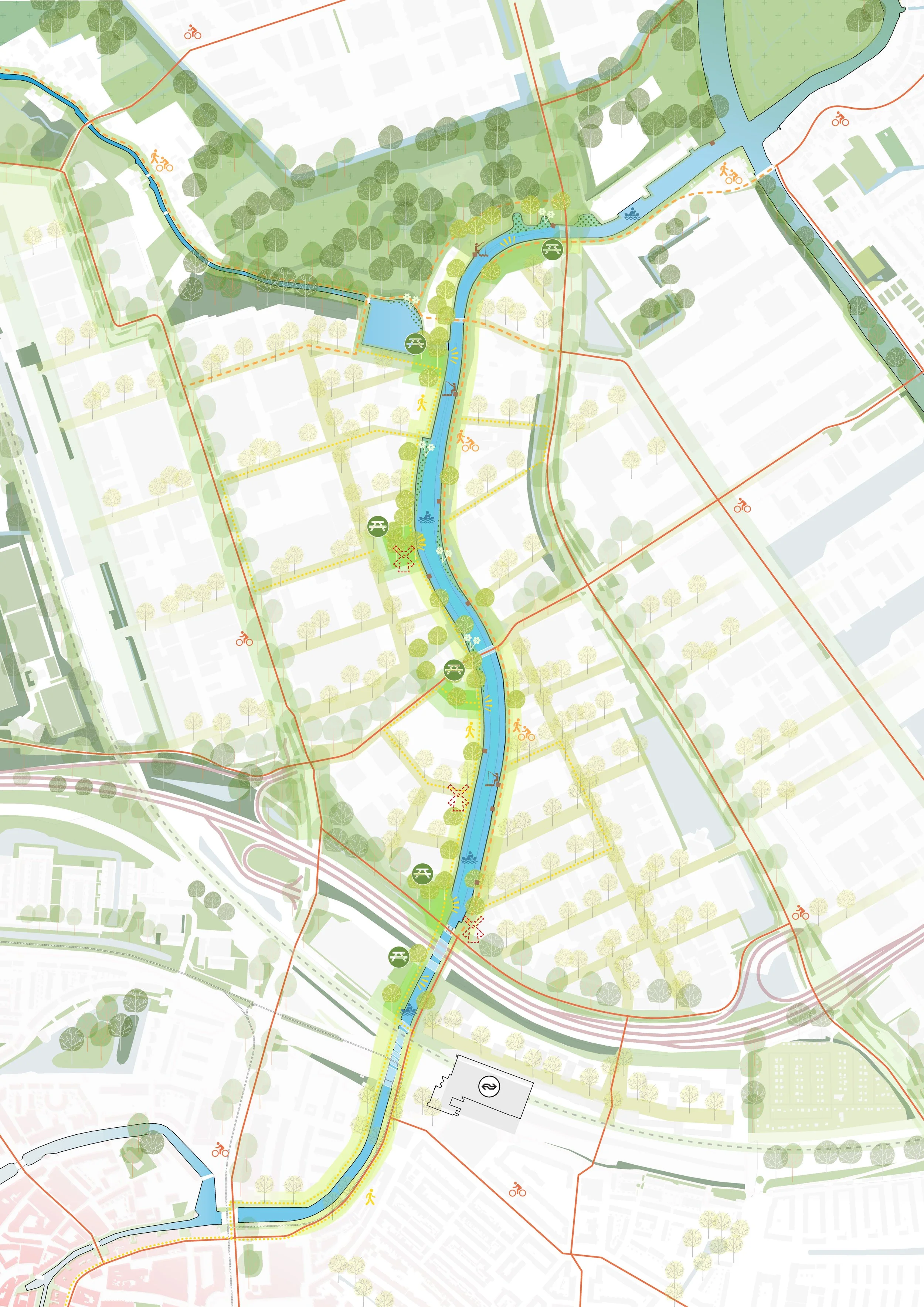
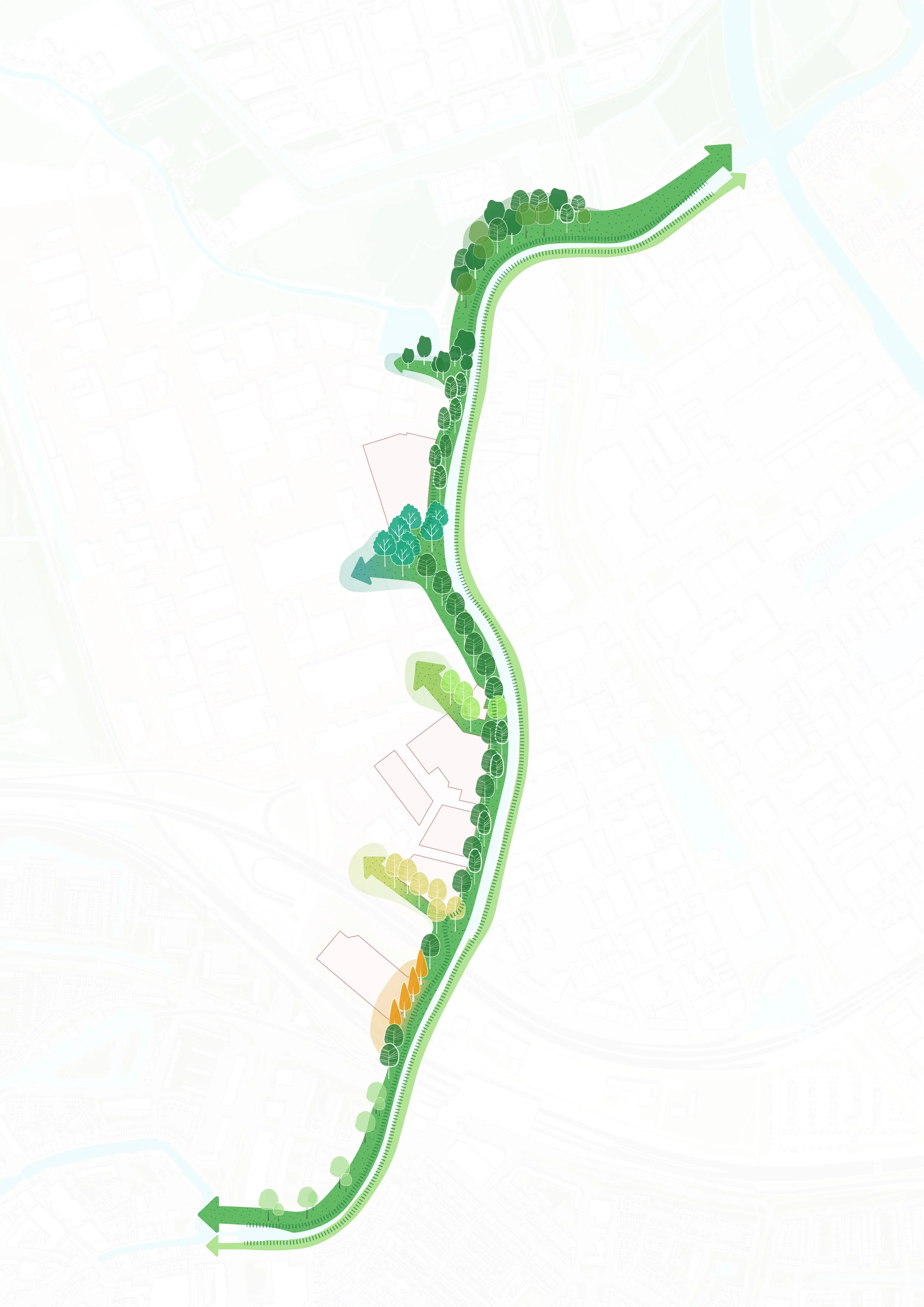
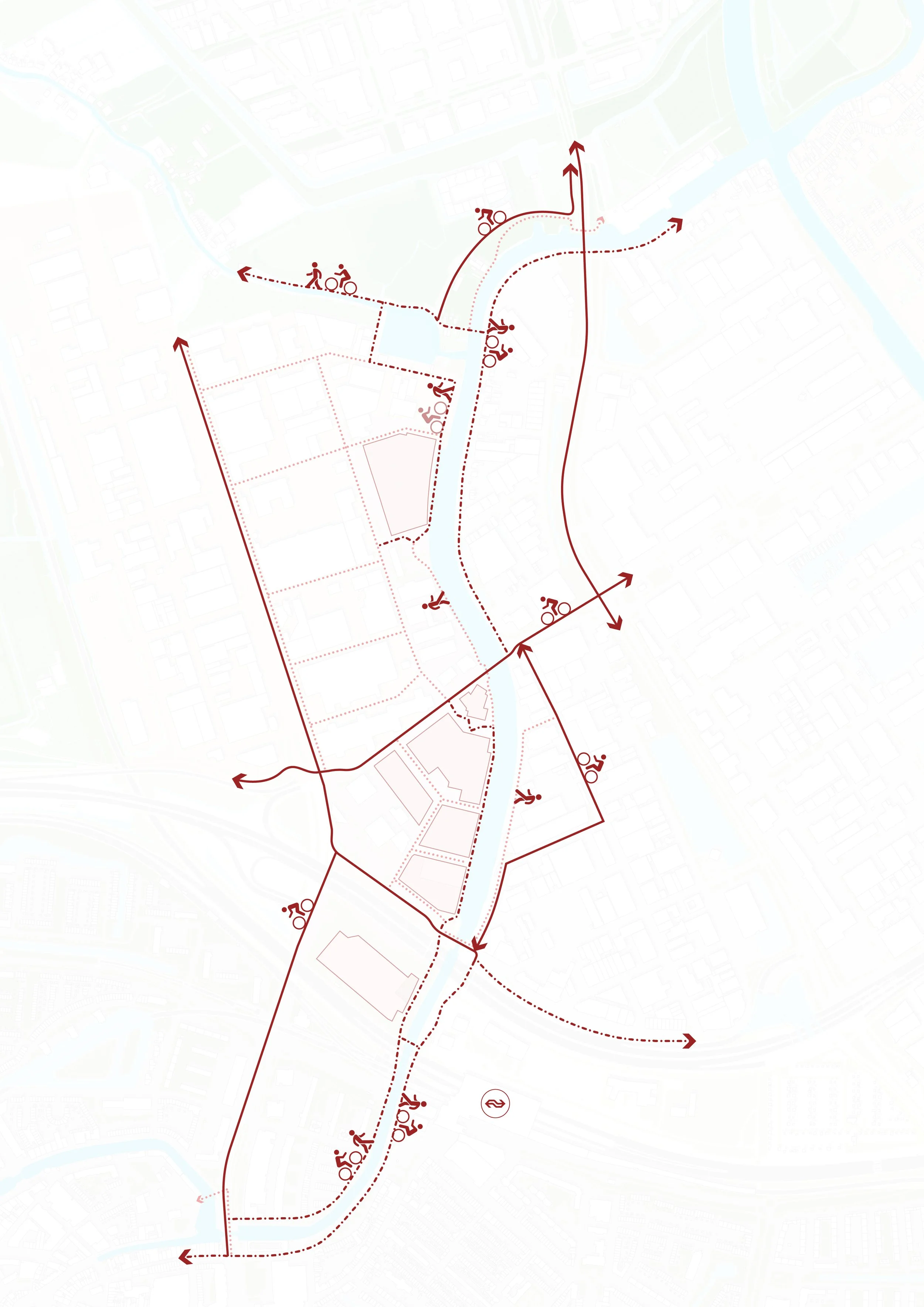
Natural Schie!
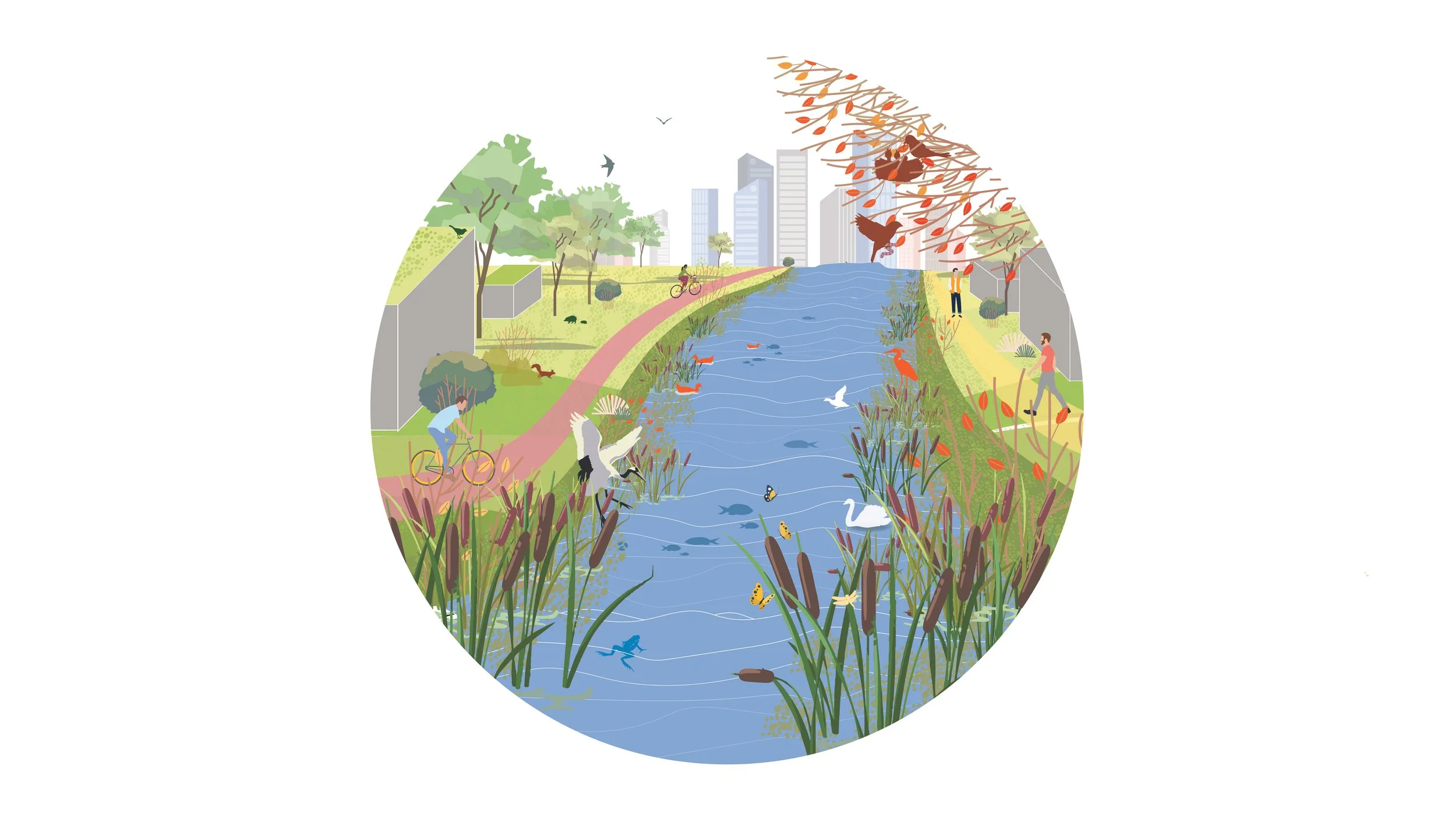
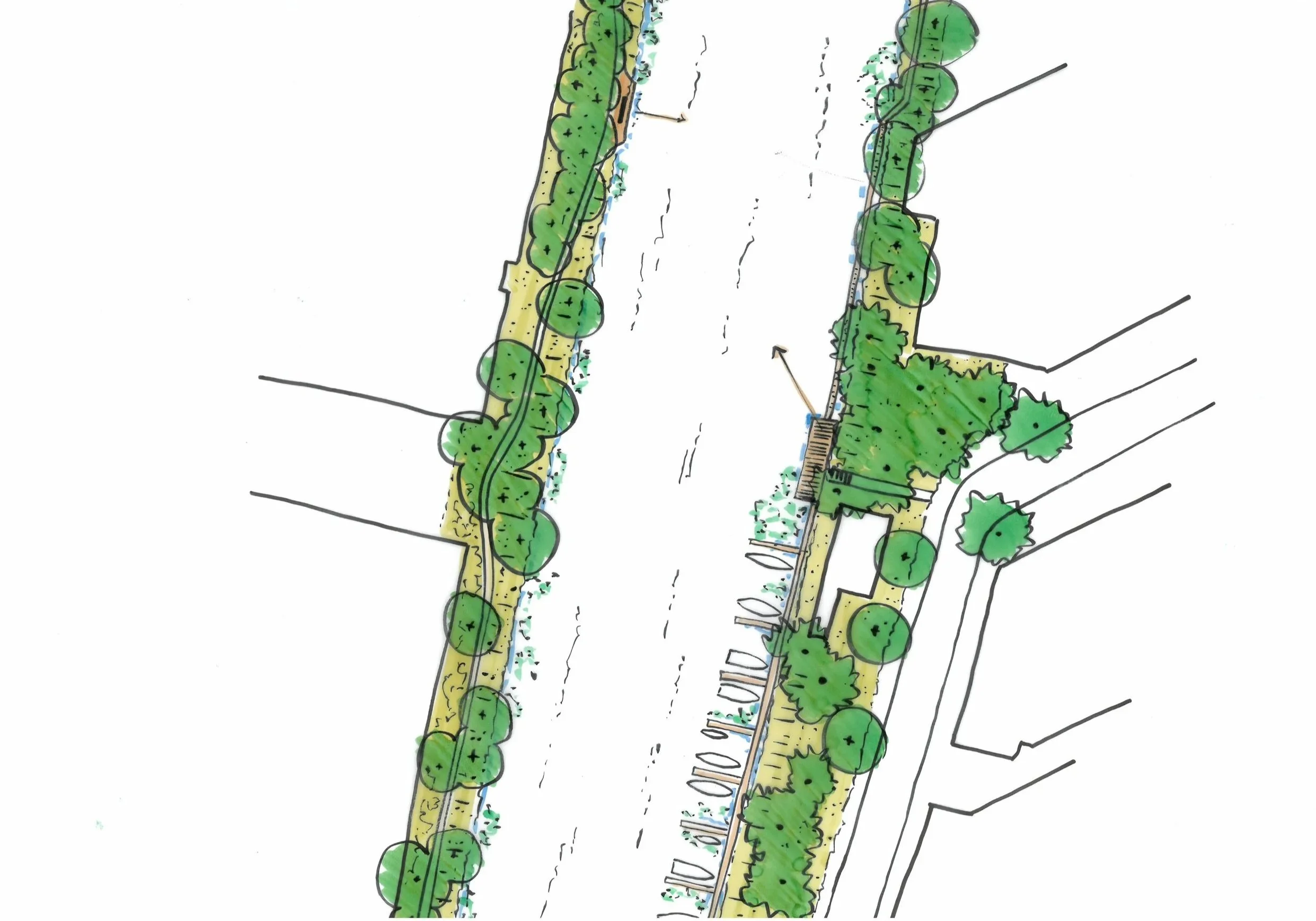
The spontaneously developed vegetation along the banks of the Schie has evolved into a valuable ecological corridor, linking the river and peat landscapes of Midden-Delfland with the urban ecology of Schiedam. This layered greenery forms an essential natural structure that is carefully preserved and further reinforced. Existing trees and green riverbanks therefore provide the foundation of the design. New interventions—such as recreational spaces and pathways—are subtly integrated and shaped by the existing landscape, allowing use and accessibility to grow without disrupting the ecological character of the Schie.
Connecting Schie!
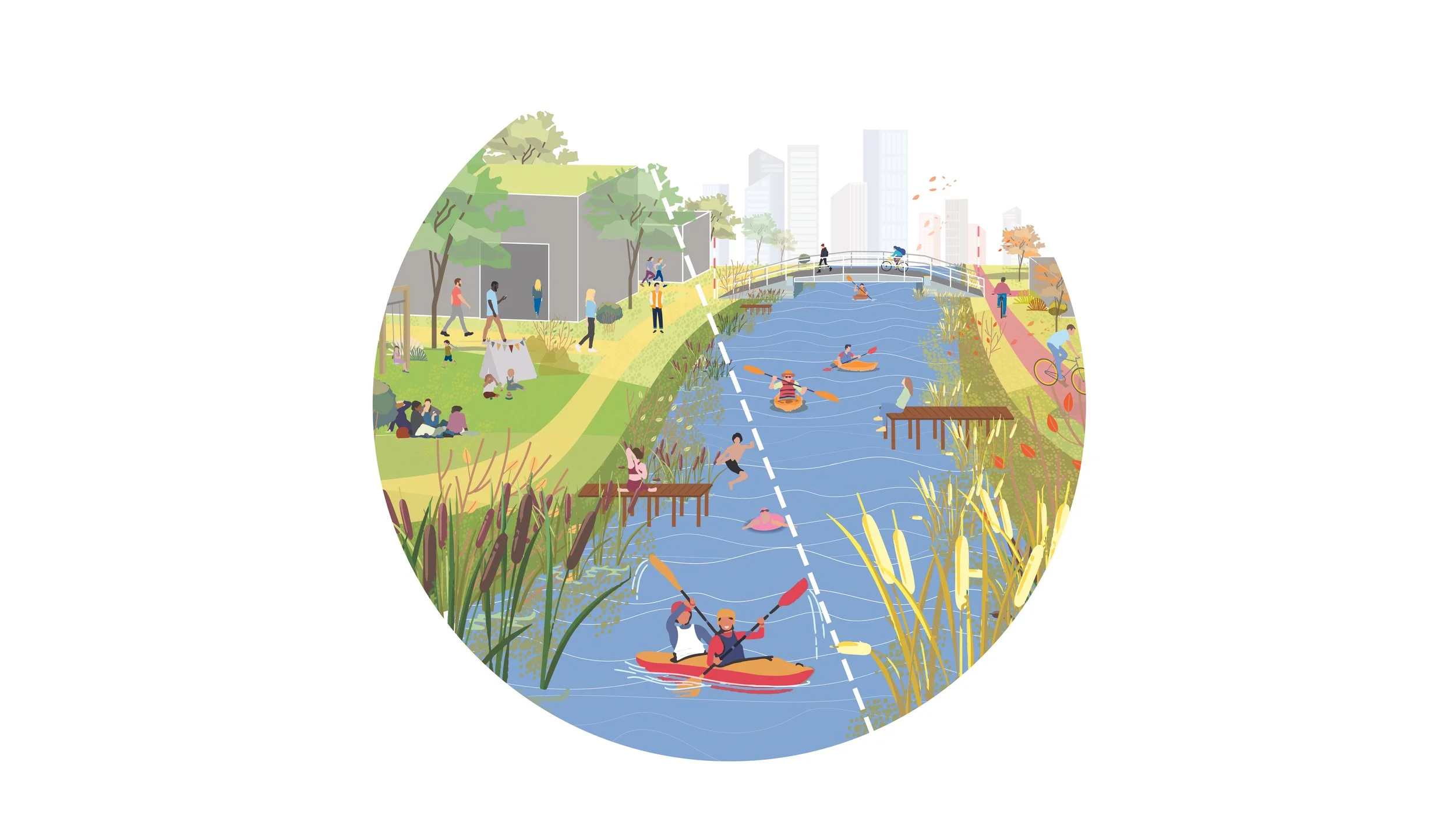
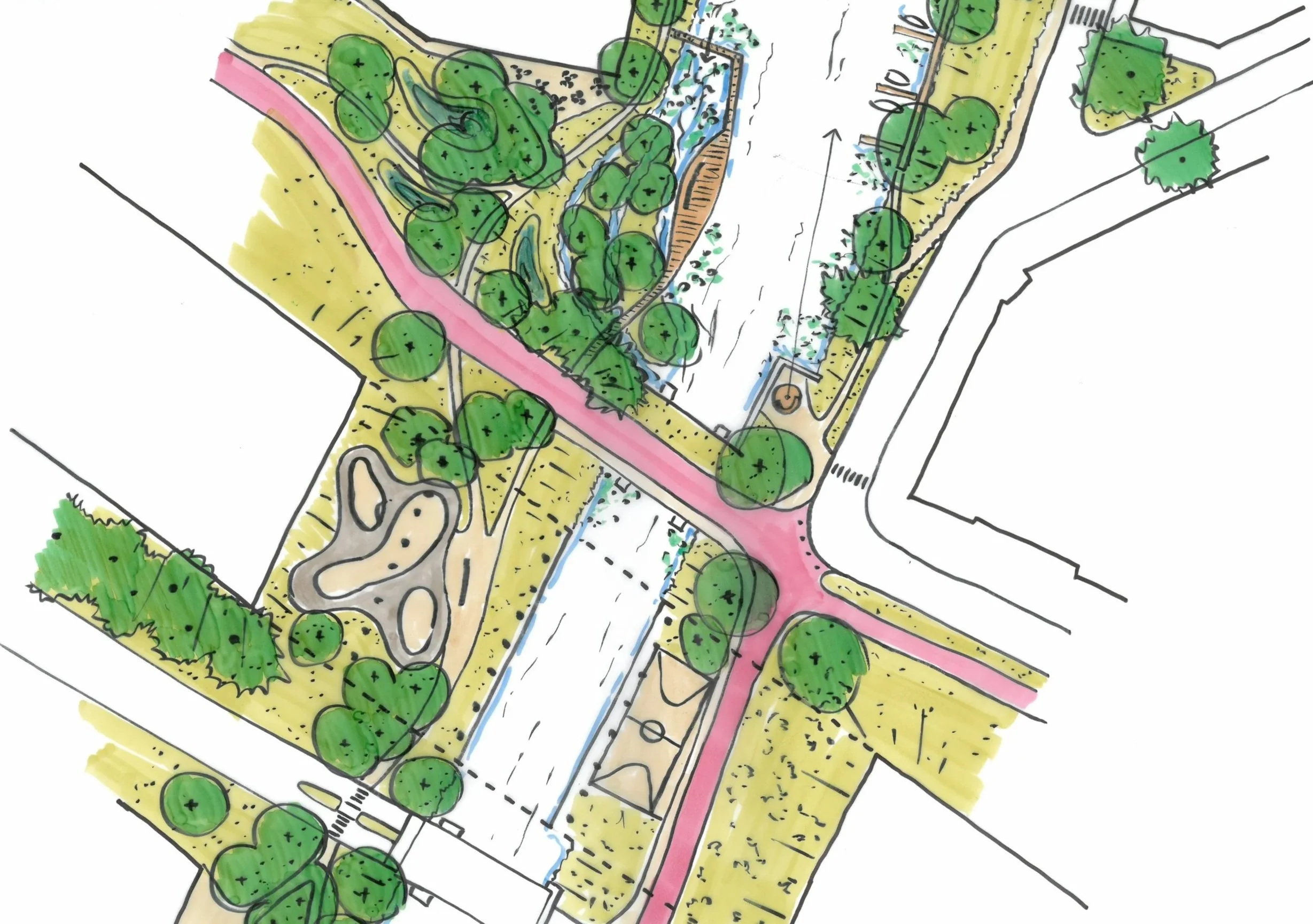
Once the lifeblood of Schiedam and its link to the hinterland, the Schie functioned as a continuous landscape of water and banks. With the development of MICS, the riverbanks will reopen to public use, combining recreation and ecology. The barrier of the A20 is softened by activating the spaces beneath the viaducts with programs that create an inviting recreational area. Added greenery connects these spaces to a larger park structure, strengthening ecological continuity. By linking the Schie to the business park, the design supports a healthy working environment, offering cooler microclimates, walking routes, and natural places to stay for all residents of Schiedam.
Spatial Principles
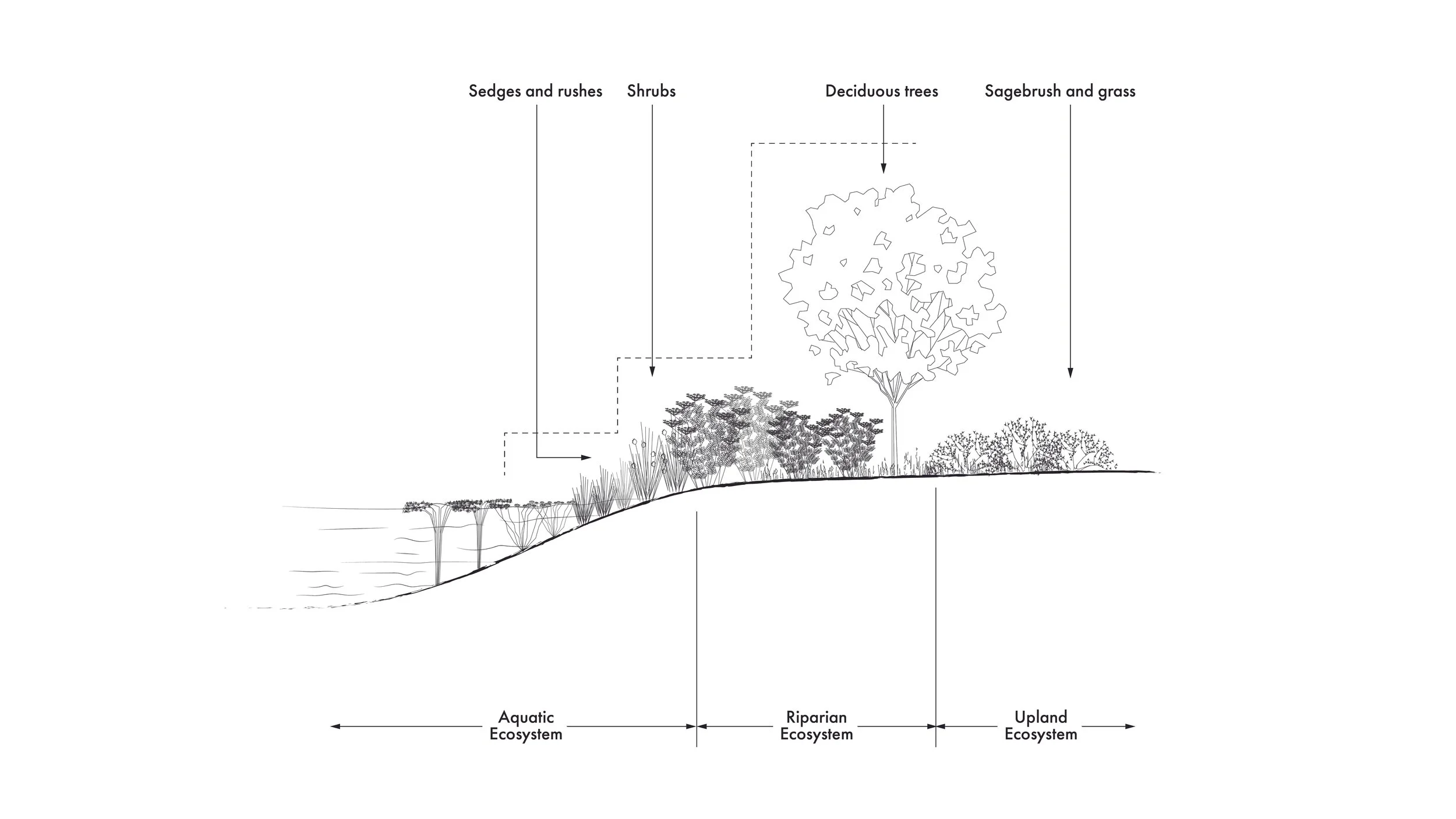
Riparian forests are the inspiration for the natural character of the Schie River landscape. Local conditions—such as soil composition, moisture, and temperature—guide the selection of vegetation. At the transition from wet to drier habitats, the lower riverbanks have a more open structure with scrub and marsh vegetation, while higher parts of the bank gradually shift to semi-open and closed woodland with taller trees, typical forest species, and areas of rough vegetation. This riparian forest atmosphere is extended beneath infrastructure viaducts and into the streets of the adjacent business park, where it helps reduce heat stress, mitigate drought, and retain water. Together, these elements create a robust ecological network with generous space for biodiversity. Interventions that make the landscape and green riverbanks accessible are designed according to the principle of adaptability, allowing the system to respond to changing environmental and use conditions.
S/M/L platforms
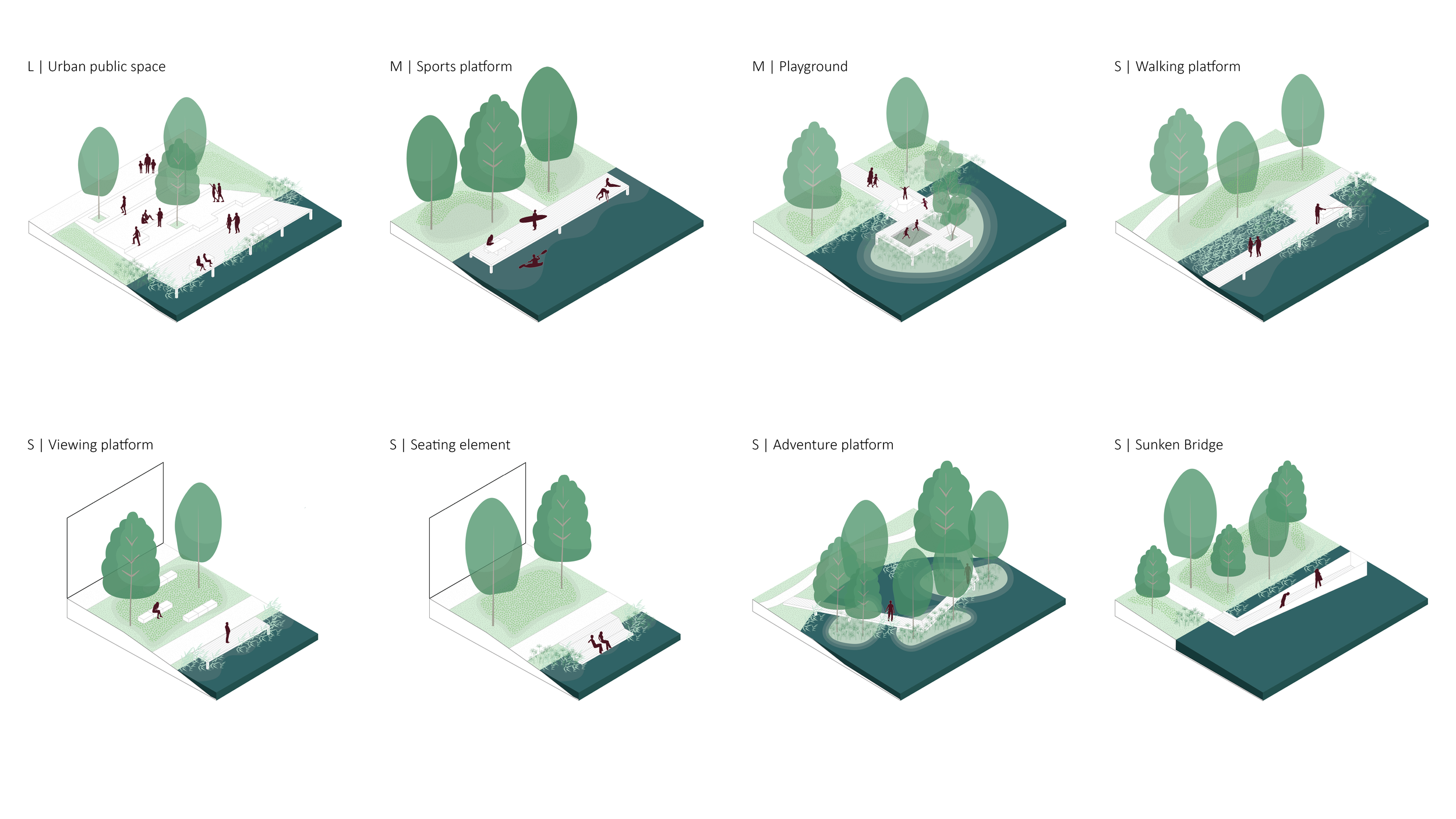
The riverbanks vary in character and therefore call for different spatial interventions. New recreational platforms are introduced along the banks and in the water, tied together by a unified design language and consistent material use. The platforms are designed in S, M, and L sizes to support a wide range of activities: from stepped urban terraces sloping toward the water that provide seating and gathering spaces in front of Hotel De Veste, to sport platforms near the most active buildings on the MICS campus, and smaller seating elements and adventurous walking platforms that offer quiet moments and opportunities for micro-restoration.