Rotterdam City Centre? Yes, Naturally
Rotterdam, The Netherlands
Location | Rotterdam, The Netherlands
Year | 2025
Client | Rotterdam Centrum
Collaboration | Municipality of Rotterdam
Status | Vision, study complete
Links | Complete study
The vitality of Rotterdam’s inner-city lags behind that of other major city centres. The organization Rotterdam Centrum therefore commissioned De Urbanisten to develop a vision for the centre of Rotterdam, in which improving the quality of stay goes hand in hand with creating a more climate- and nature-sensitive urban environment. The result is the green vision “Rotterdam City Centre? Yes, Naturally.” The vision has been embraced by BIZ Rotterdam Centrum and presented to the Municipality of Rotterdam.
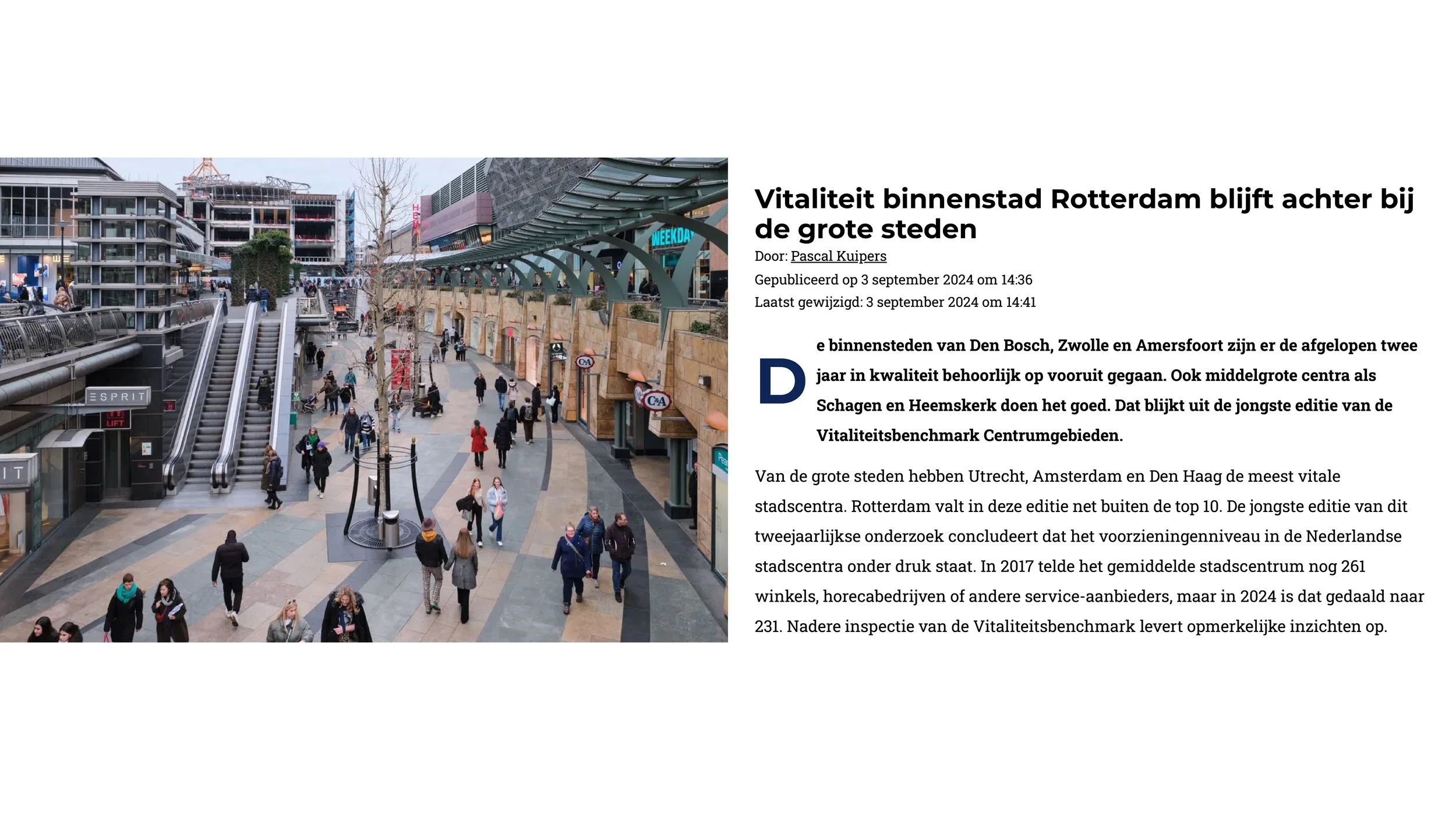
Vitality
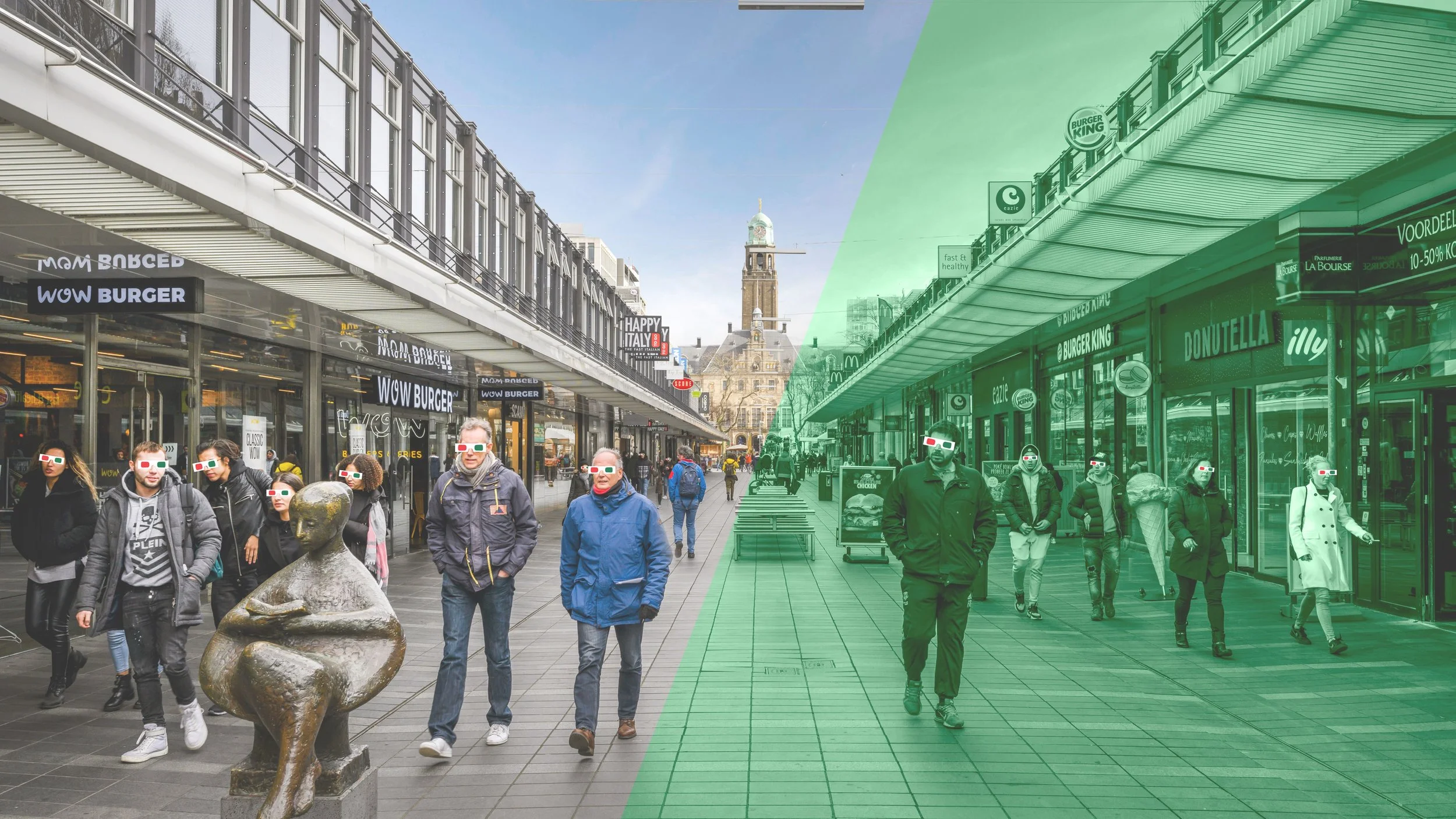
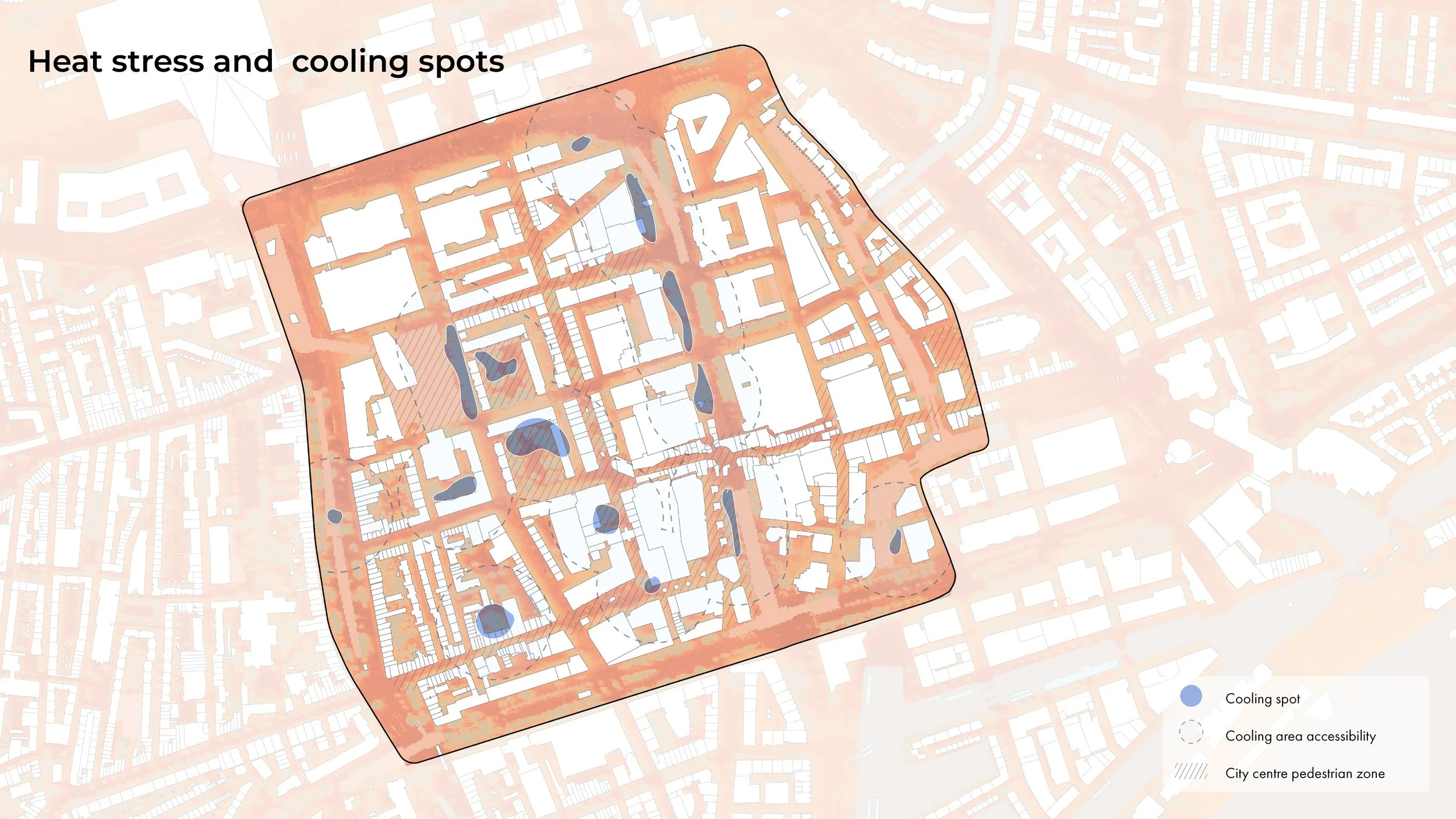
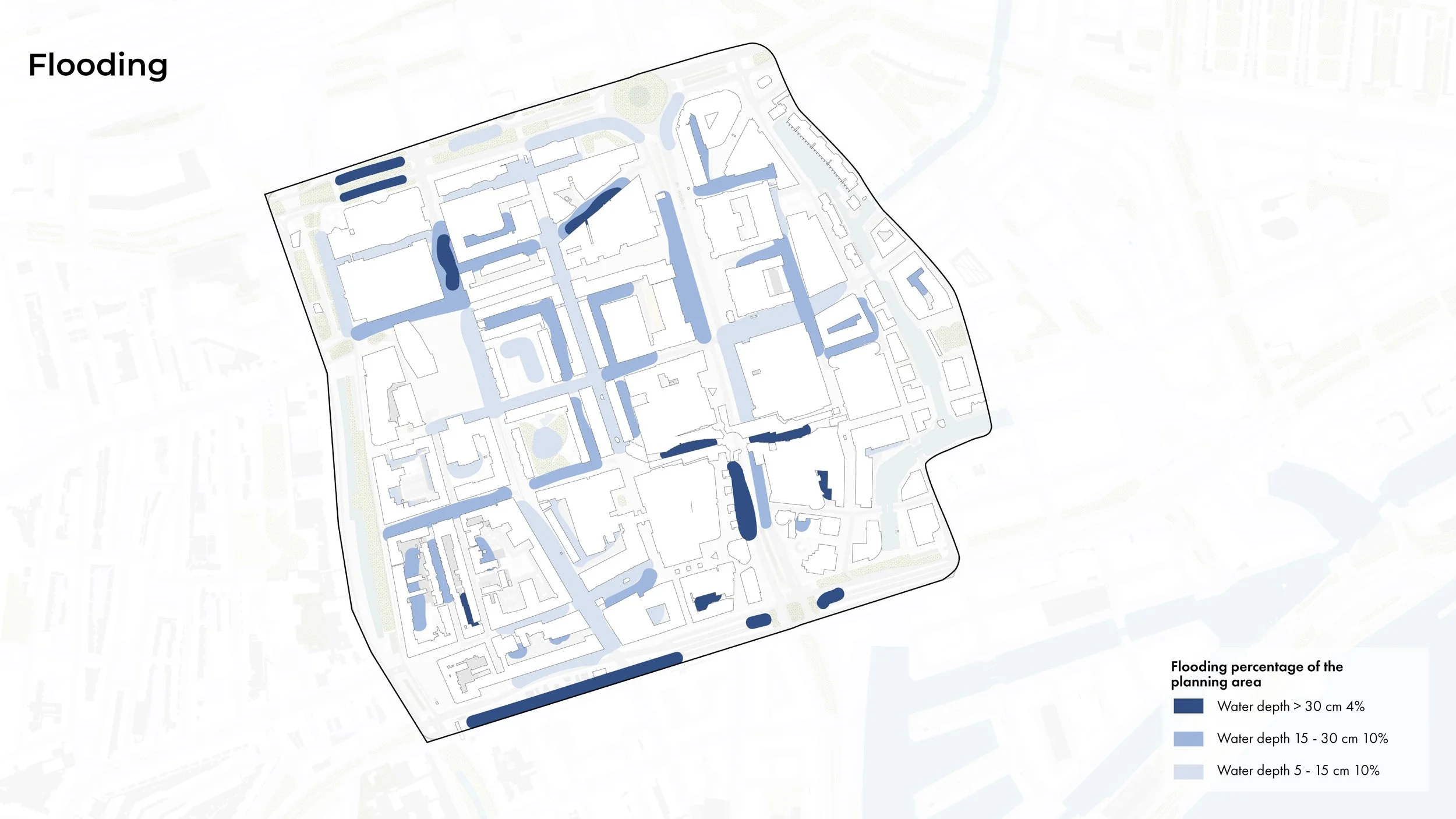
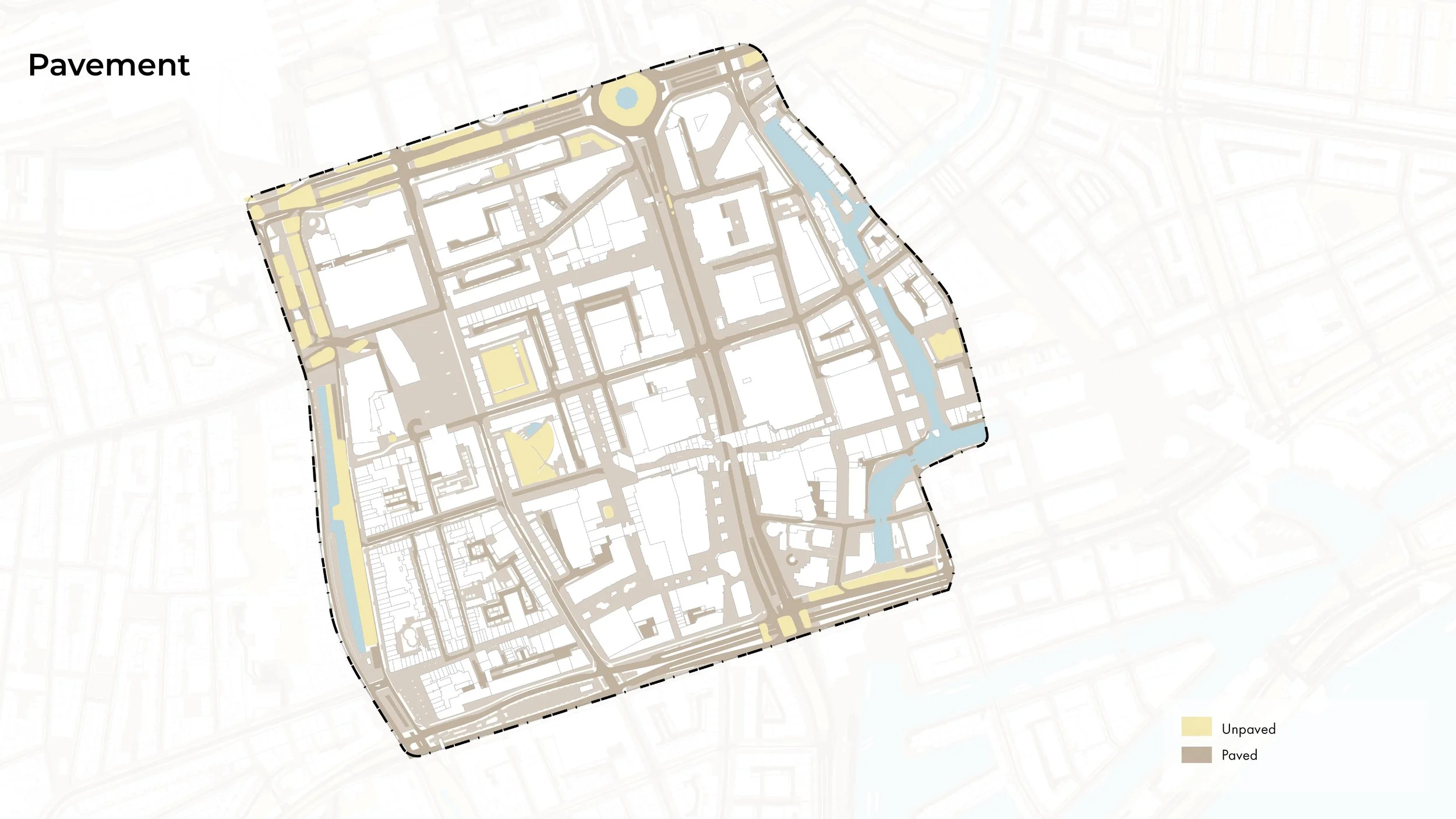
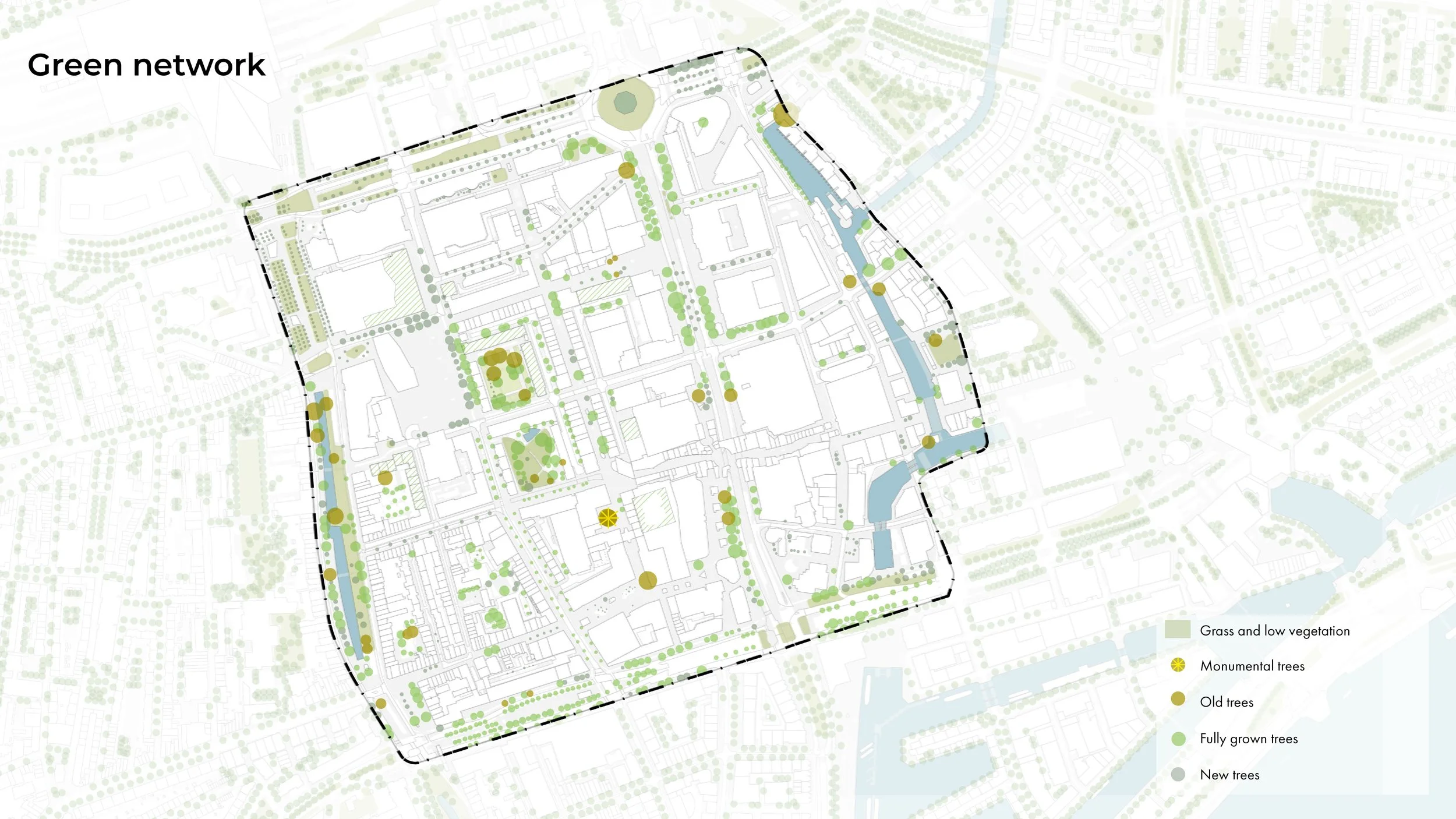
Rotterdam’s inner city is one of the busiest and most densely built-up areas of the city. It contains an exceptionally high proportion of paved surfaces and very few generous green structures. This makes the area particularly vulnerable to climate change (extreme rainfall, drought, and heat). The lack of urban nature (such as trees, green squares, parks, and planting beds) also negatively affects the quality of stay. These factors together provided strong reasons to develop a nature-based perspective for Rotterdam’s city centre.
A natural city centre for Rotterdam
For and by Rotterdam Centrum, three ambitions were formulated:
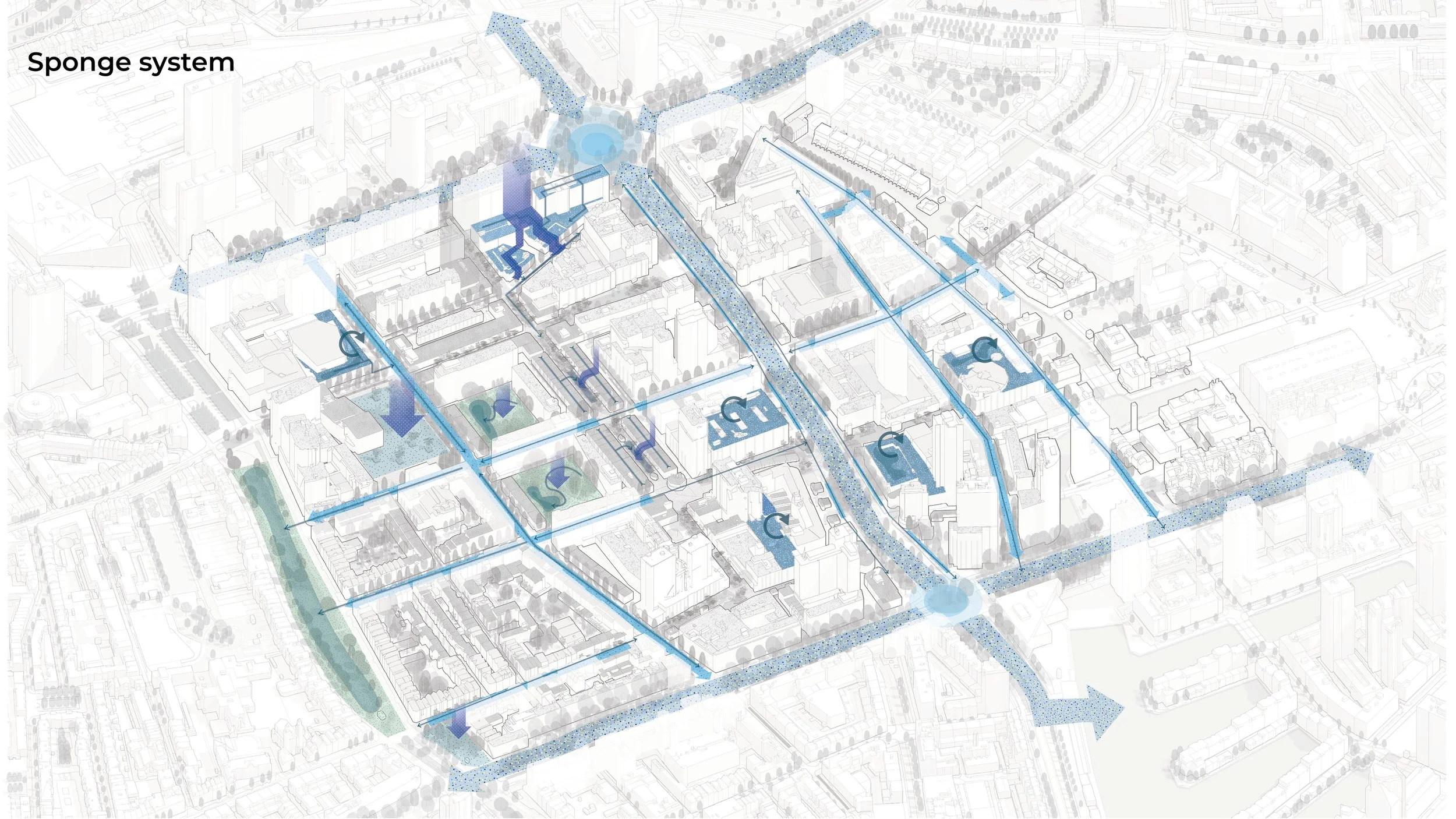
The city centre is prepared for a changing climate.
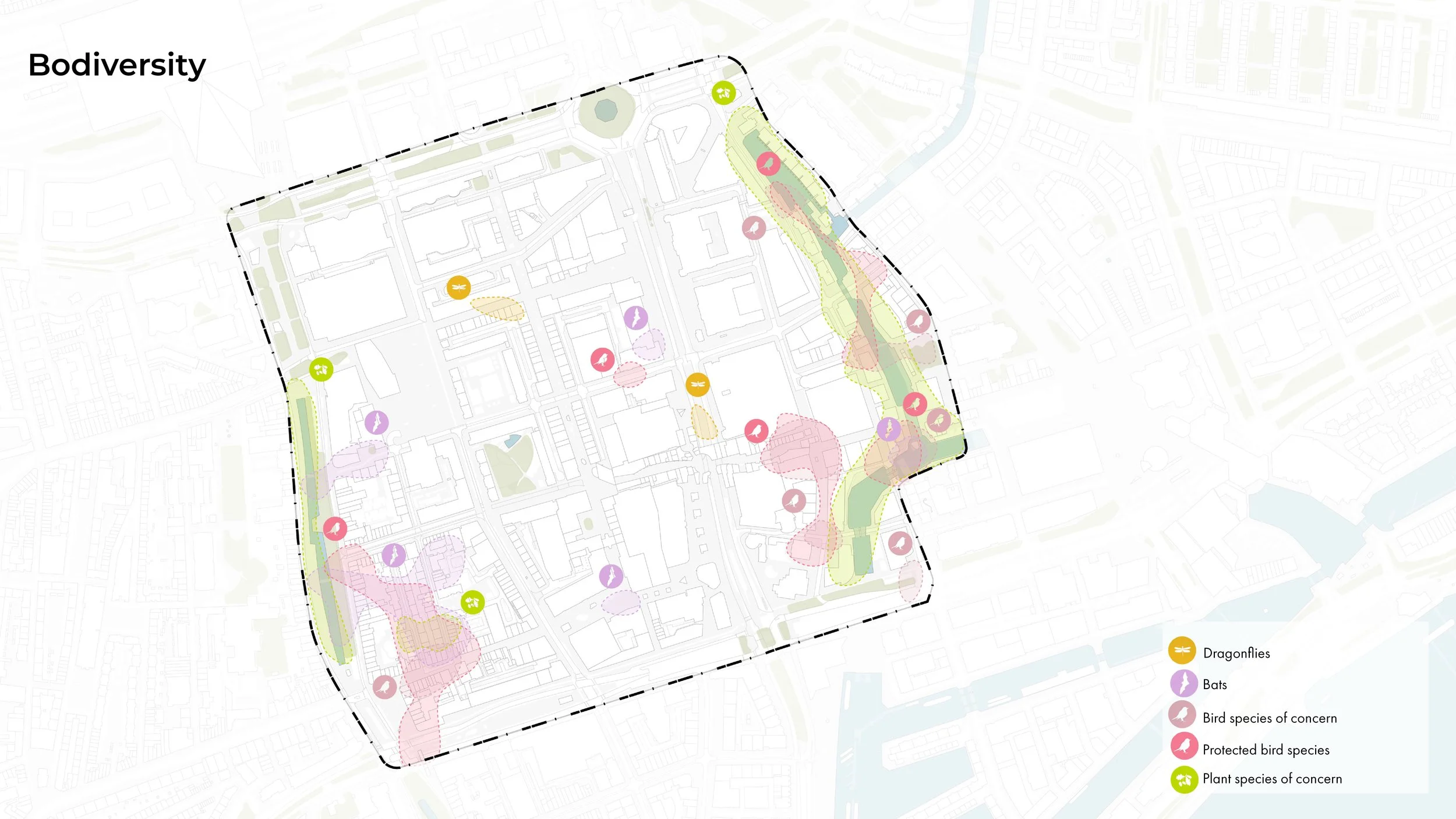
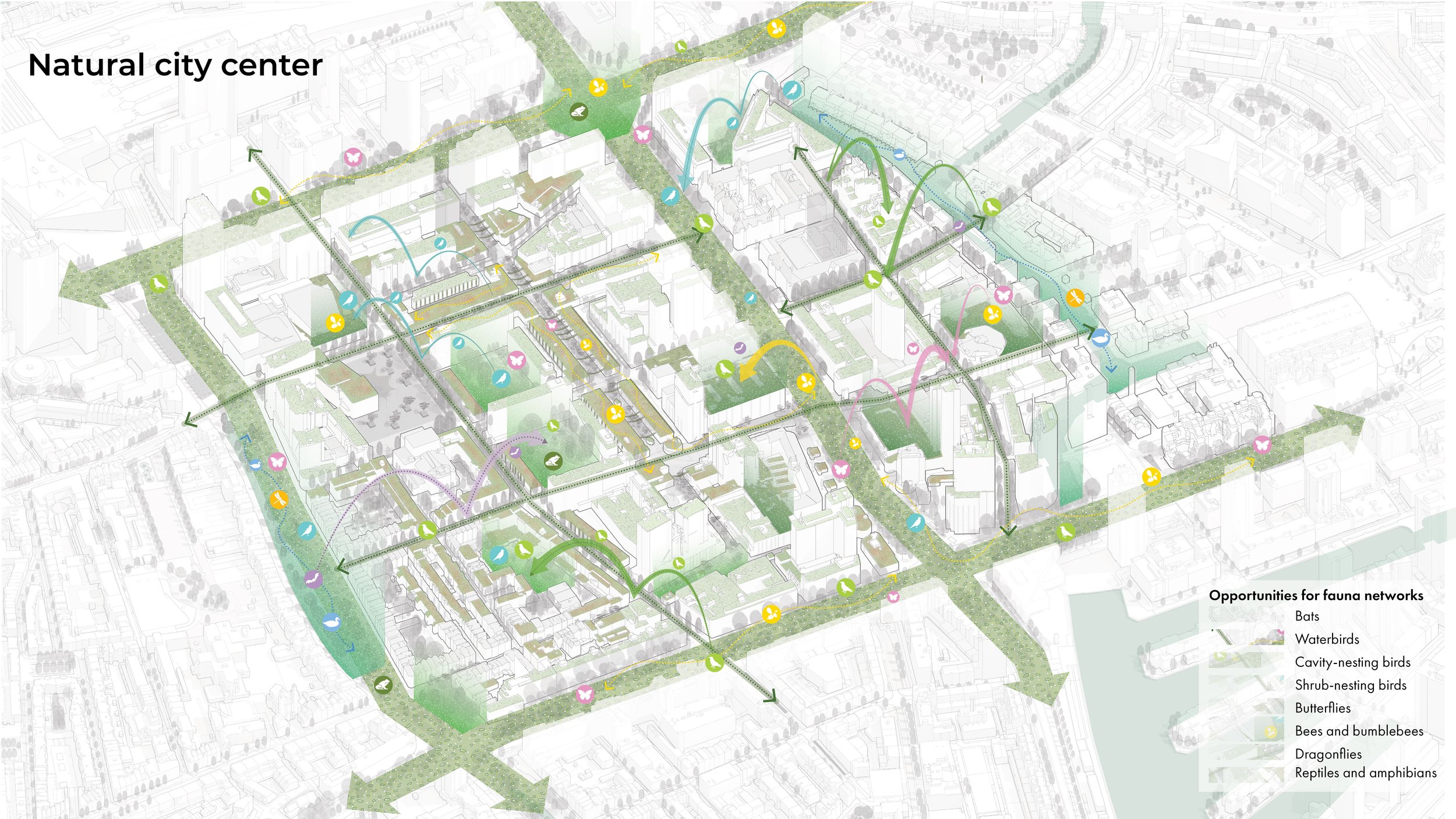
The city centre is an attractive place to stay for people and wildlife.
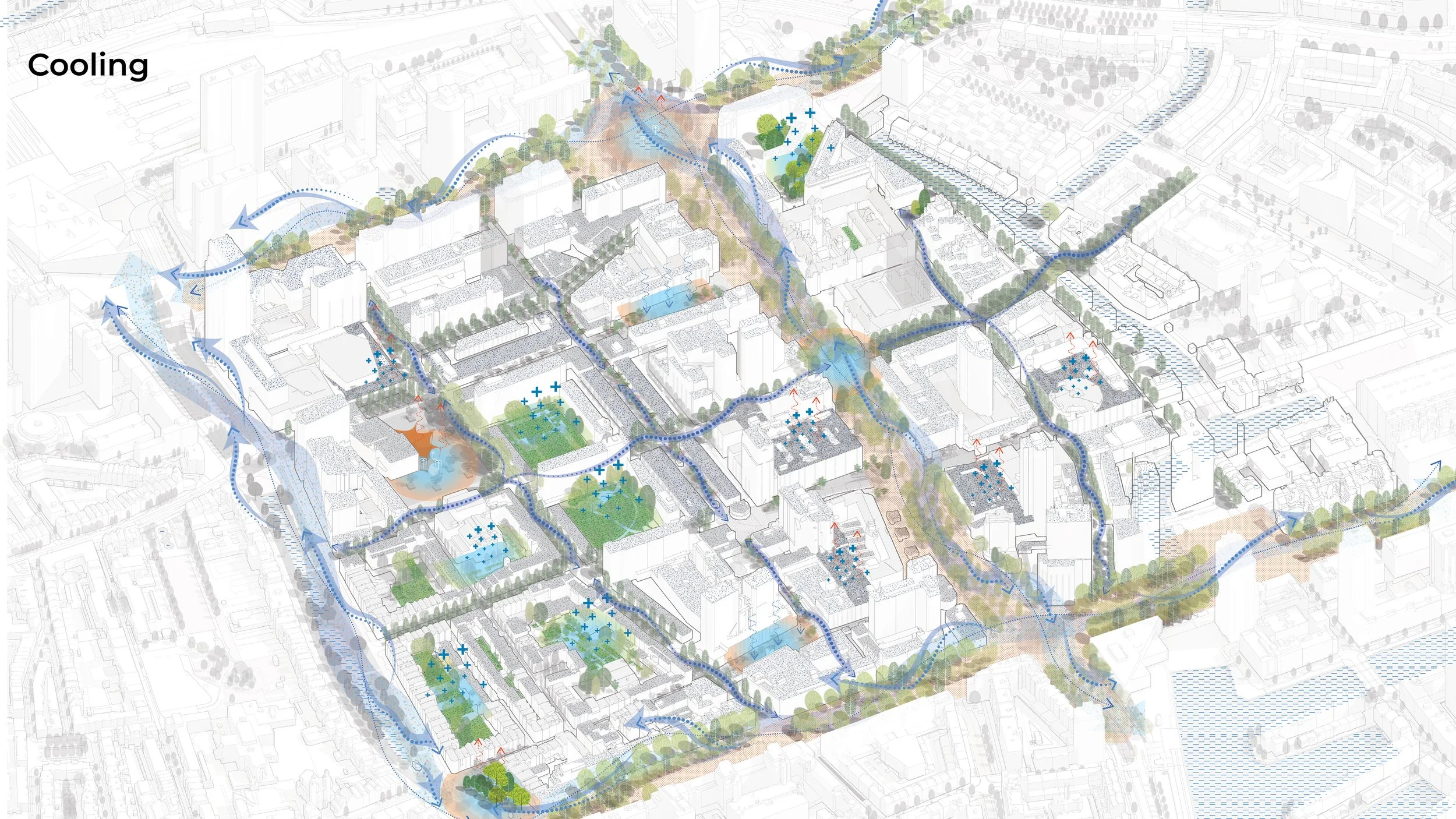
Throughout the centre, nature contributes to a pleasant urban climate.
These ambitions have been elaborated in four perspective maps (water, cooling, biodiversity, and quality of stay), each supported by a set of applicable and suitable measures.
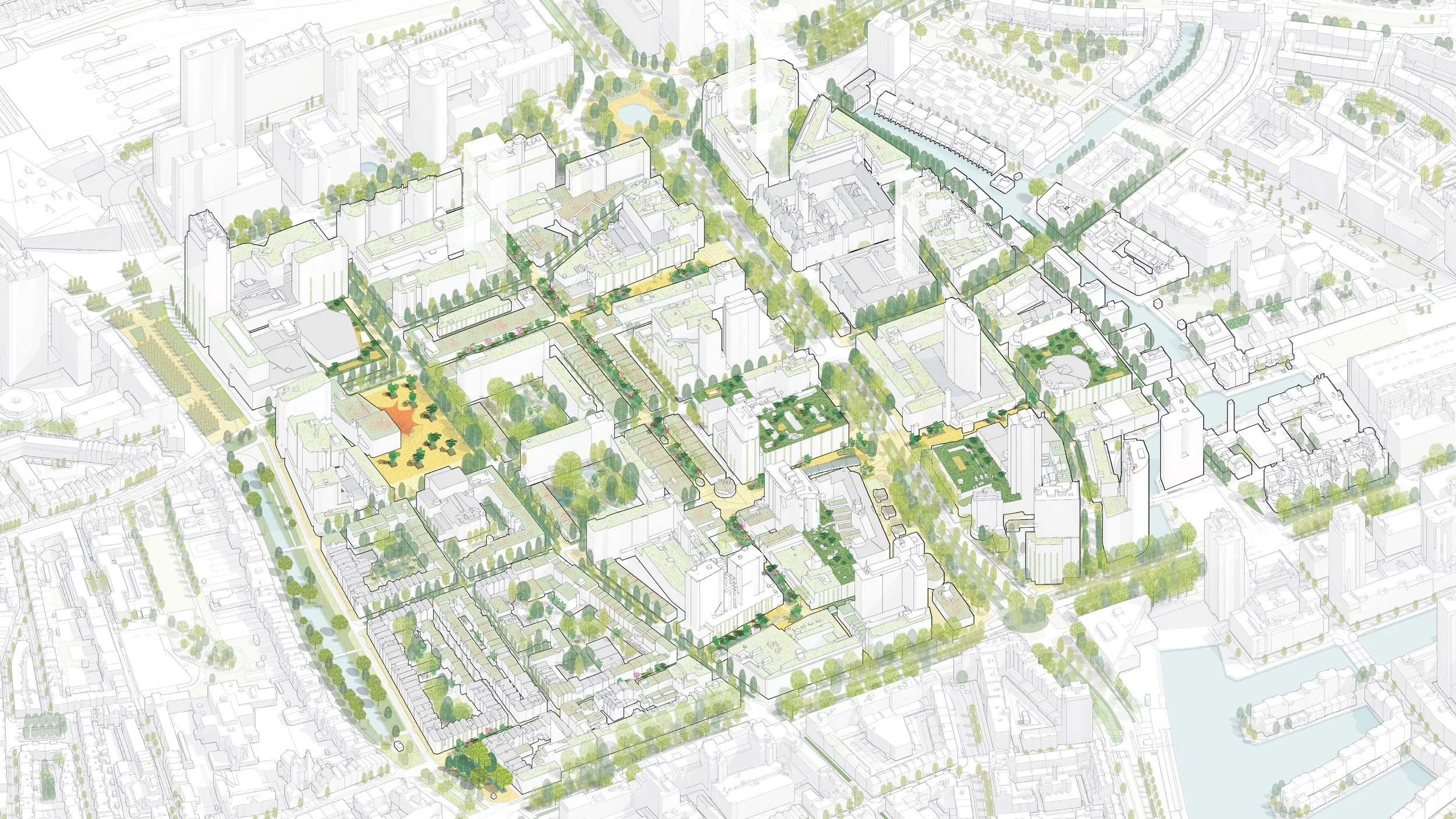
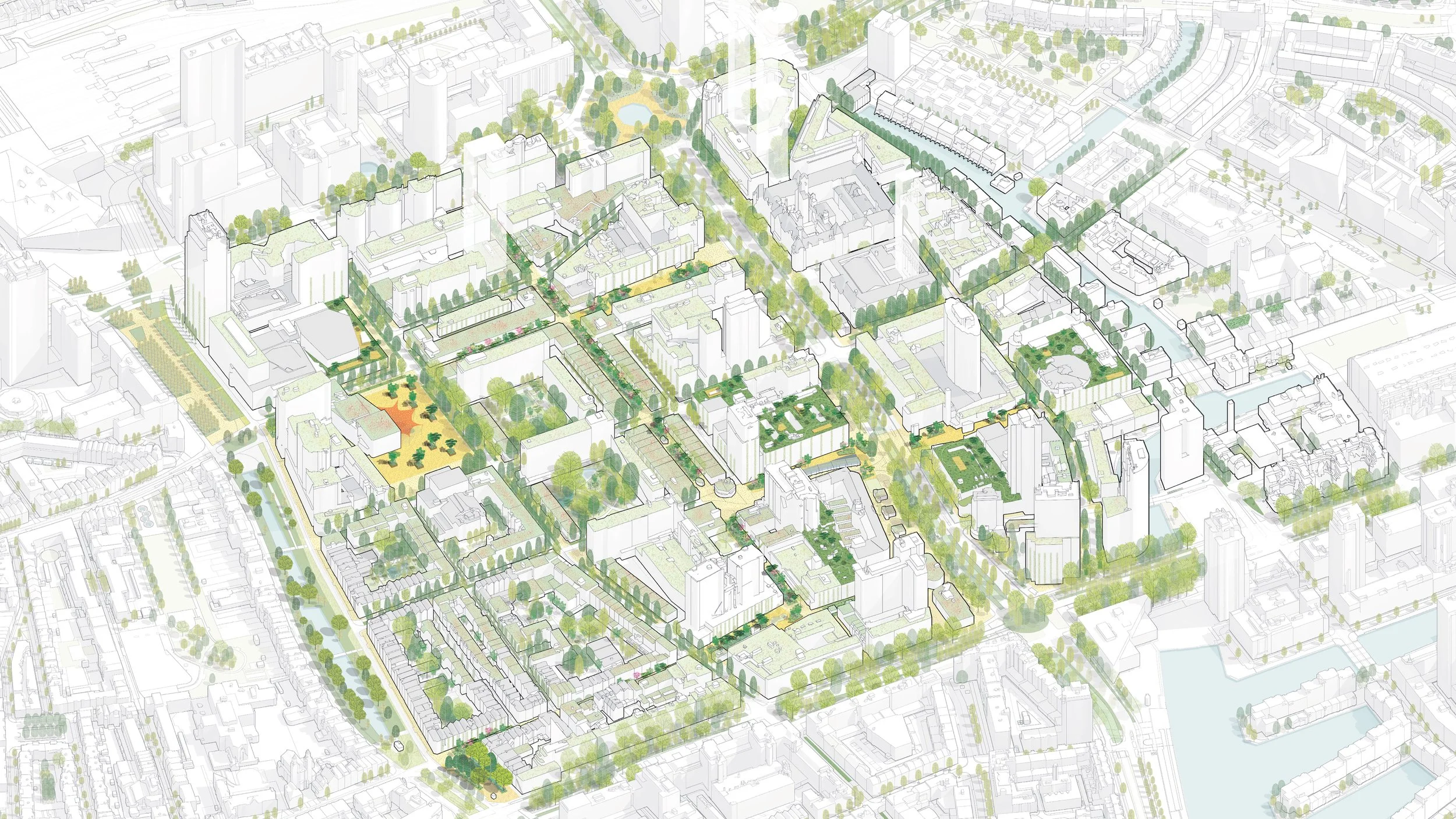
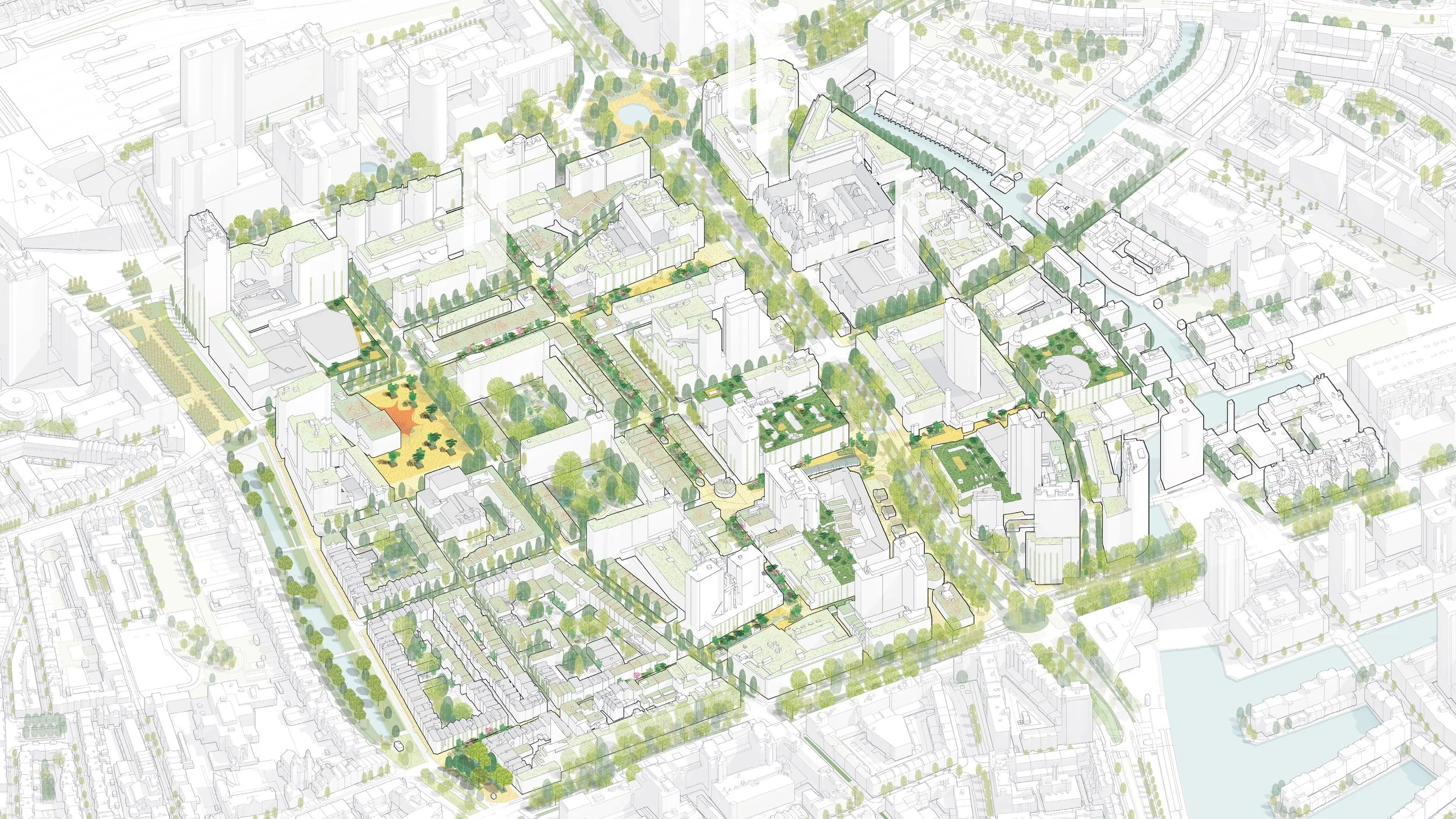
A generous and coherent green structure
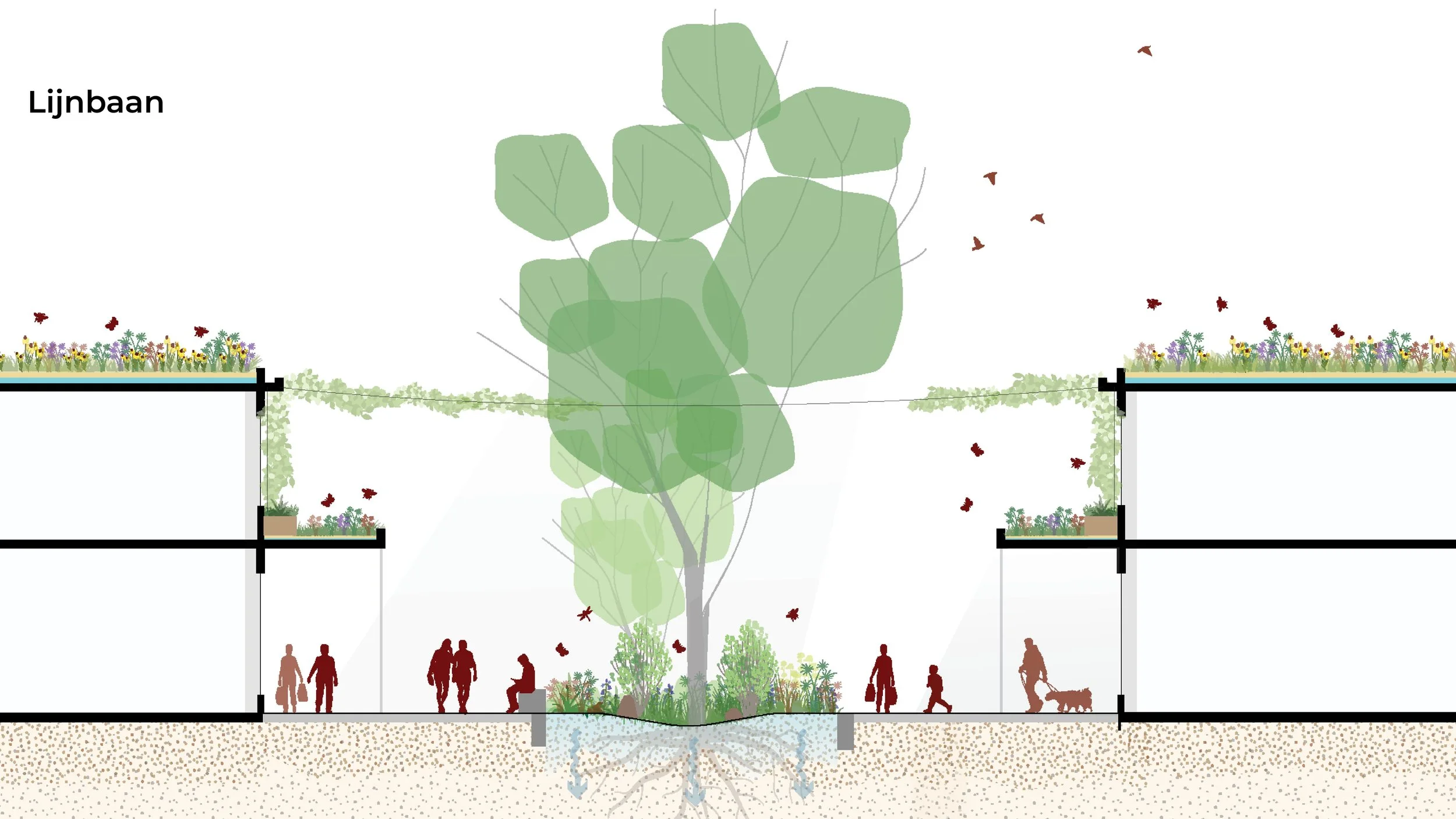
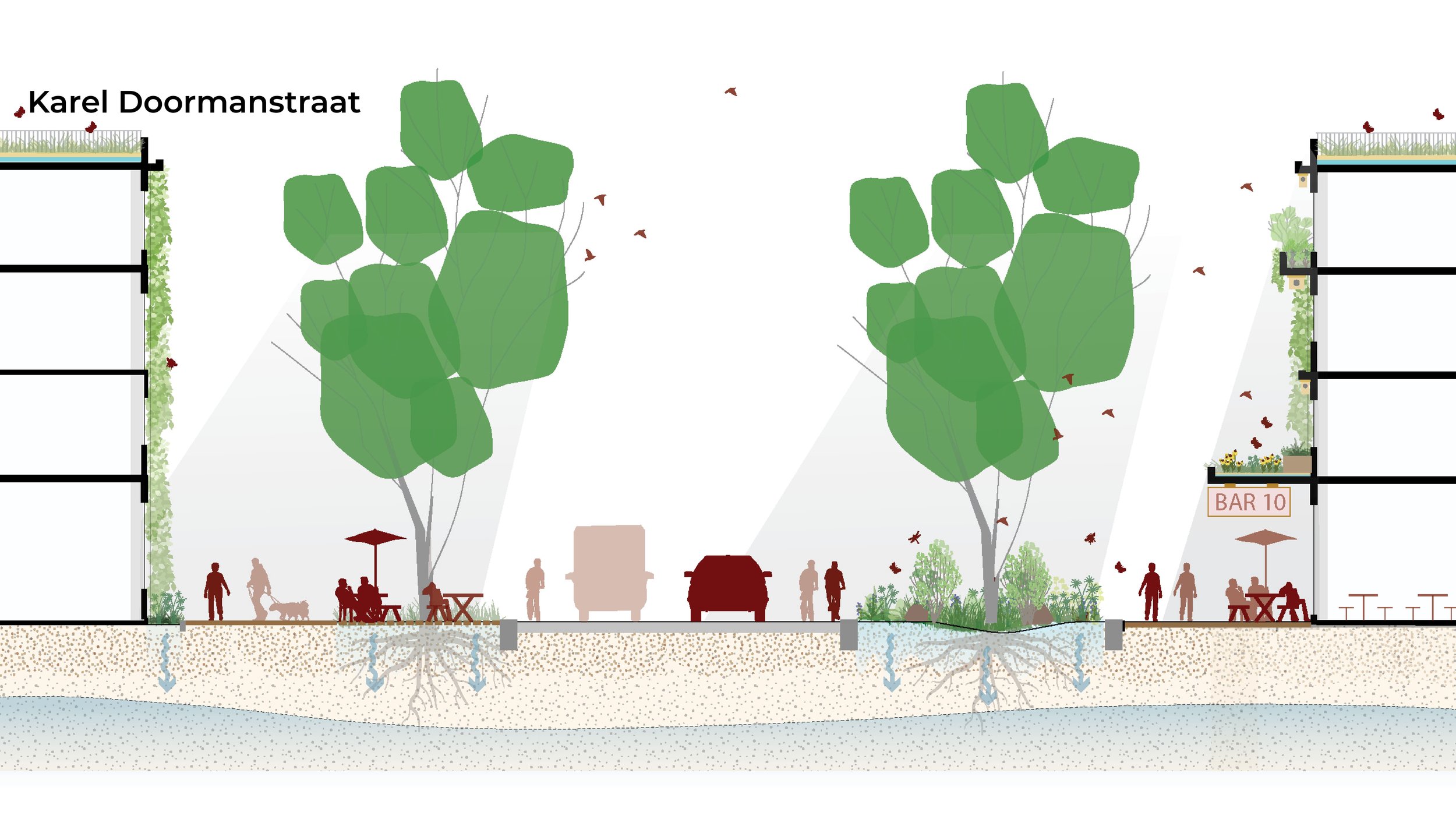
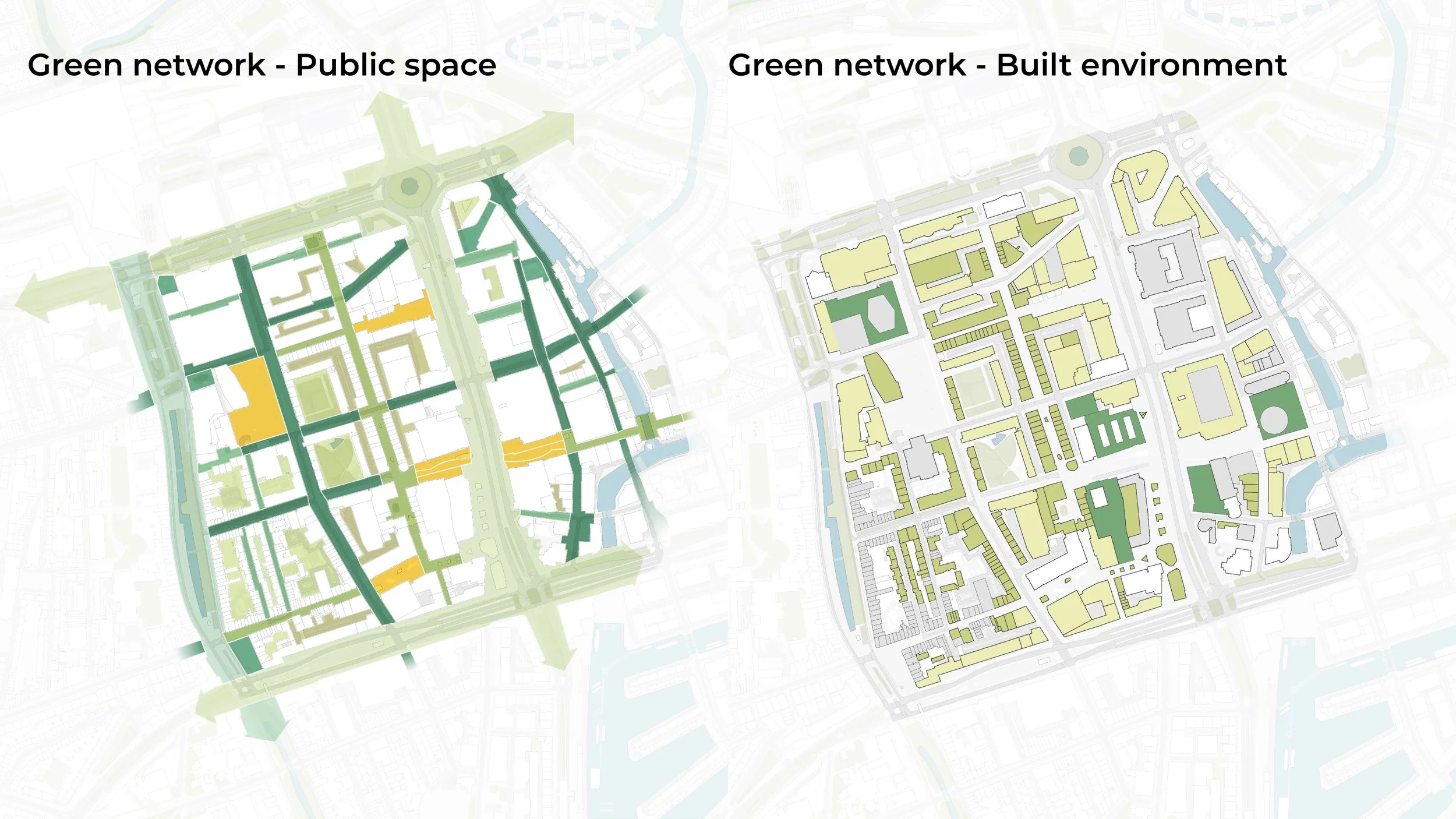
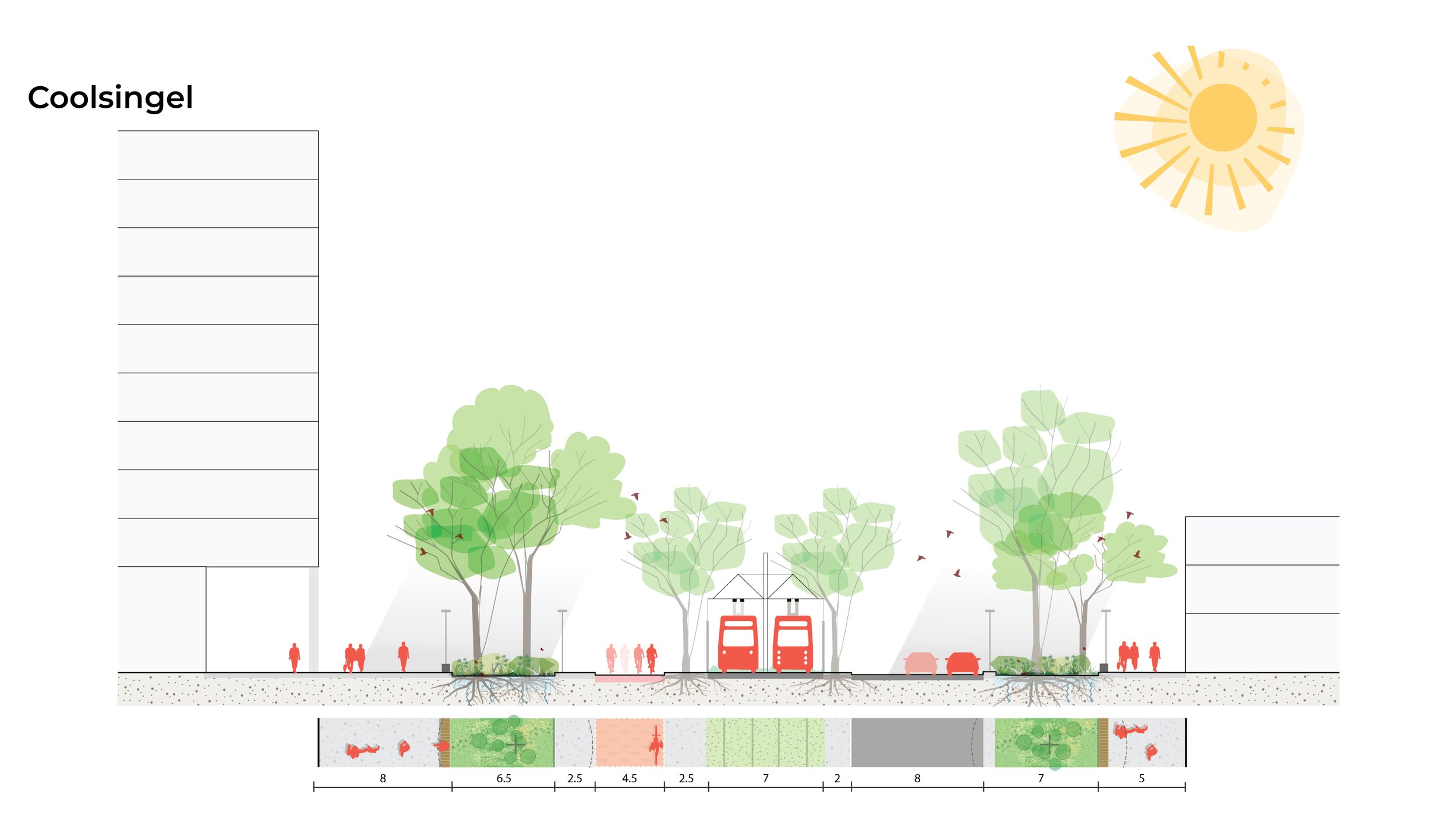
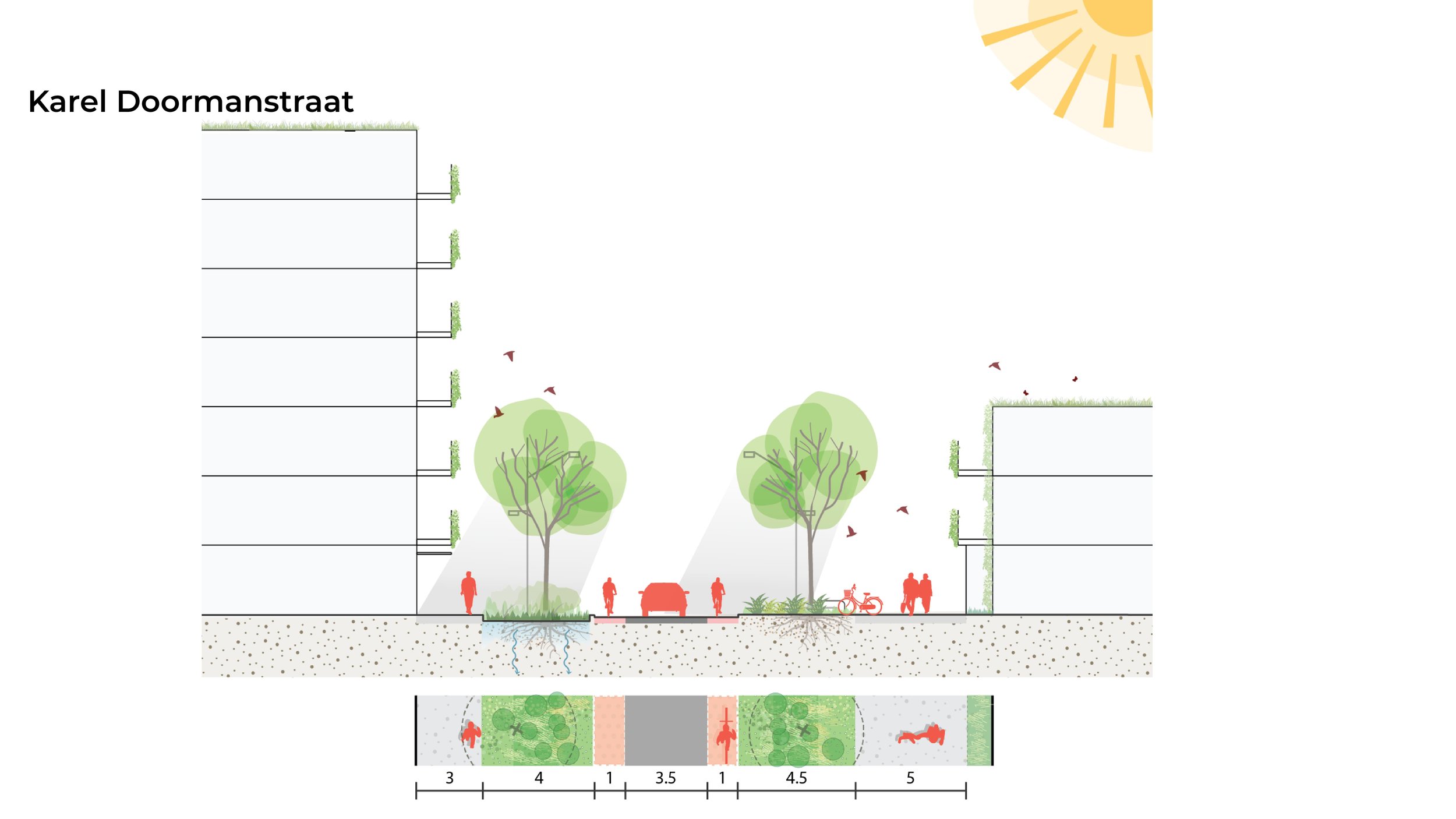
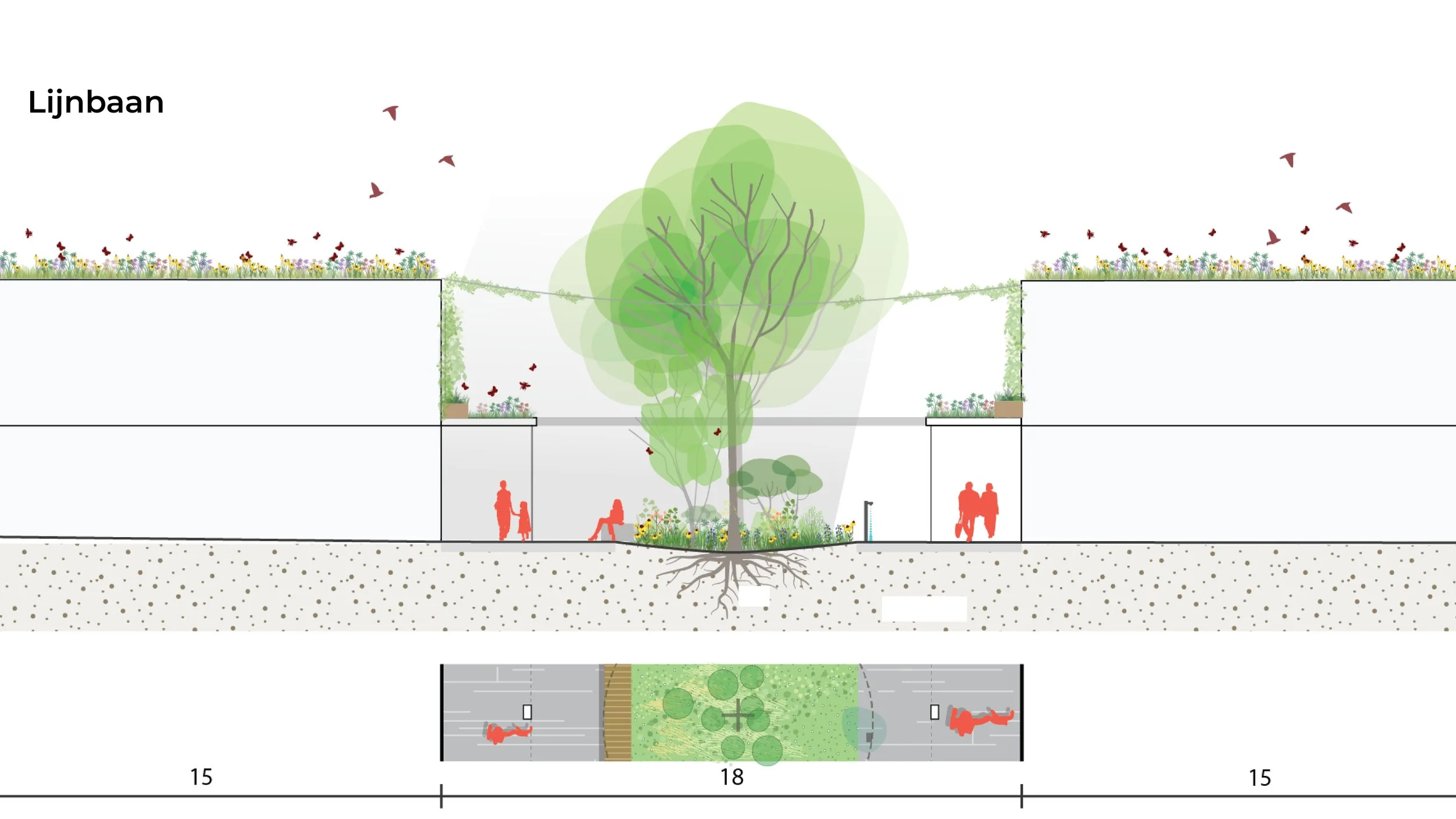
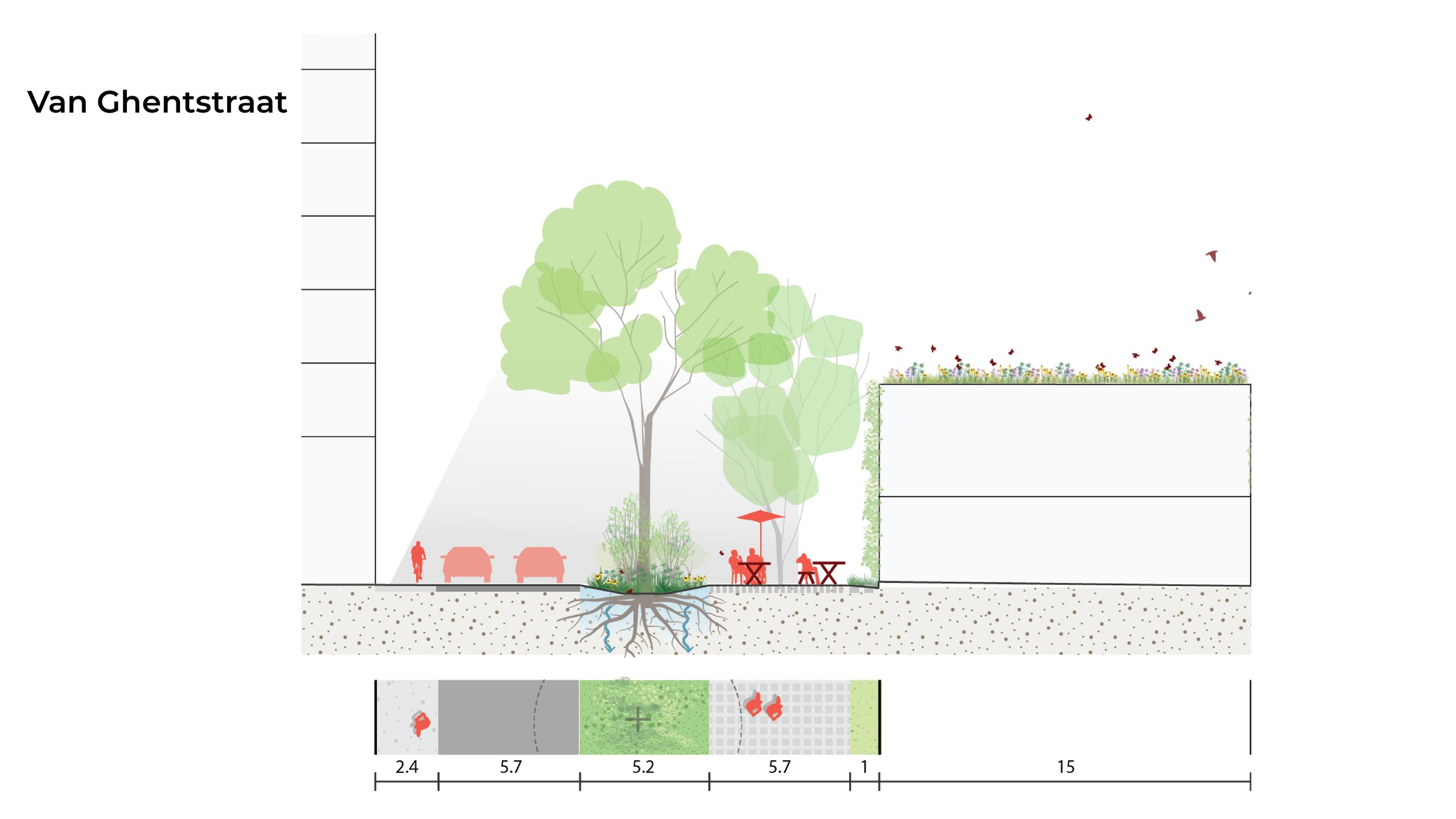
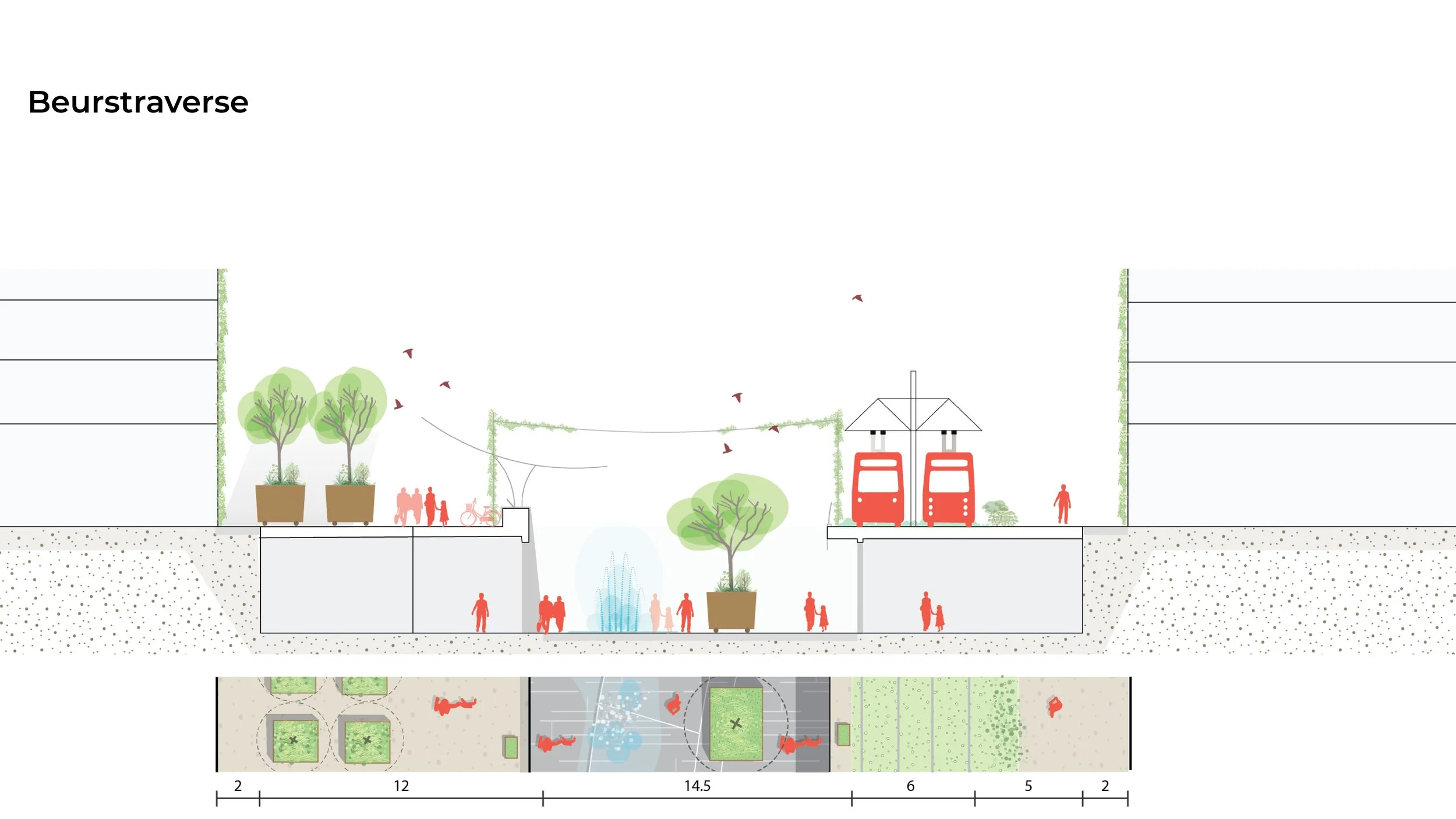
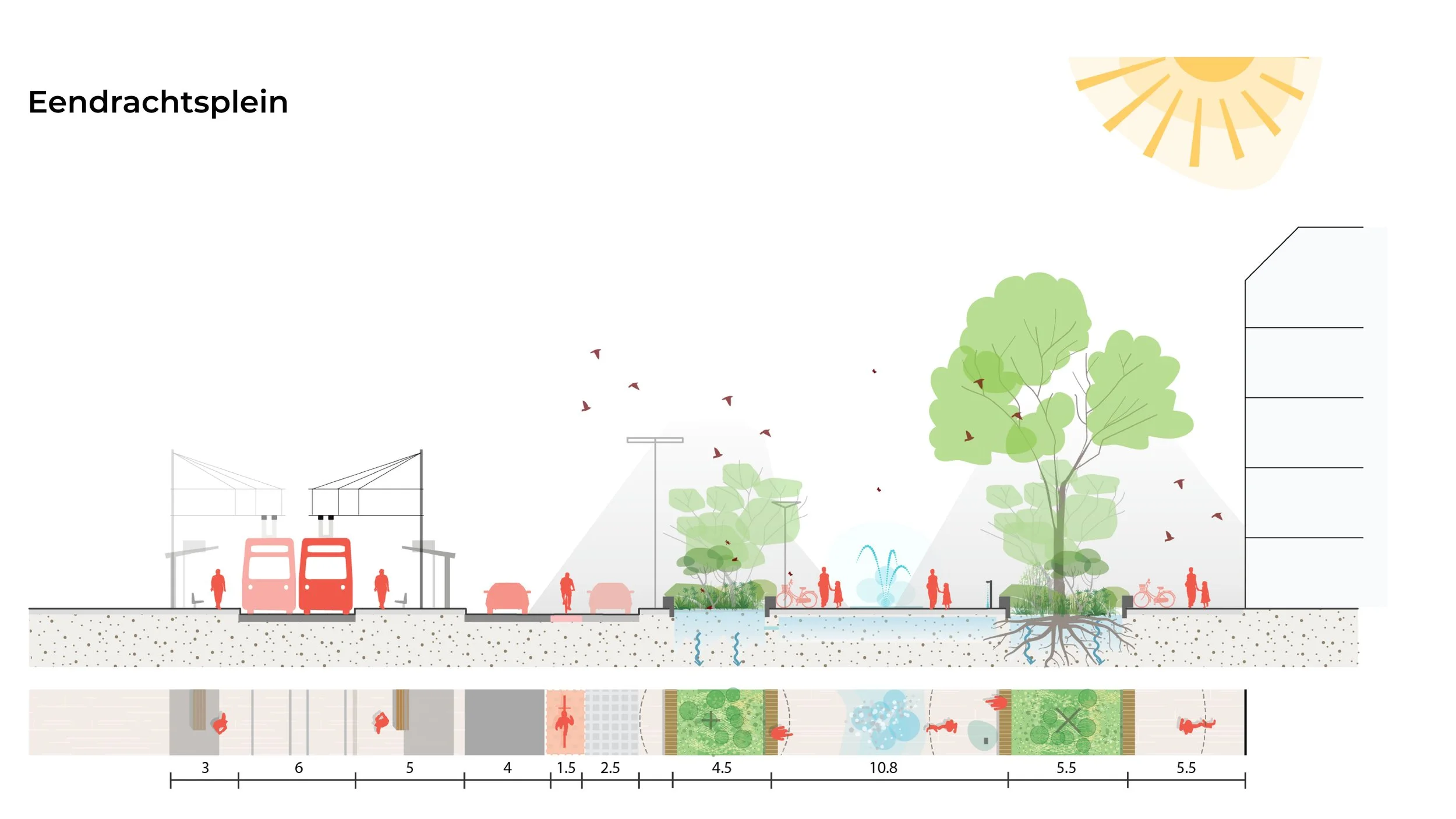
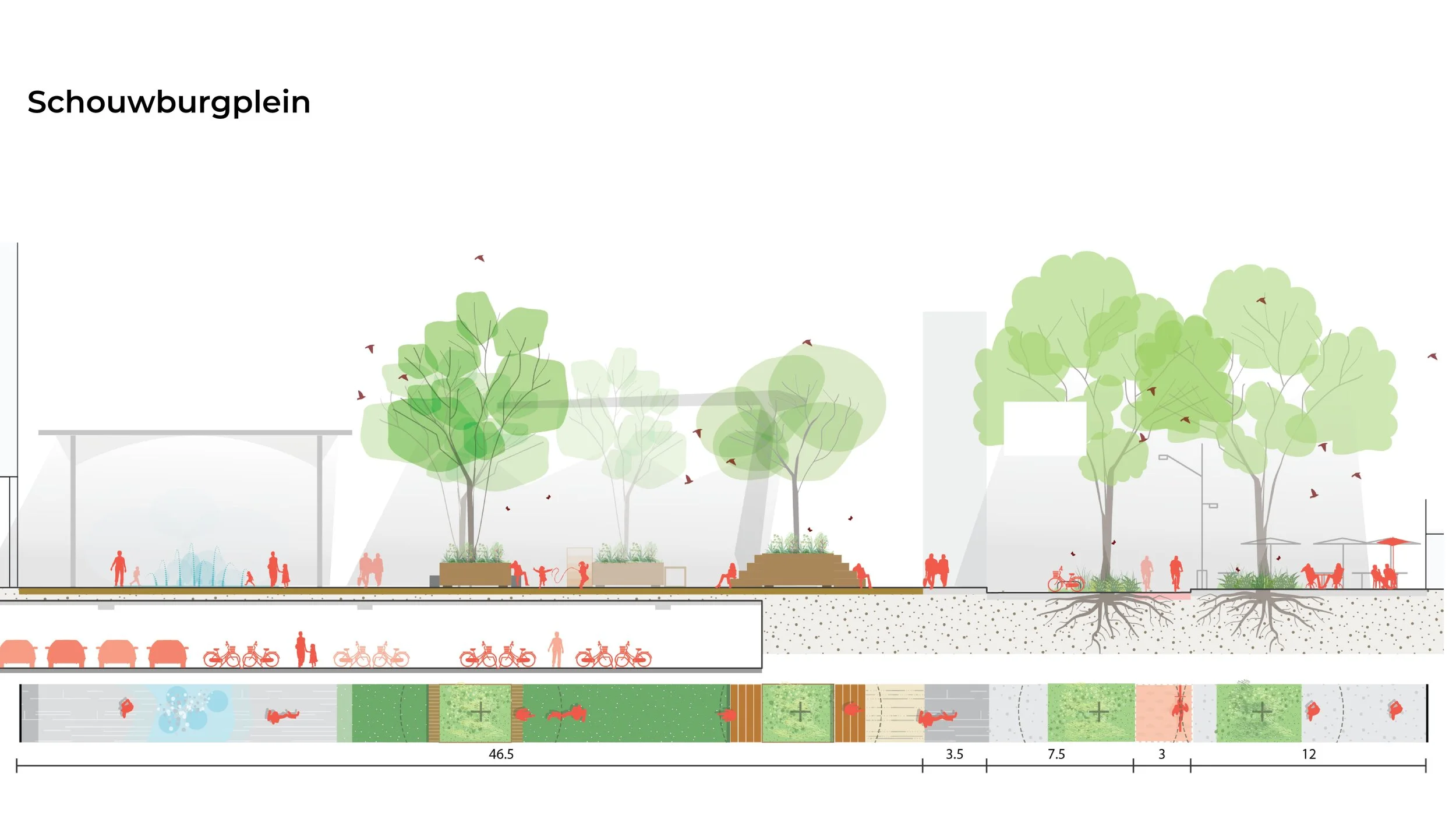
The perspectives have been translated spatially into green structure maps for both public space and the built environment. The aim is to provide direction and coherence for future projects. Principle cross-sections for the city centre have also been developed. Wide roads are transformed into lush green boulevards with planting beds and tree lanes. In urban streets, parking spaces and overly wide pavements make way for elongated green strips with more trees. Service courtyards become green courtyards. Buildings support climbing plants, and flat roofs are fitted with green roofs.
Opportunities
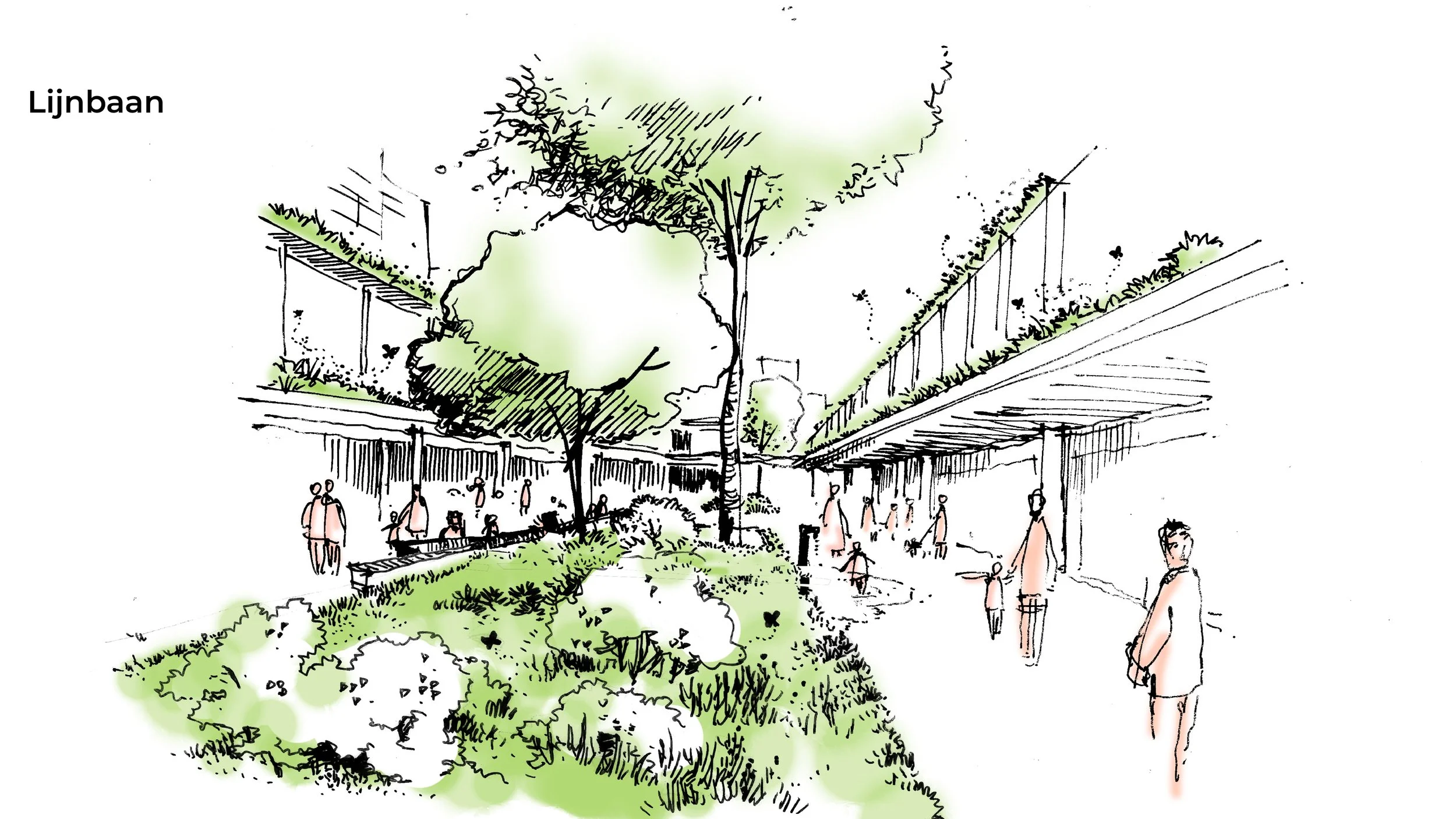
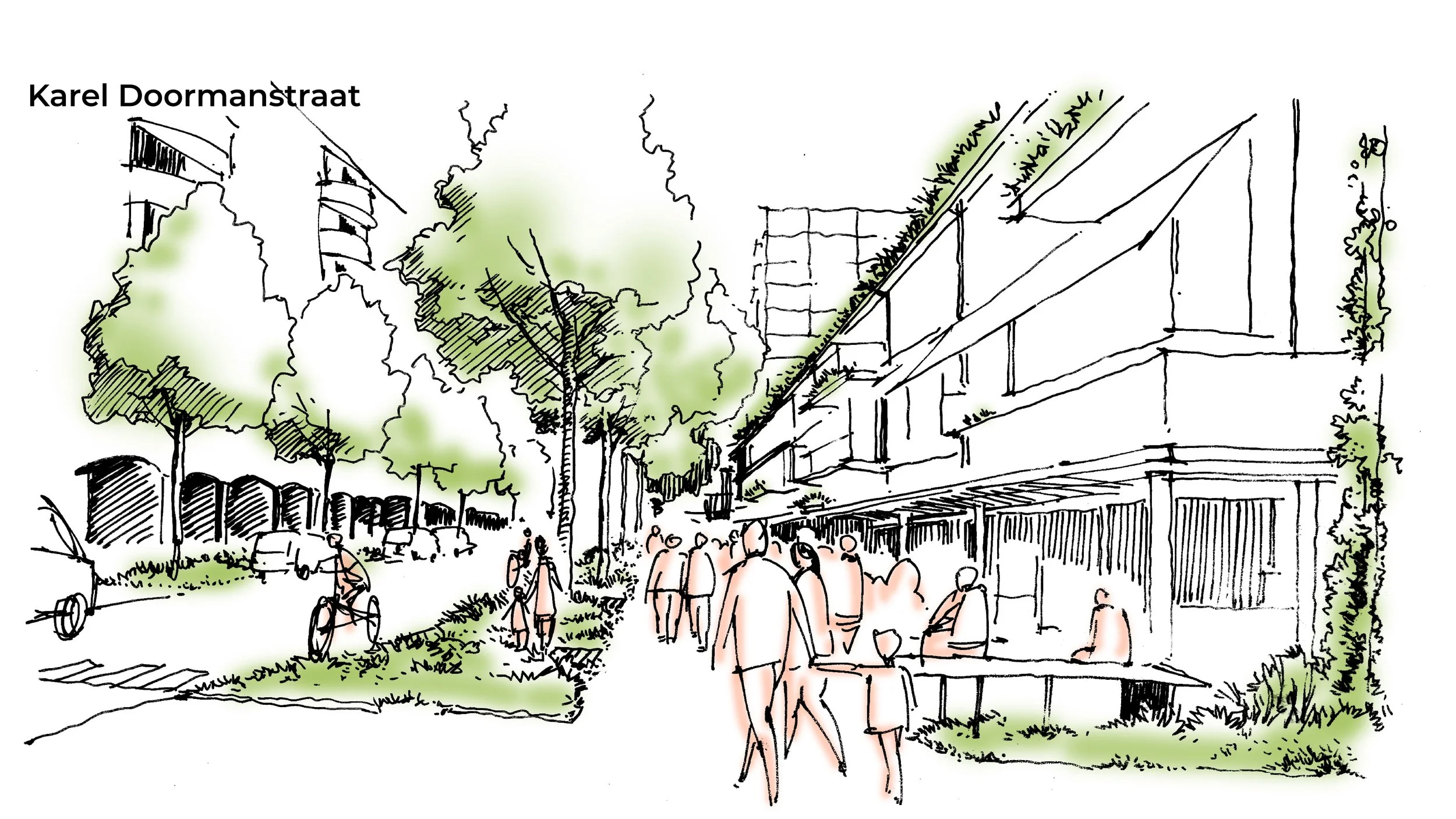
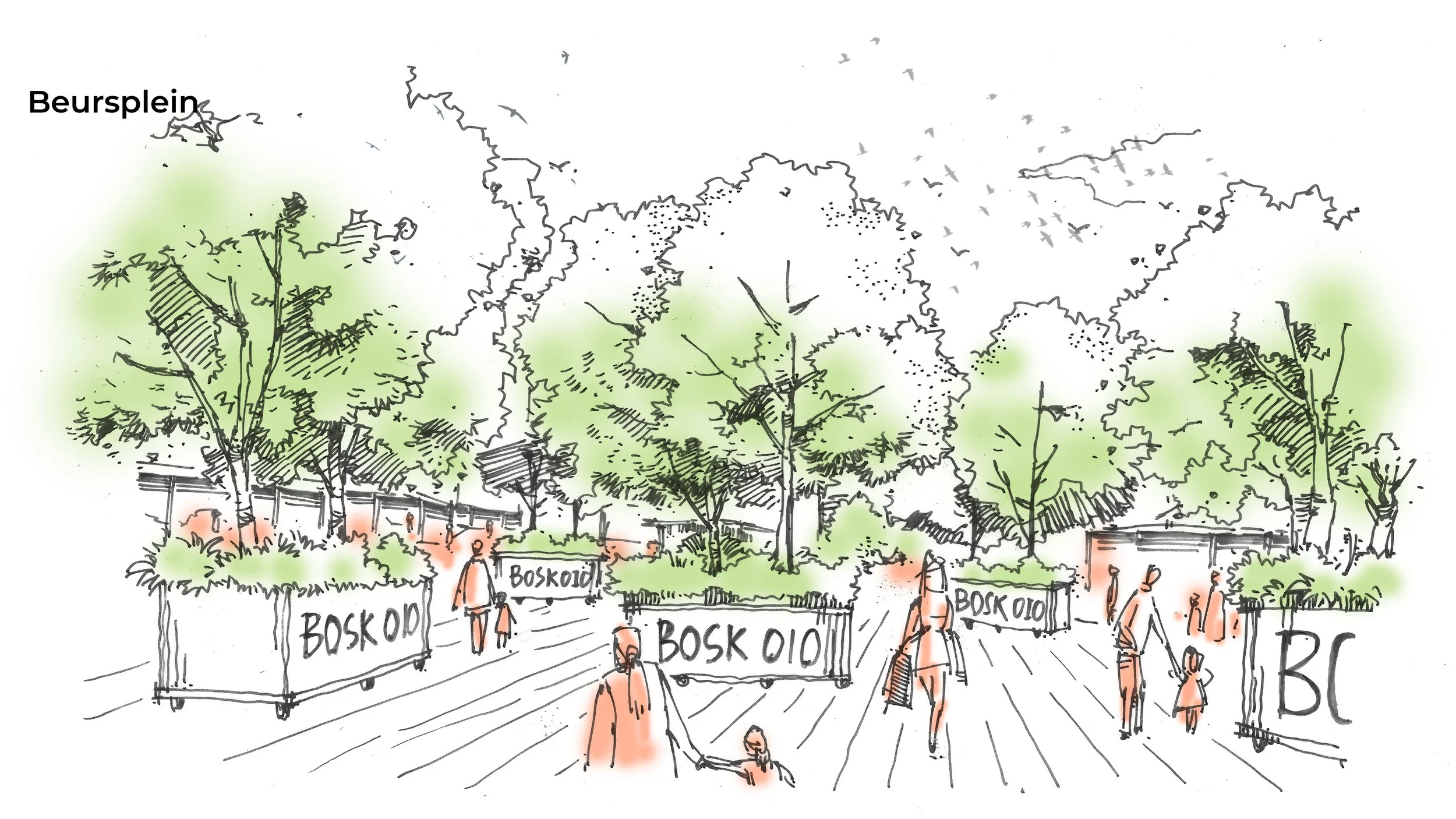
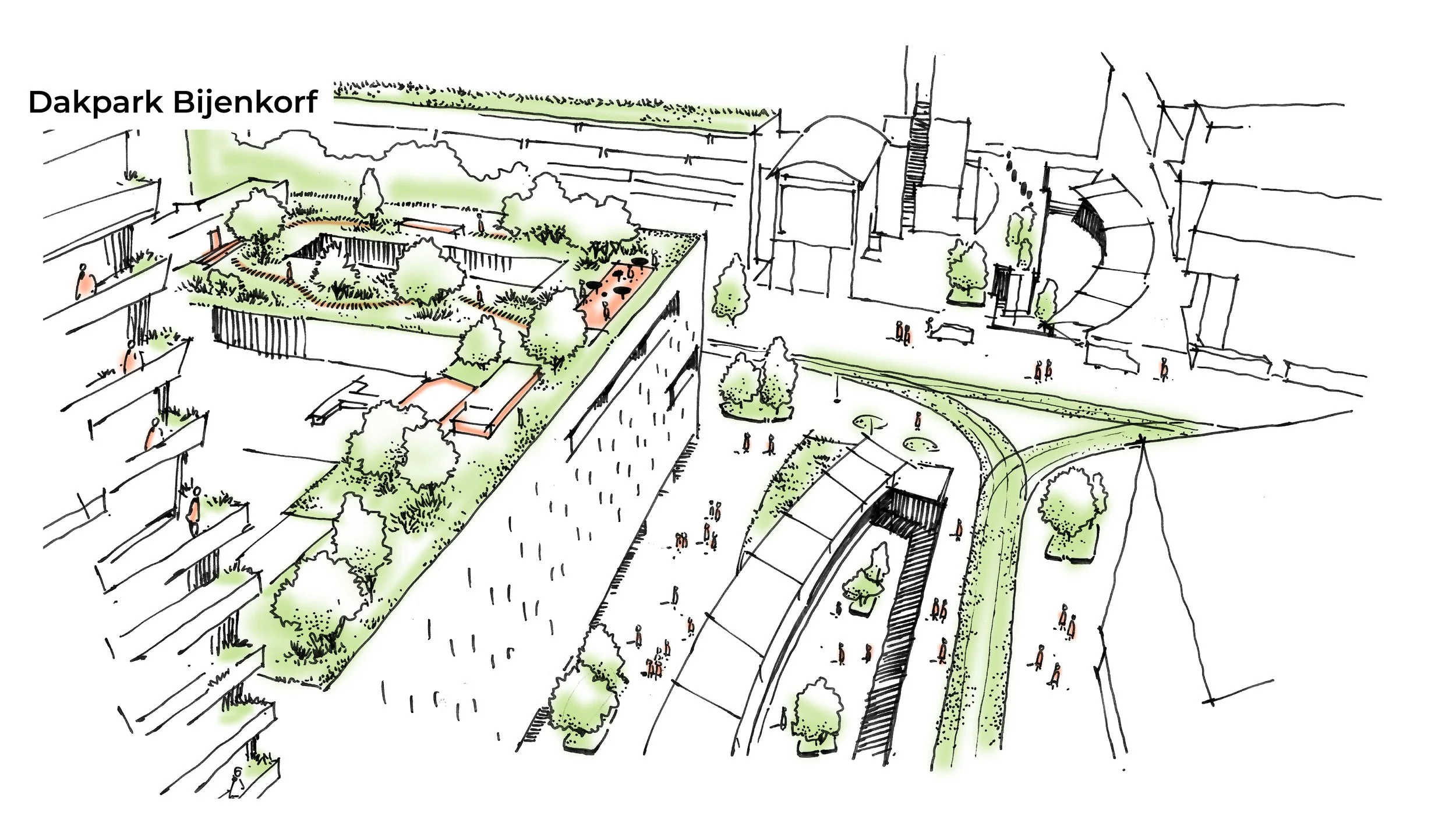
Finally, four promising projects are presented. On the Lijnbaan, the necessary replacement of trees is used as an opportunity for a more radical natural redesign, featuring long planting beds and a diverse new tree population. The Karel Doormanstraat gains an improved quality of stay through additional trees and planting areas. The roof of De Bijenkorf could become a beautiful (semi-)public rooftop park. And the mobile forest BOSK (by Bruno Doedens) could find a temporary location at Stadhuisplein, Schouwburgplein, or Beursplein.