IABR Atelier Delta Rijnmond-Drechtsteden 2100
Rotterdam, The Netherlands
Location | Rotterdam, The Netherlands
Year | 2026
Client | International Architecture Biennale Rotterdam
Status | Vision, study complete
Publication | Final report
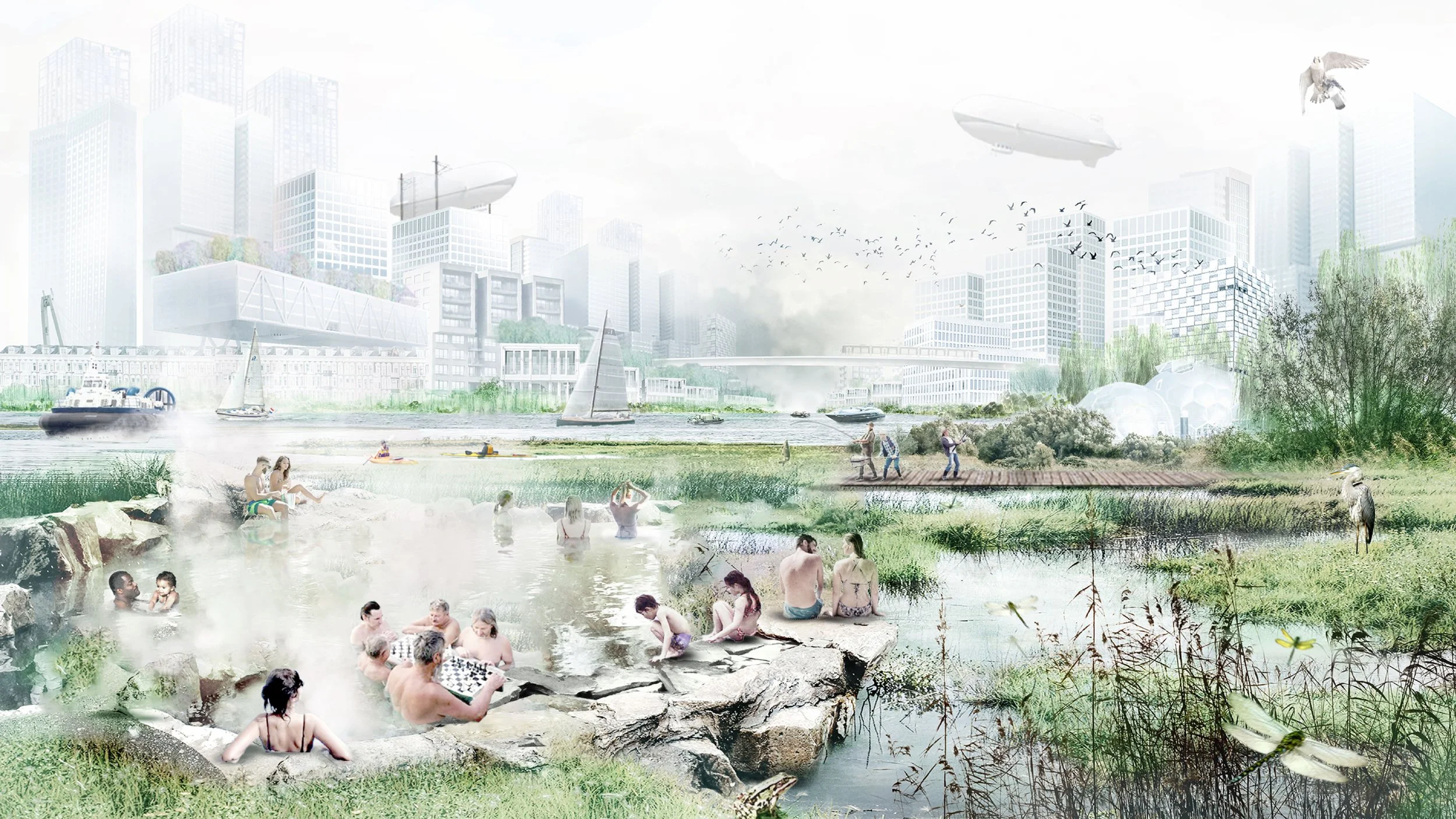
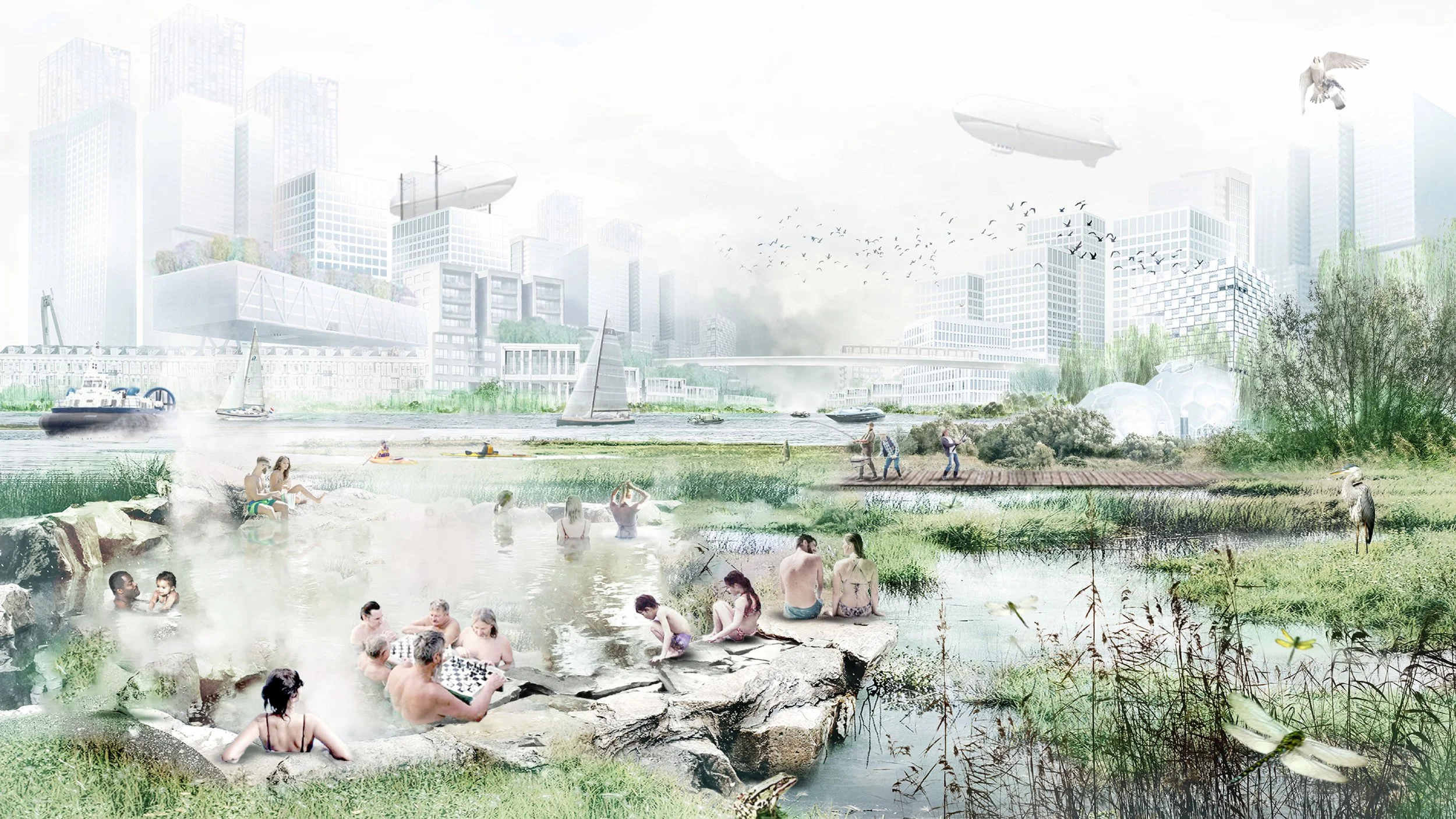
The Rijnmond-Drechtsteden region faces growing challenges to its water safety. The current Dutch Delta strategy is considered robust until around 2070, even under an extreme climate scenario. But what comes next? Rising sea levels, extreme river discharges, land subsidence, and climate change will increasingly test the region’s resilience. To explore what lies beyond 2070, the IABR Atelier Deltaprogramma Rijnmond-Drechtsteden 2100 was launched. The research was carried out by H+N+S, PosadMaxwan and De Urbanisten. We were asked to conduct further research into a closed watersafety strategy for the region: the polder strategy.
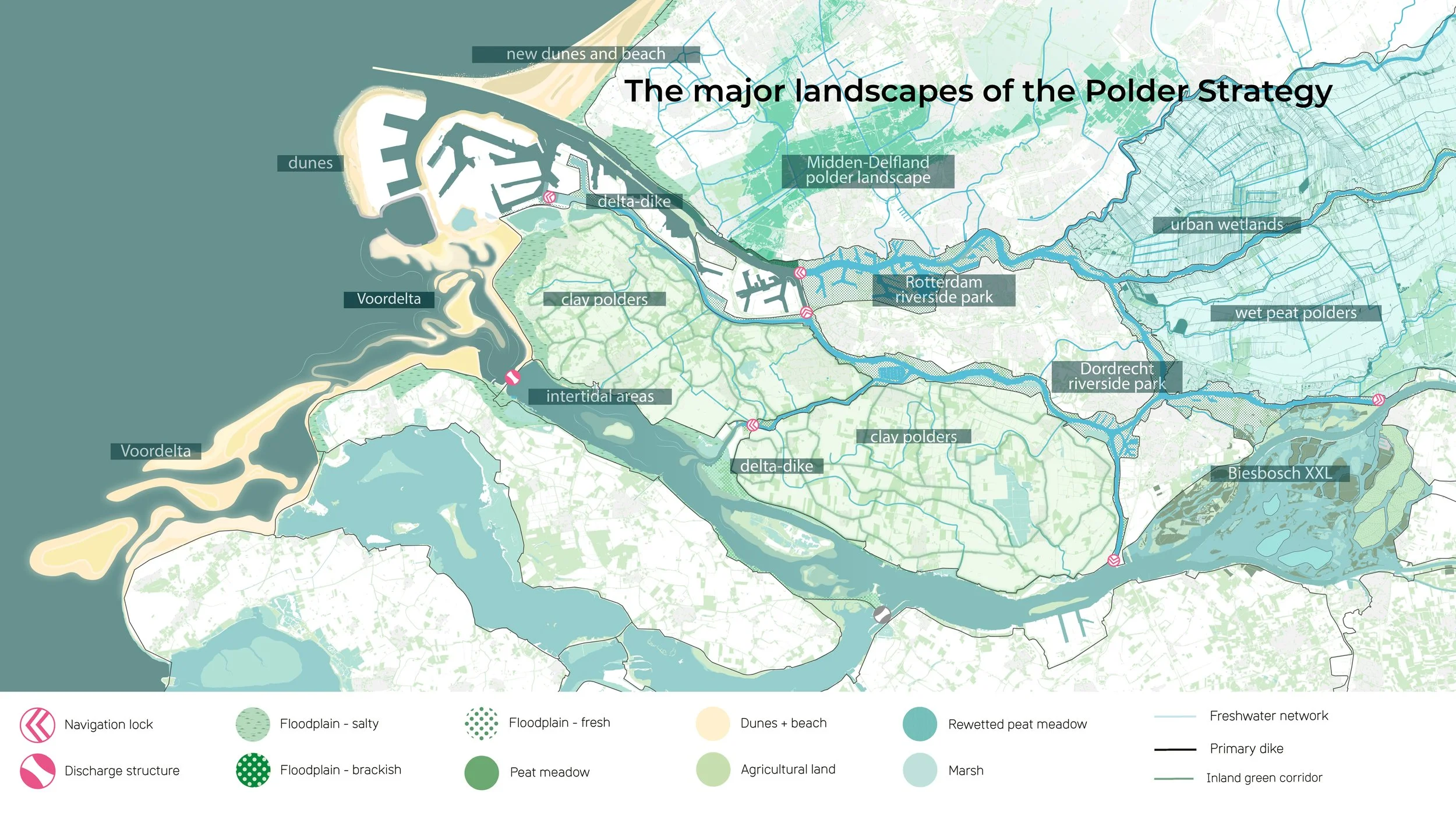
The Polder Strategy protects the Netherlands from coastal and river flooding through a continuous system of dunes, dikes, dams, sluices and storm surge barriers, placing cities such as Rotterdam and Dordrecht behind fixed flood defences. This would place Rotterdam and Dordrecht, among other areas, behind locks. Building on the Dutch tradition of living with water, it combines flood safety with active water management.
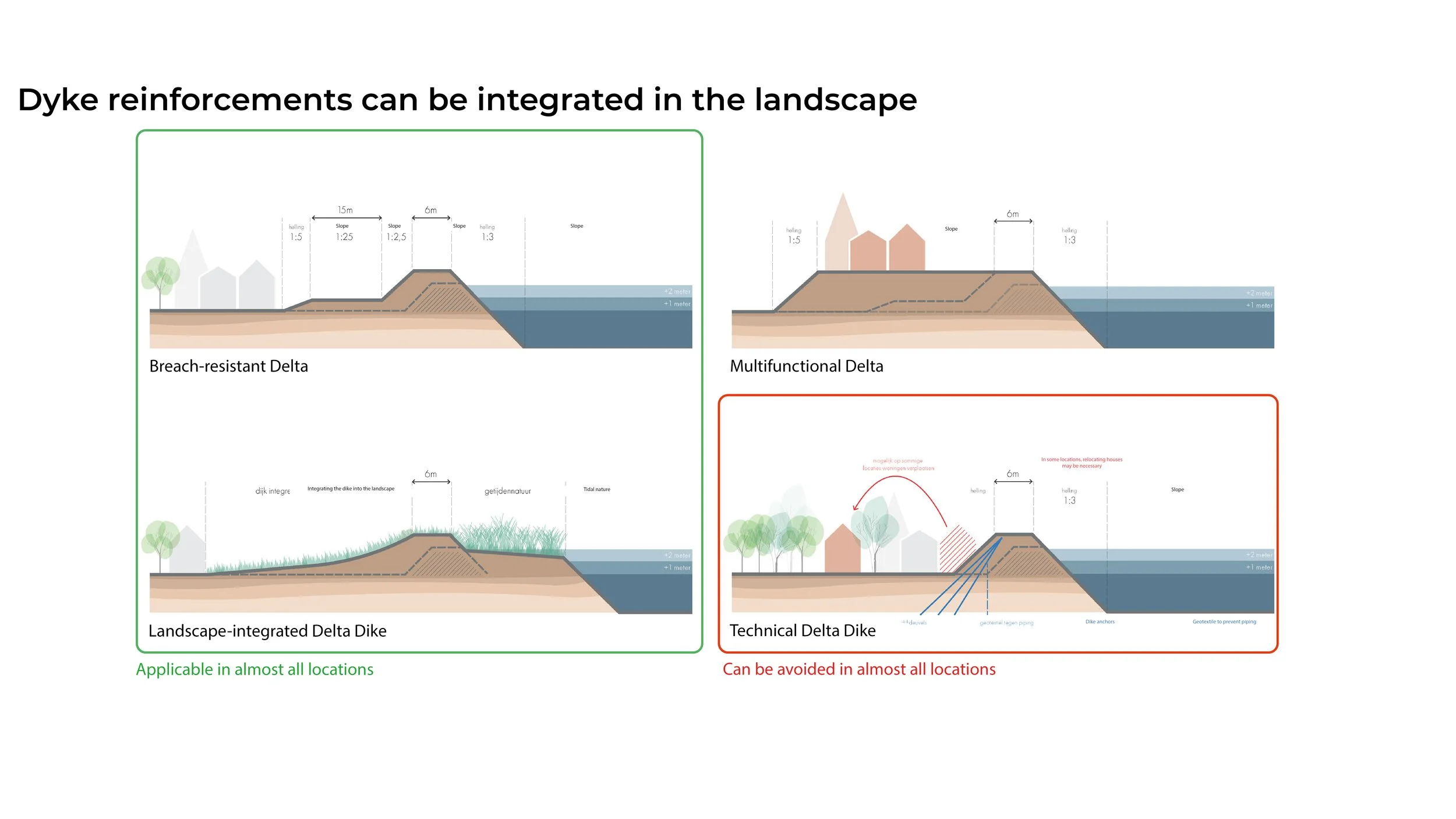
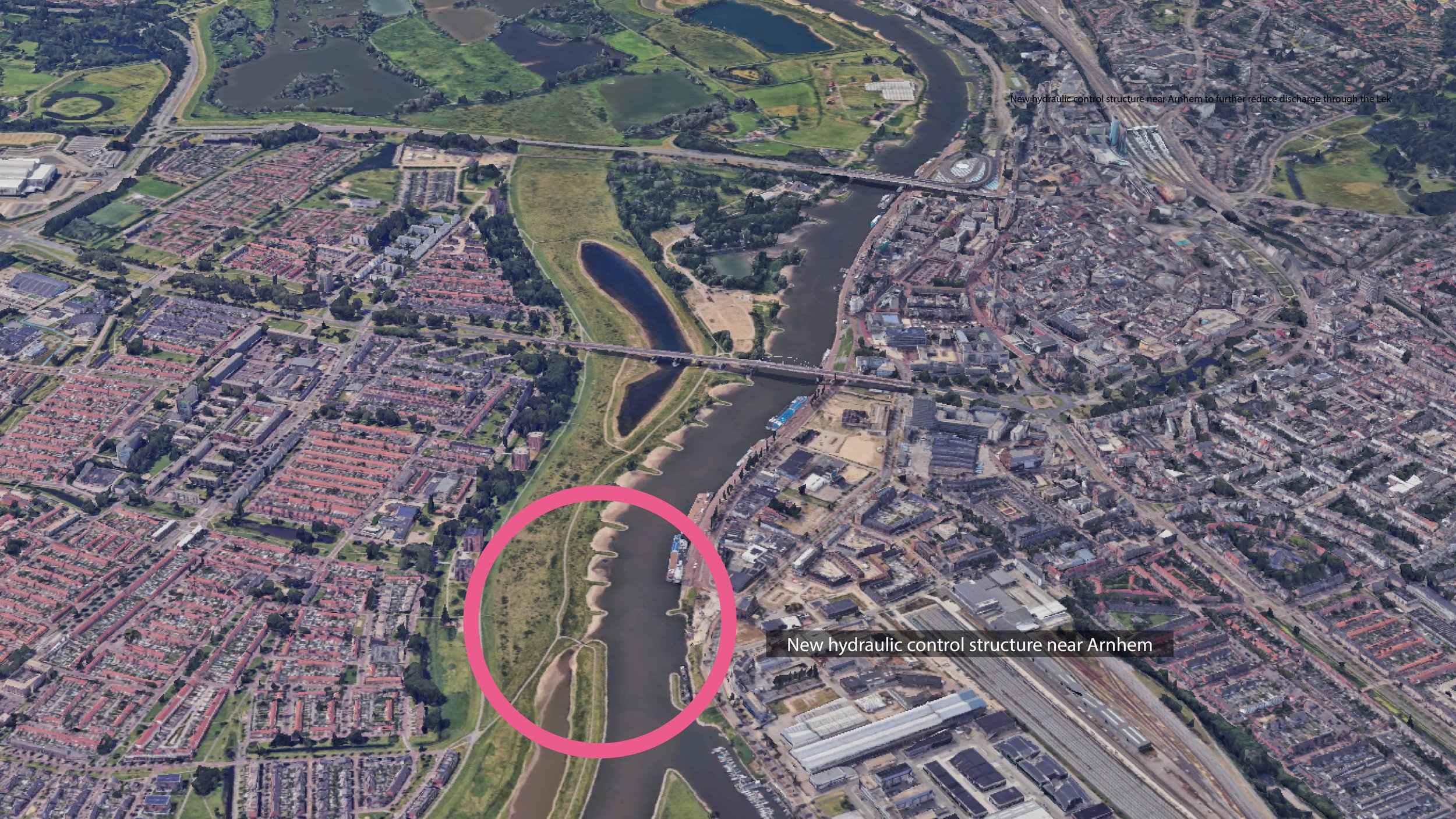
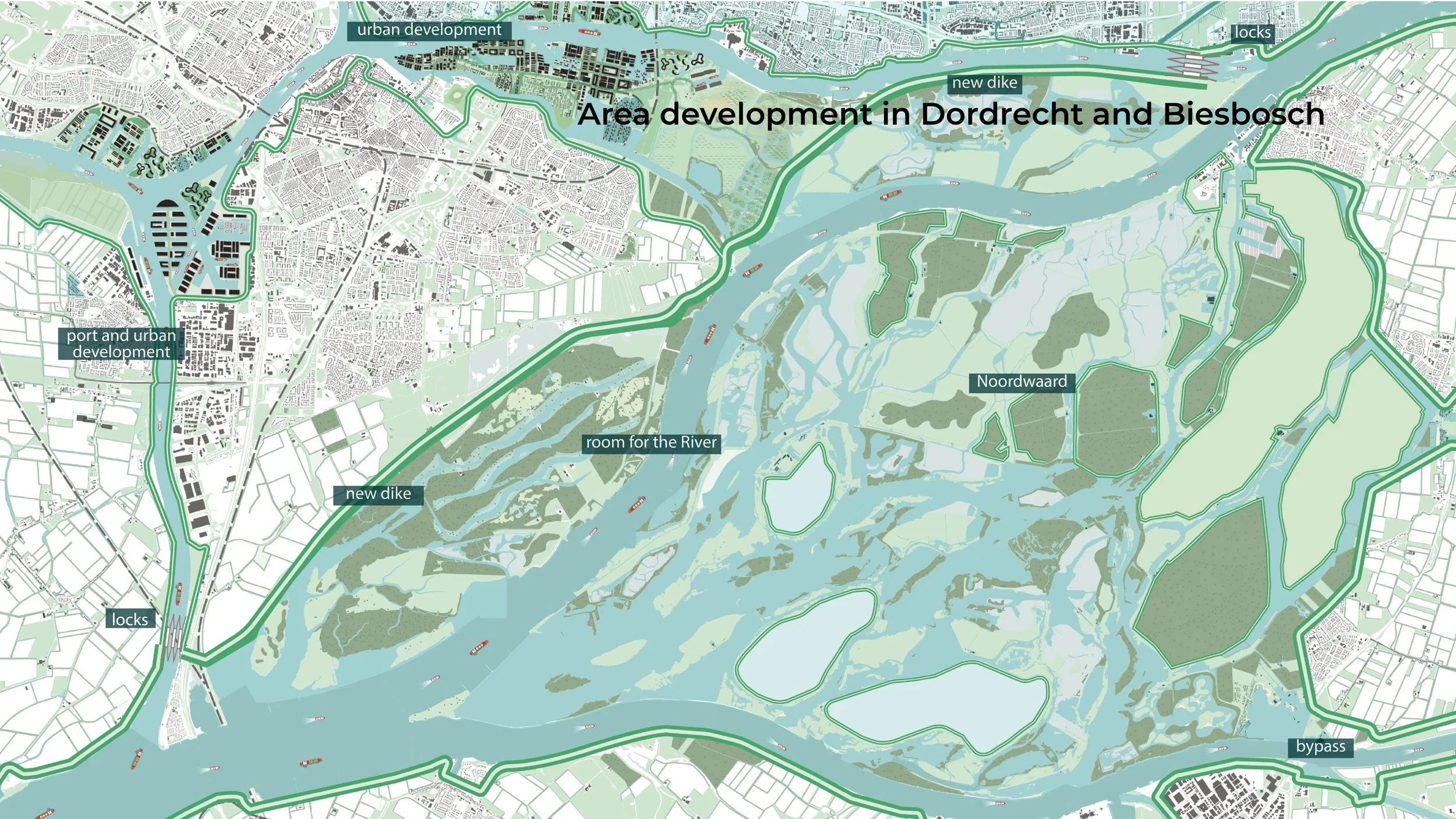
While higher dikes remain necessary along the Haringvliet and Merwede, dams and sluices reduce the need for major dike reinforcements elsewhere and permanently protect many currently unembanked areas. The Polder Strategy redirects more Rhine discharge to the sea via the Waal, Merwede and Haringvliet, relieving the Lek and allowing the Haringvliet barrier to open more frequently and for longer periods
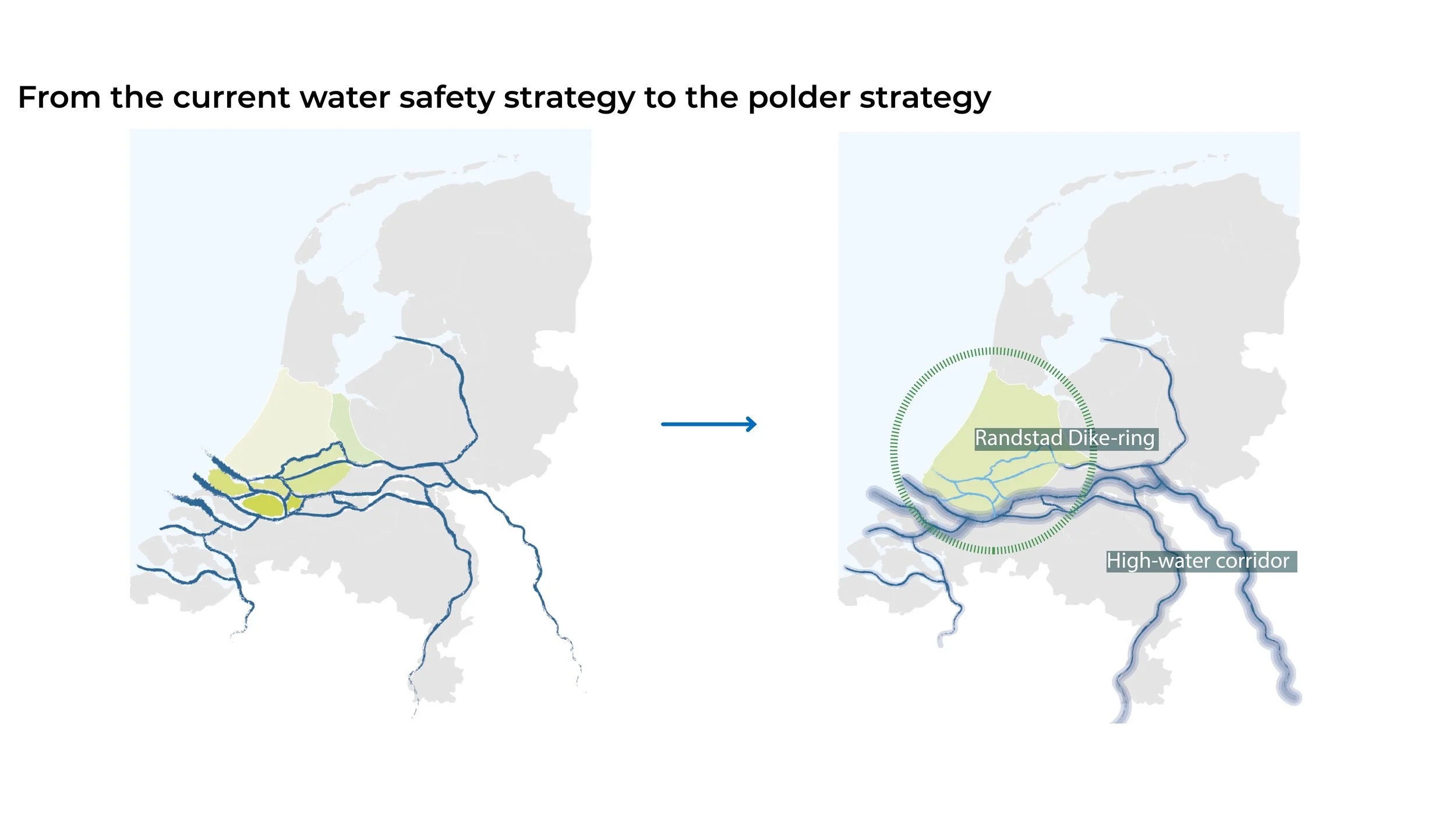
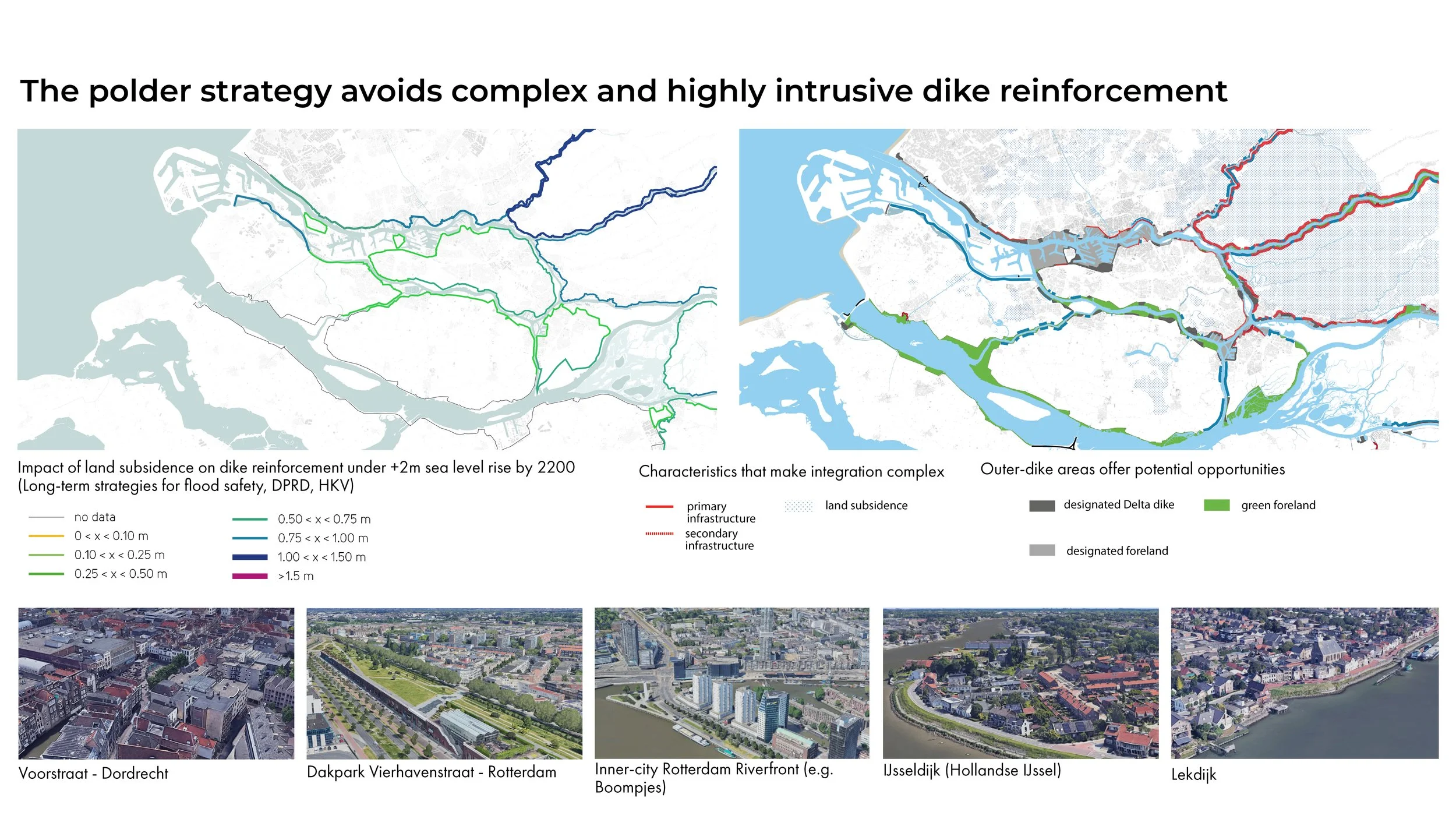
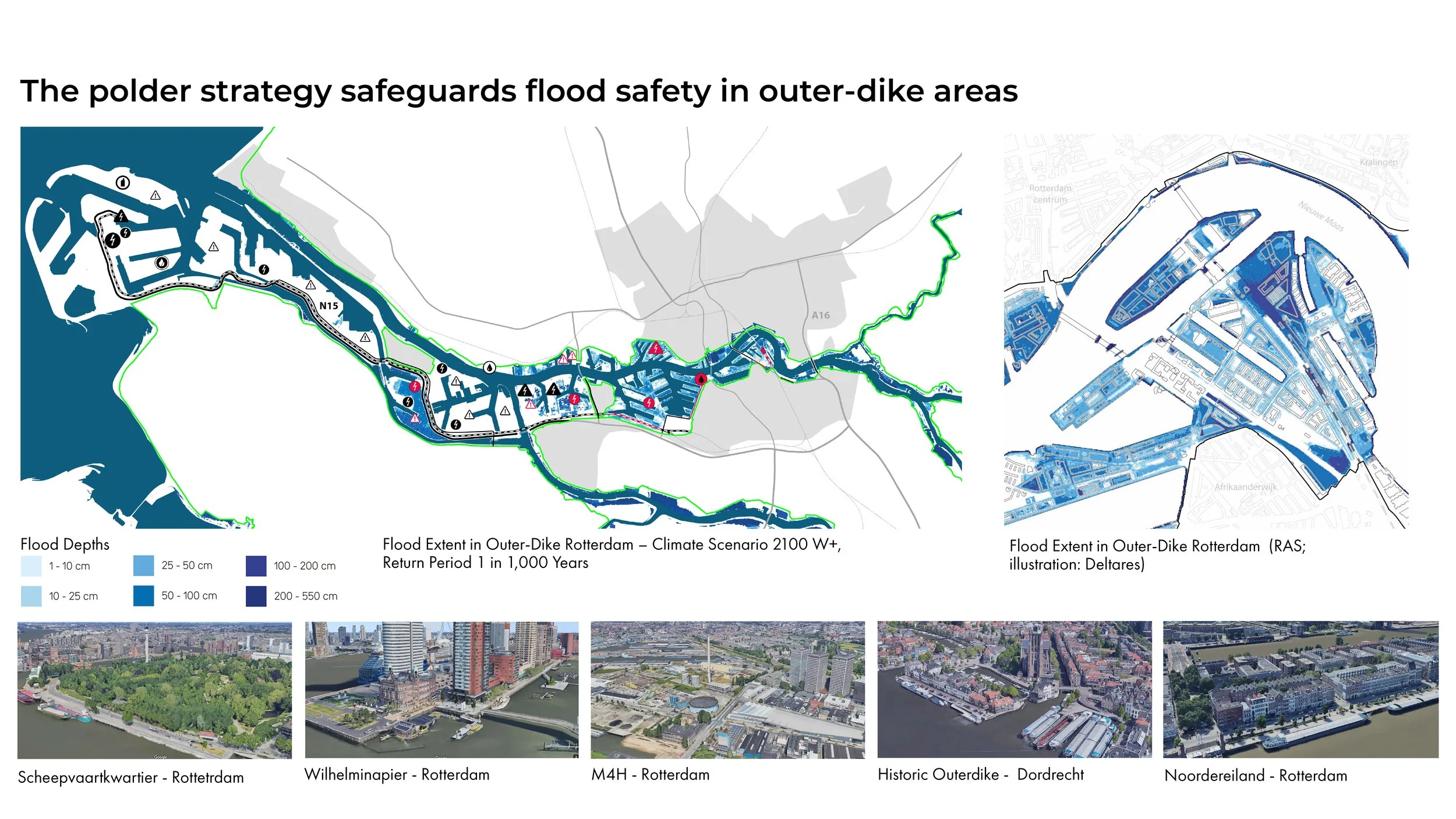
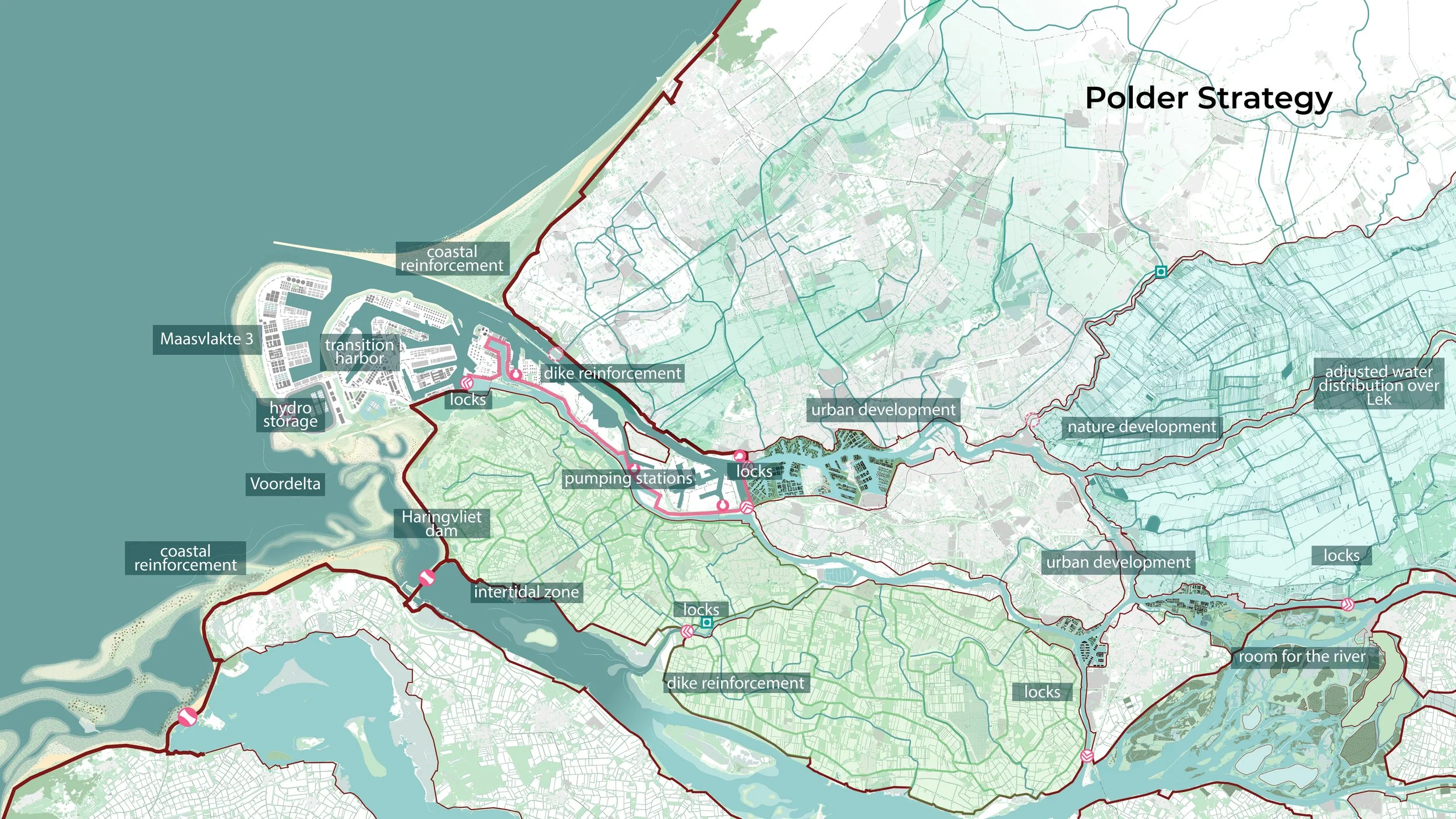
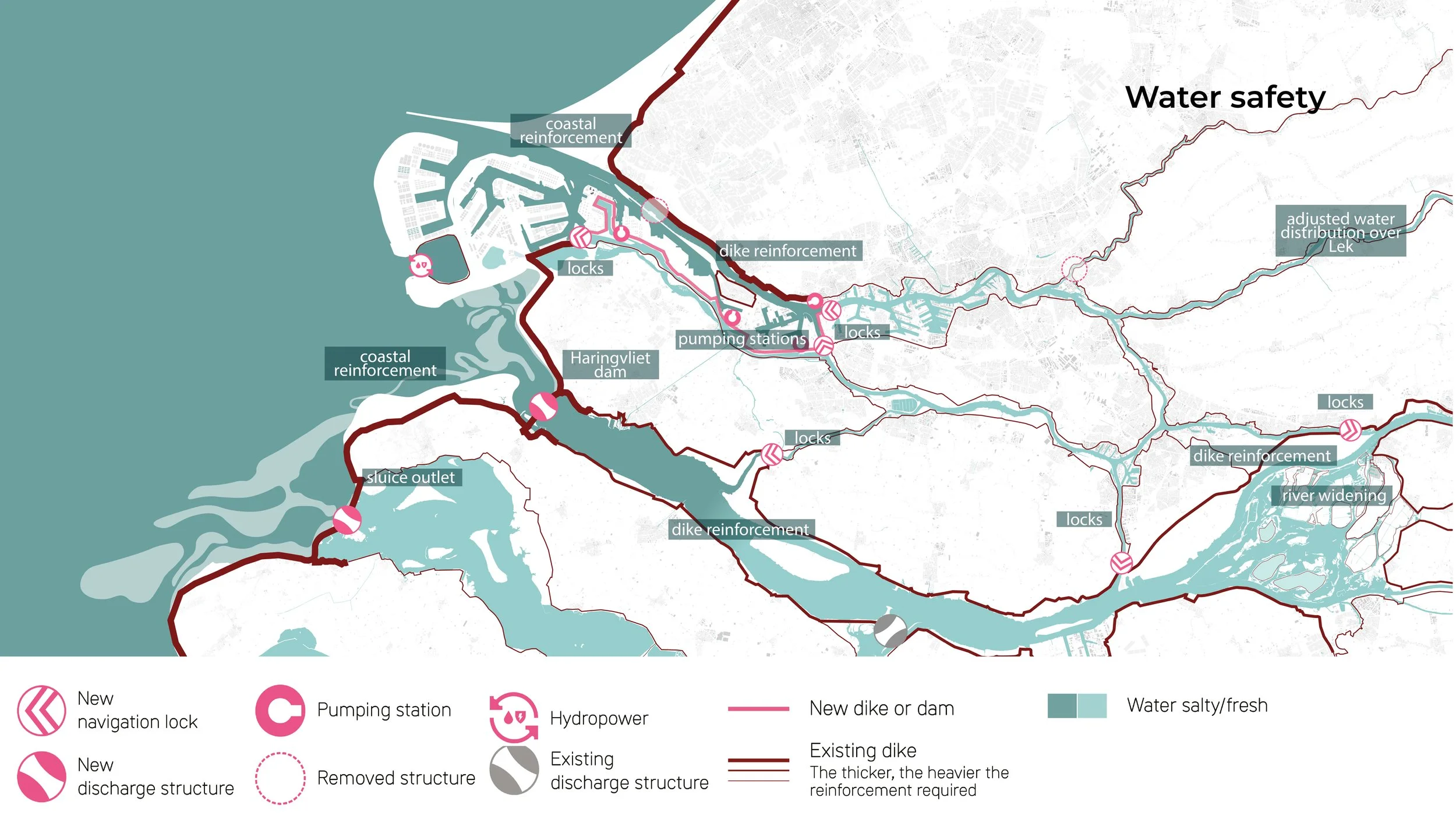
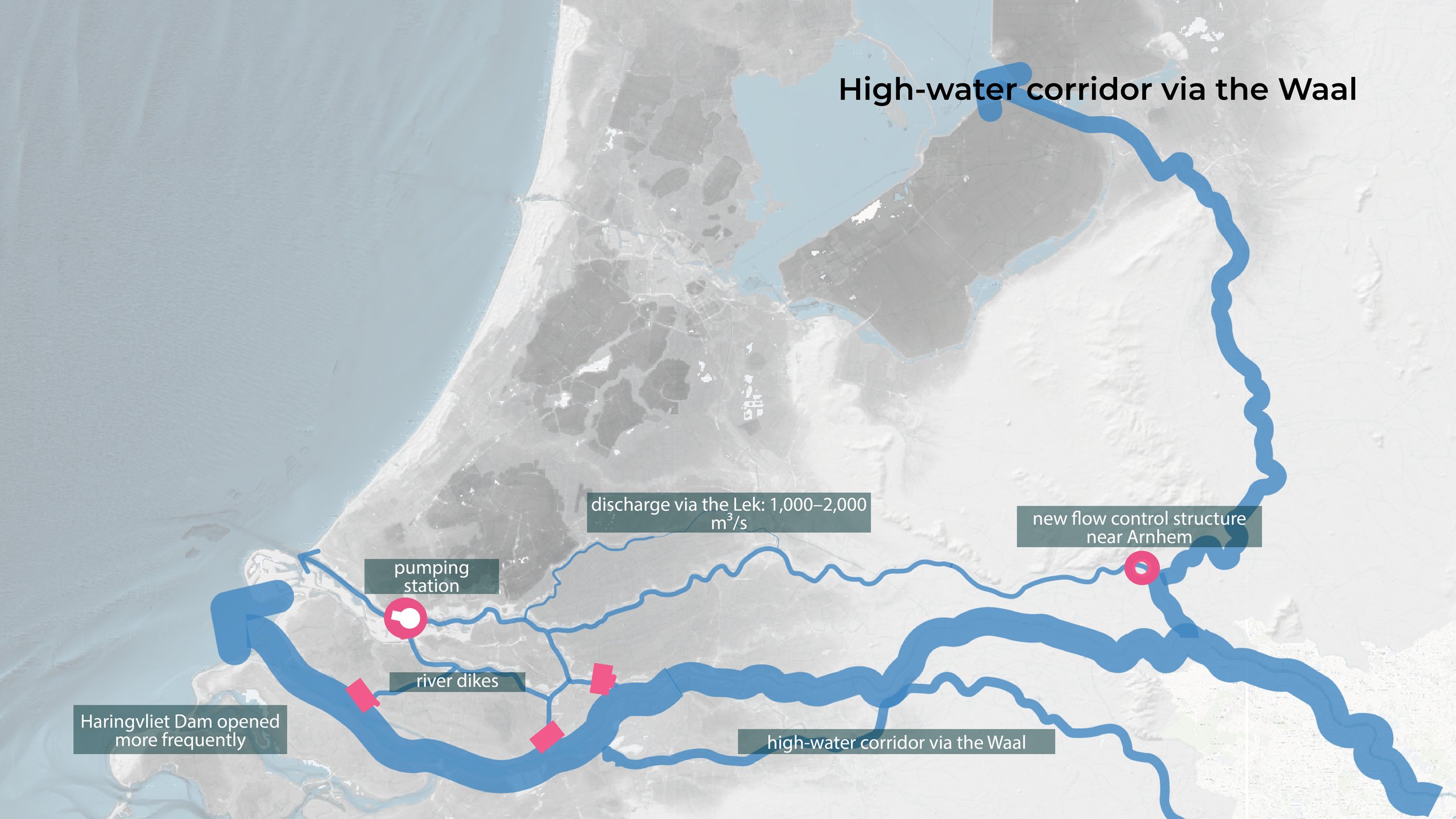
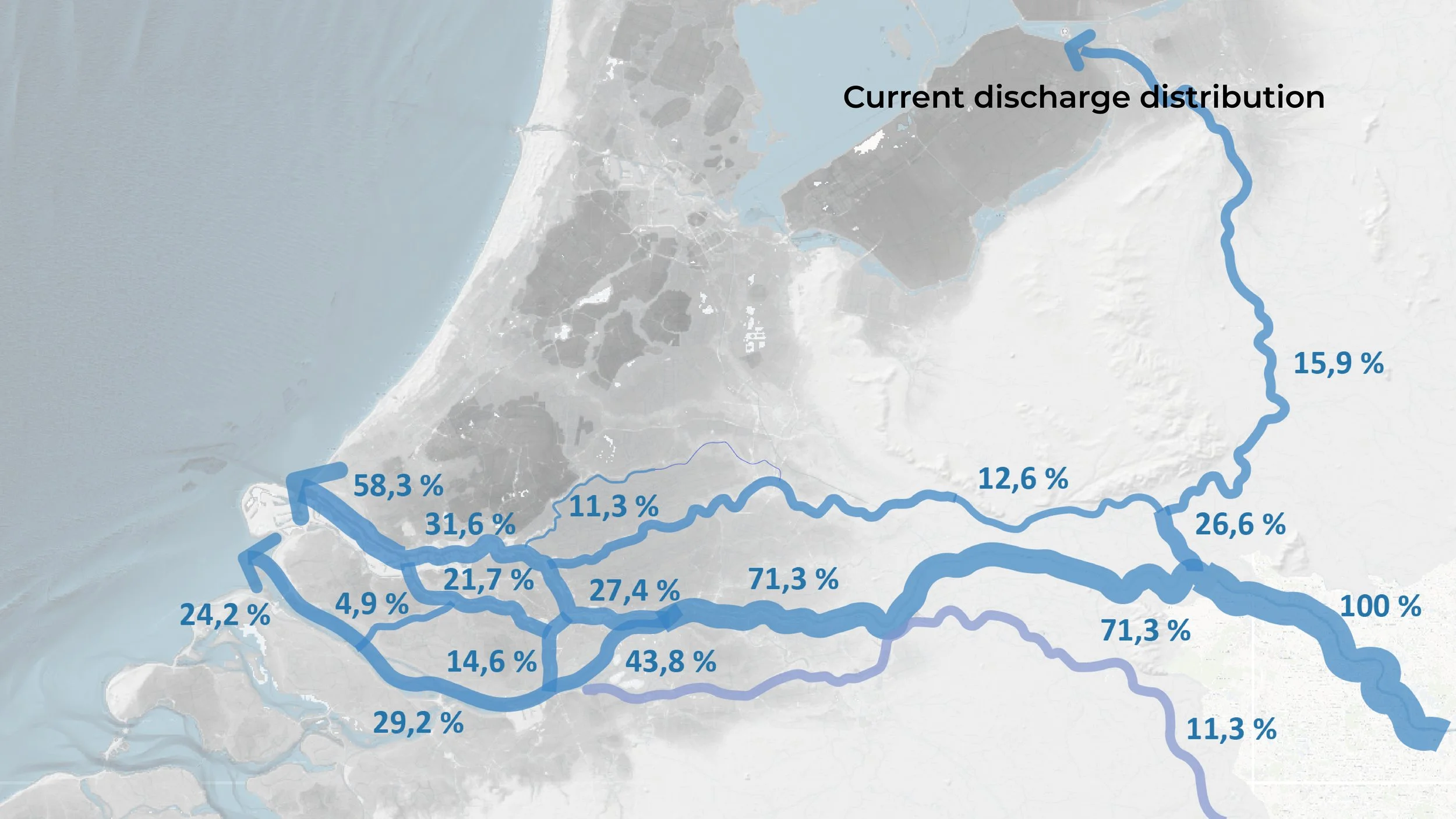
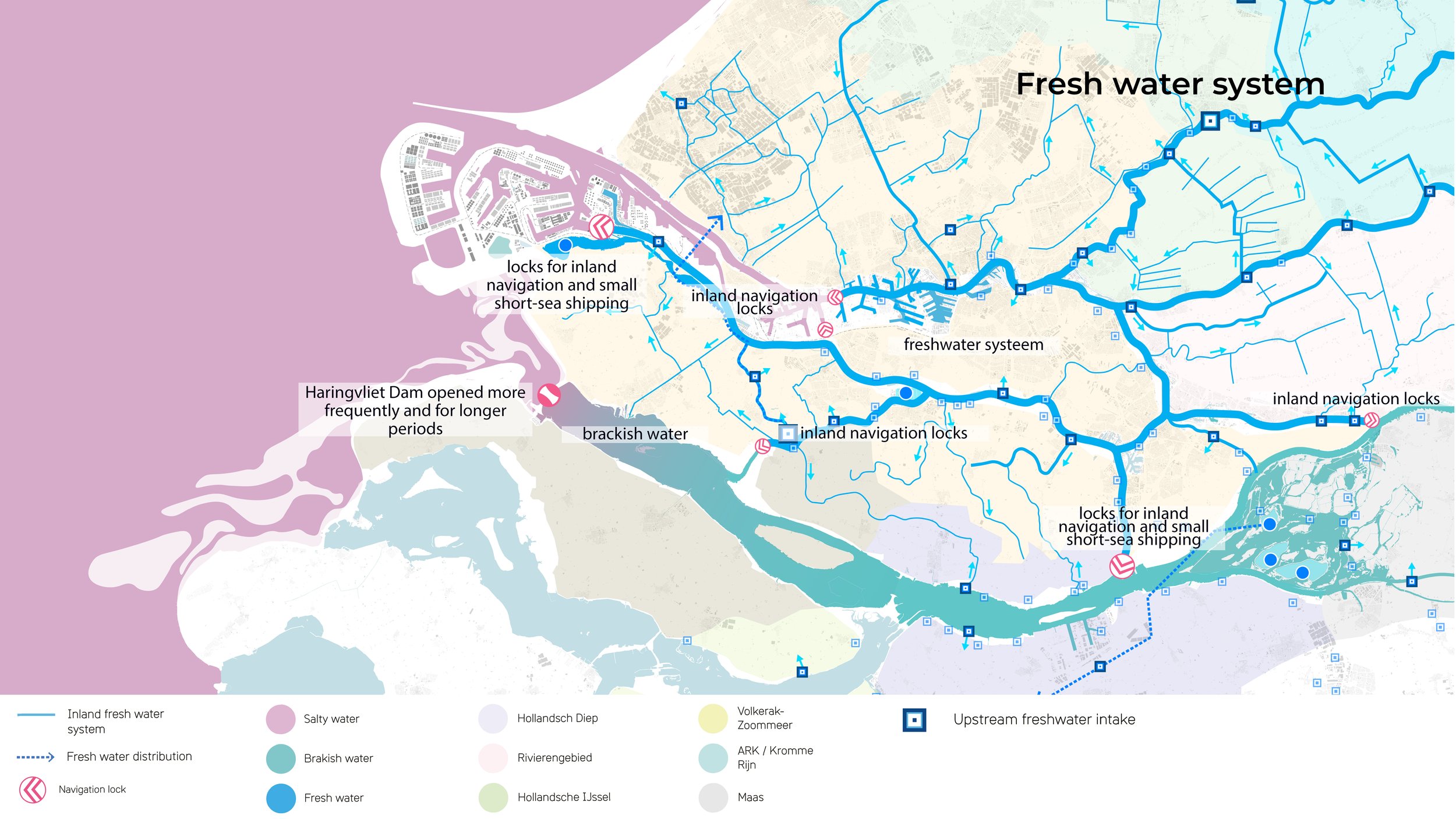
Within the enclosed system, the Nieuwe Maas and Oude Maas function as a freshwater reservoir, storing excess rainfall, while Rhine discharge is redirected via the Waal, Merwede and Haringvliet. Sluices prevent saltwater intrusion and reduce pressure on the Lek. More frequent opening of the Haringvliet Dam restores tidal dynamics, strengthens estuarine ecosystems and creates new opportunities for riverine nature around Dordrecht and the Biesbosch.
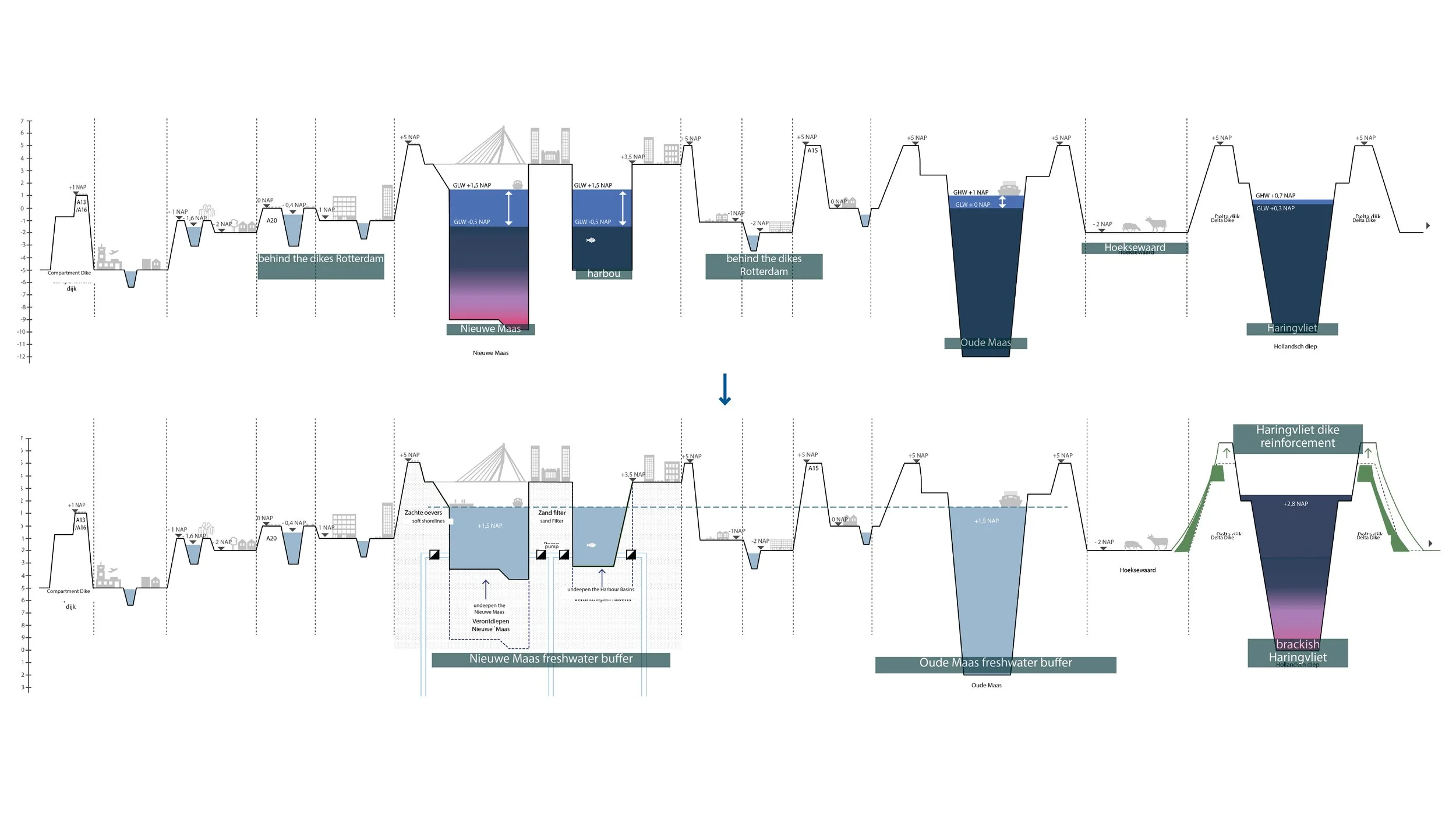
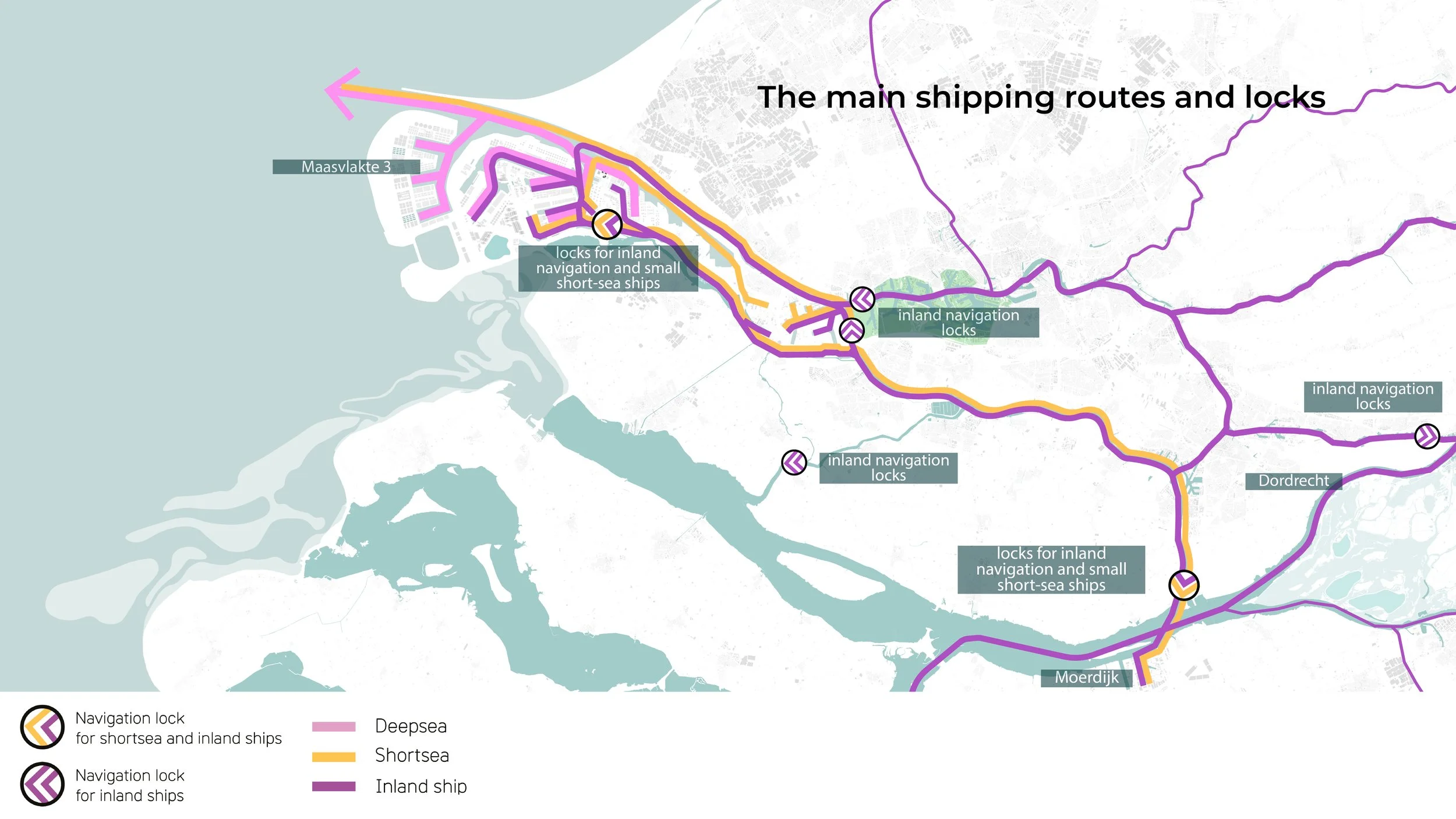
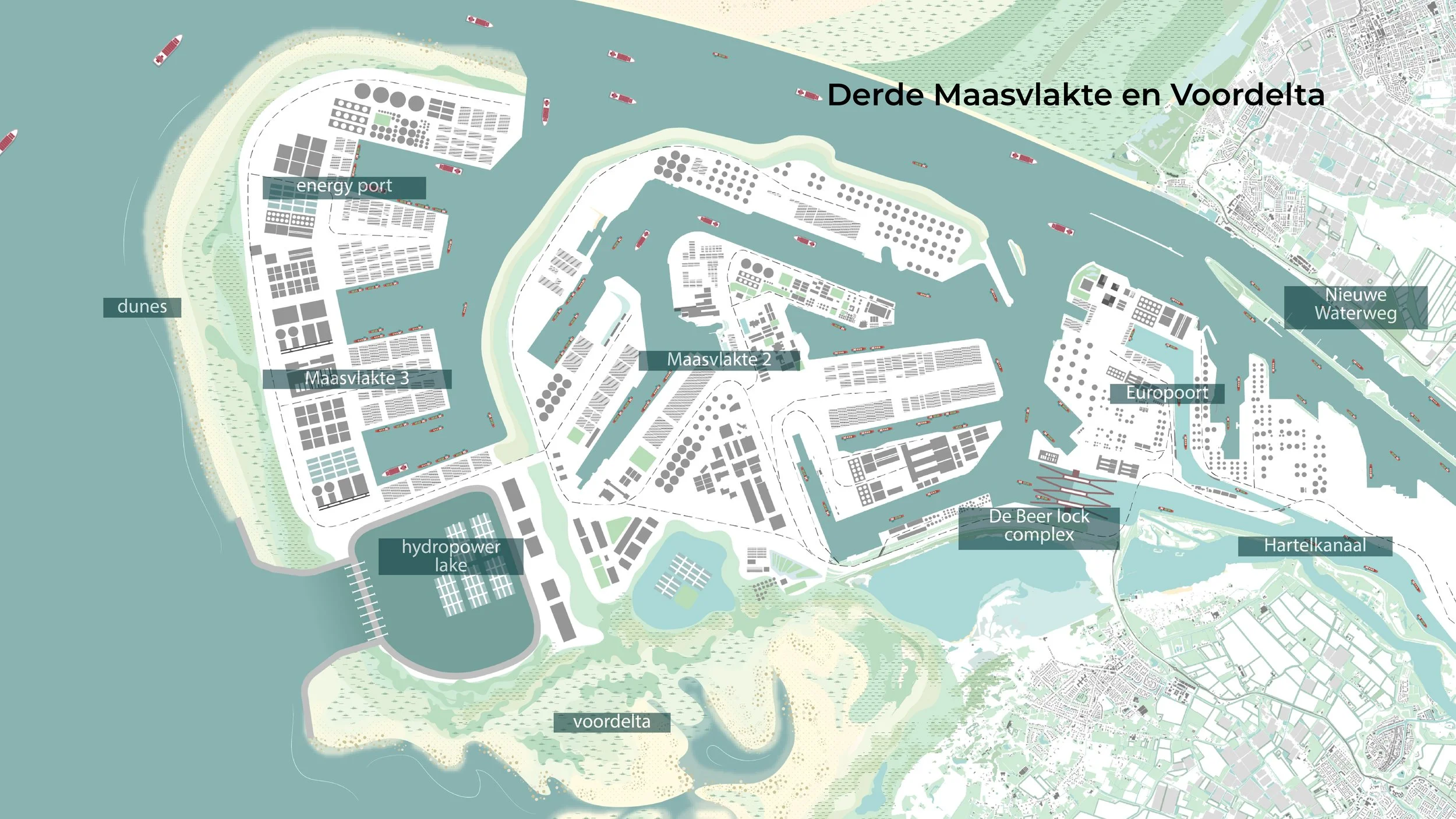
The strategy also anticipates a post-fossil Port of Rotterdam with a third Maasvlakte. Large seagoing vessels remain outside the sluices, while inland and smaller seagoing vessels continue to serve the hinterland via new transshipment systems. This requires a far-reaching transformation of the ports, associated maritime manufacturing industries and logistics.
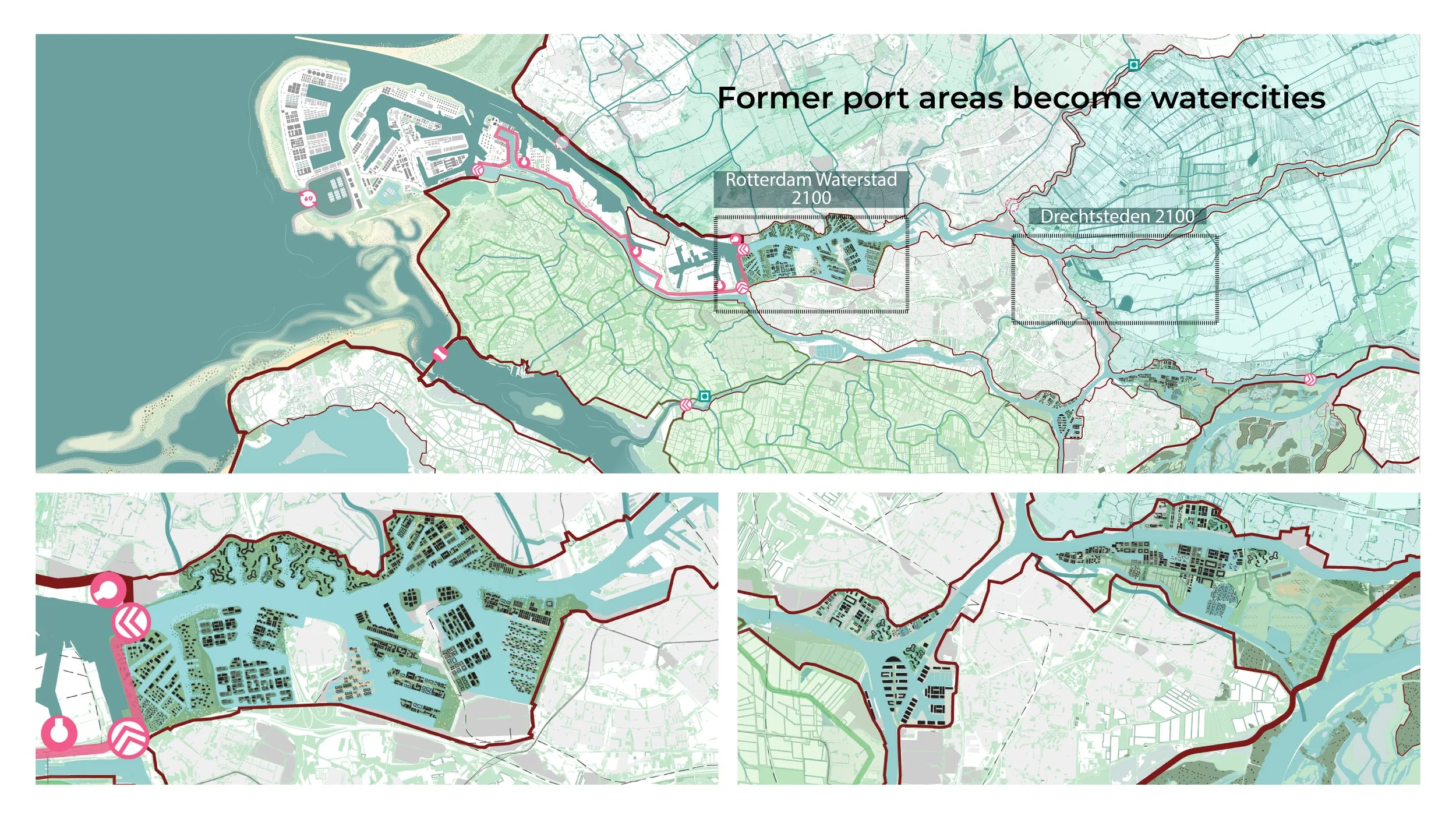
Former port areas currently outside the dikes but brought within the polder would provide an enormous amount of development space, comparable in scale to the existing city. These city harbours could accommodate a wide range of water-oriented urban living environments, inspired by cities such as Copenhagen, Stockholm, Venice and Amsterdam.
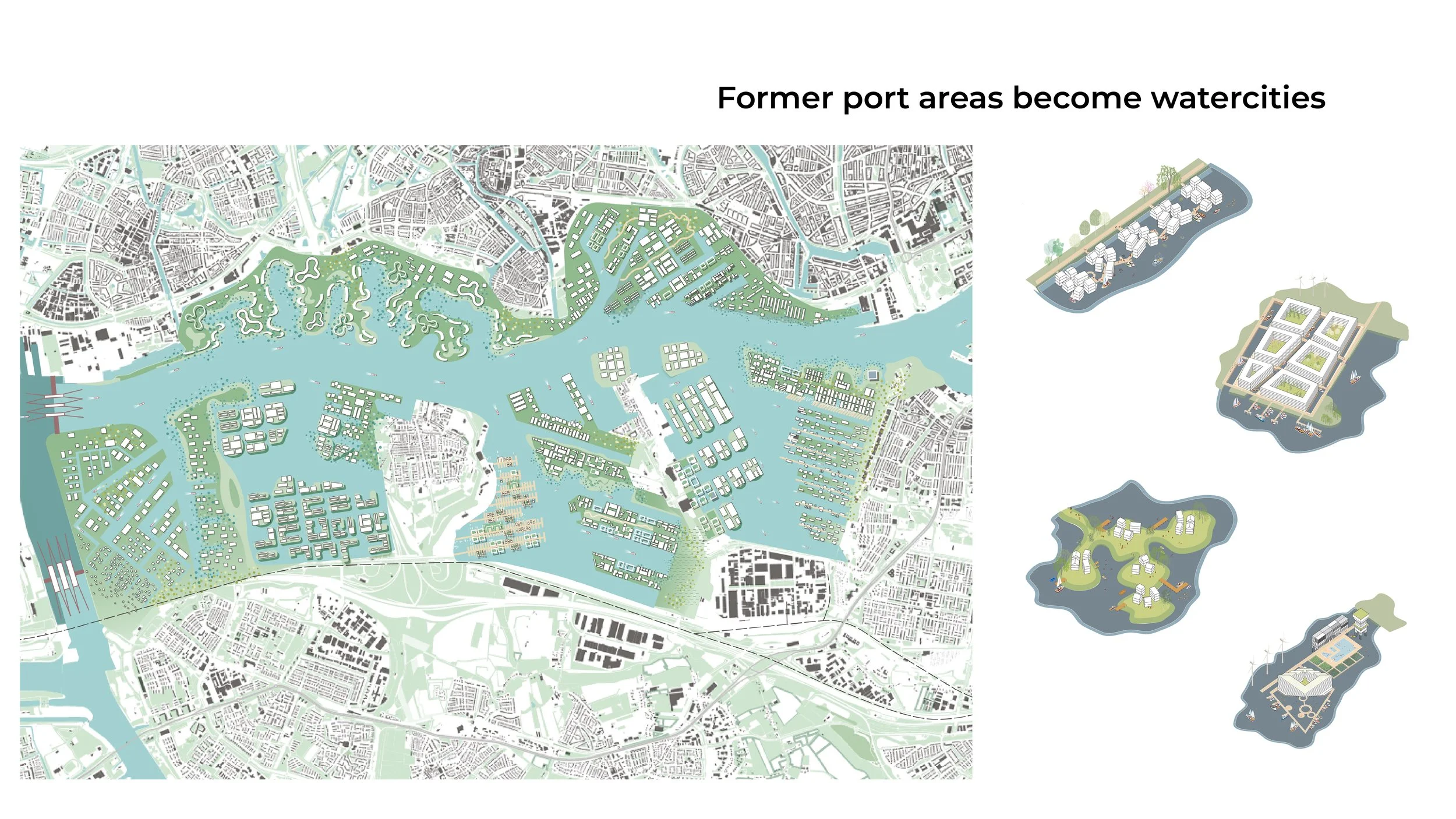
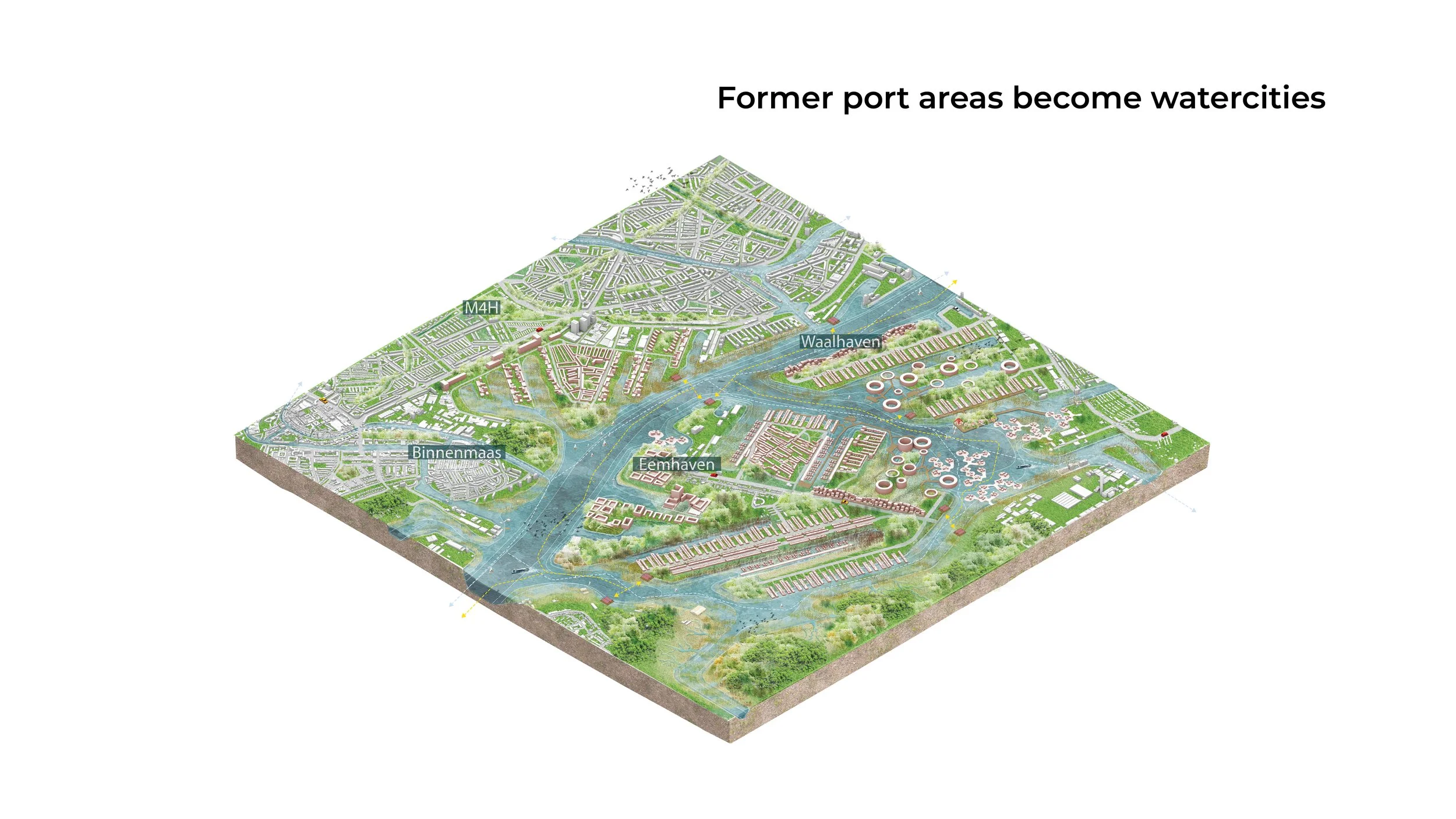
The landscape strategy combines increased river and tidal dynamics around the Haringvliet and Voordelta with a new freshwater landscape within the polder. Inside the Polder, regional landscape parks support nature, recreation and climate resilience through rewetting and freshwater supply.
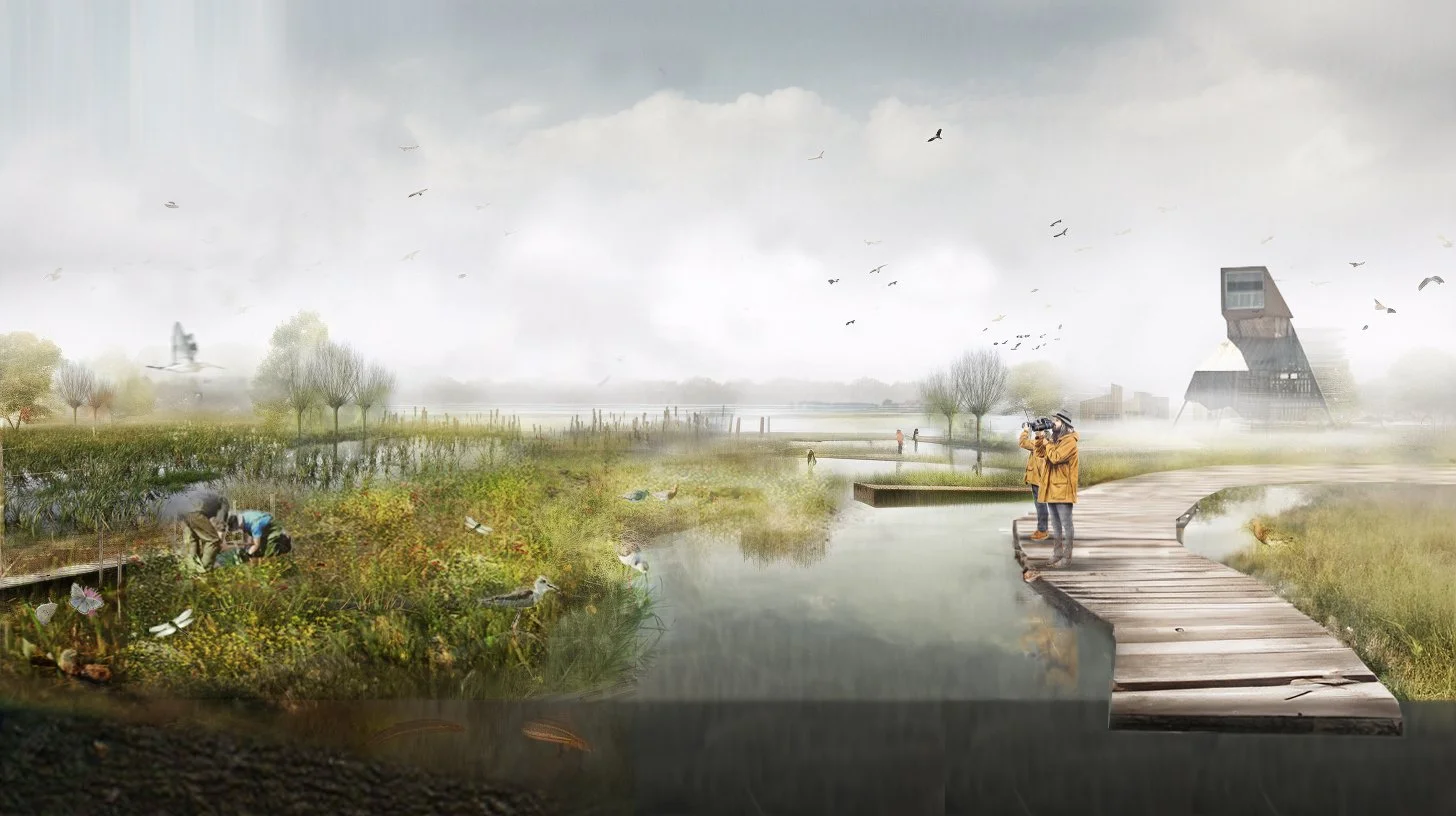
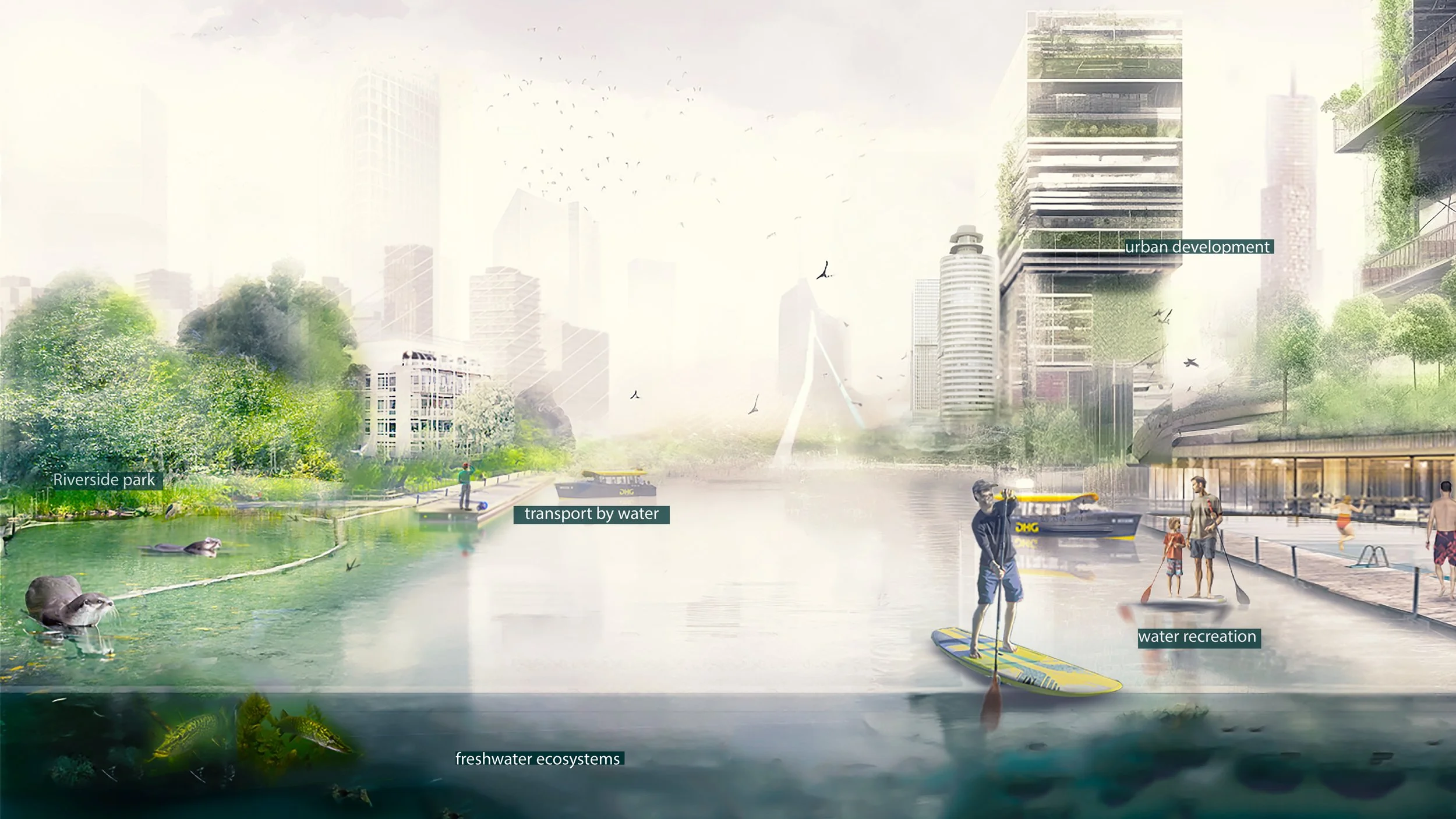
The Atelier was commissioned by the Rhine-Meuse-Drechtsteden Delta Program (DPRD), the Province of South Holland, the Port of Rotterdam, and the municipalities of Rotterdam and Dordrecht, together with Smart Delta Drechtsteden, as part of the review of the Preferred Strategy of the Rhine-Meuse-Drechtsteden Delta Program 2026. The final results of the IABR design research are featured in the IABR ‘‘SYSTEMS OF SUPPORT’’ exhibition.
The outcomes are also publicly available and compiled in this publication.