Teilingersingel
Rotterdam, The Netherlands
Location | Rotterdam, The Netherlands
Year | 2025
Client | Municipality of Rotterdam, Rotterdams Weerwoord
Collaboration | HHSK Schieland en de Krimpenerwaard, Rebel, Buro Bergh
Status | Vision, study complete
In 2022 Rotterdams WeerWoord published Weer Verandert Alles, a book that serves as both an invitation and a tool to discuss Rotterdam’s climate-resilient future beyond 2050. To further elaborate this perspective for dense, historic urban areas and their green-blue structures, De Urbanisten were asked to investigate how Teilingerstraat could transform into Teilingersingel and how this could contribute to a Singelplan 2.0.


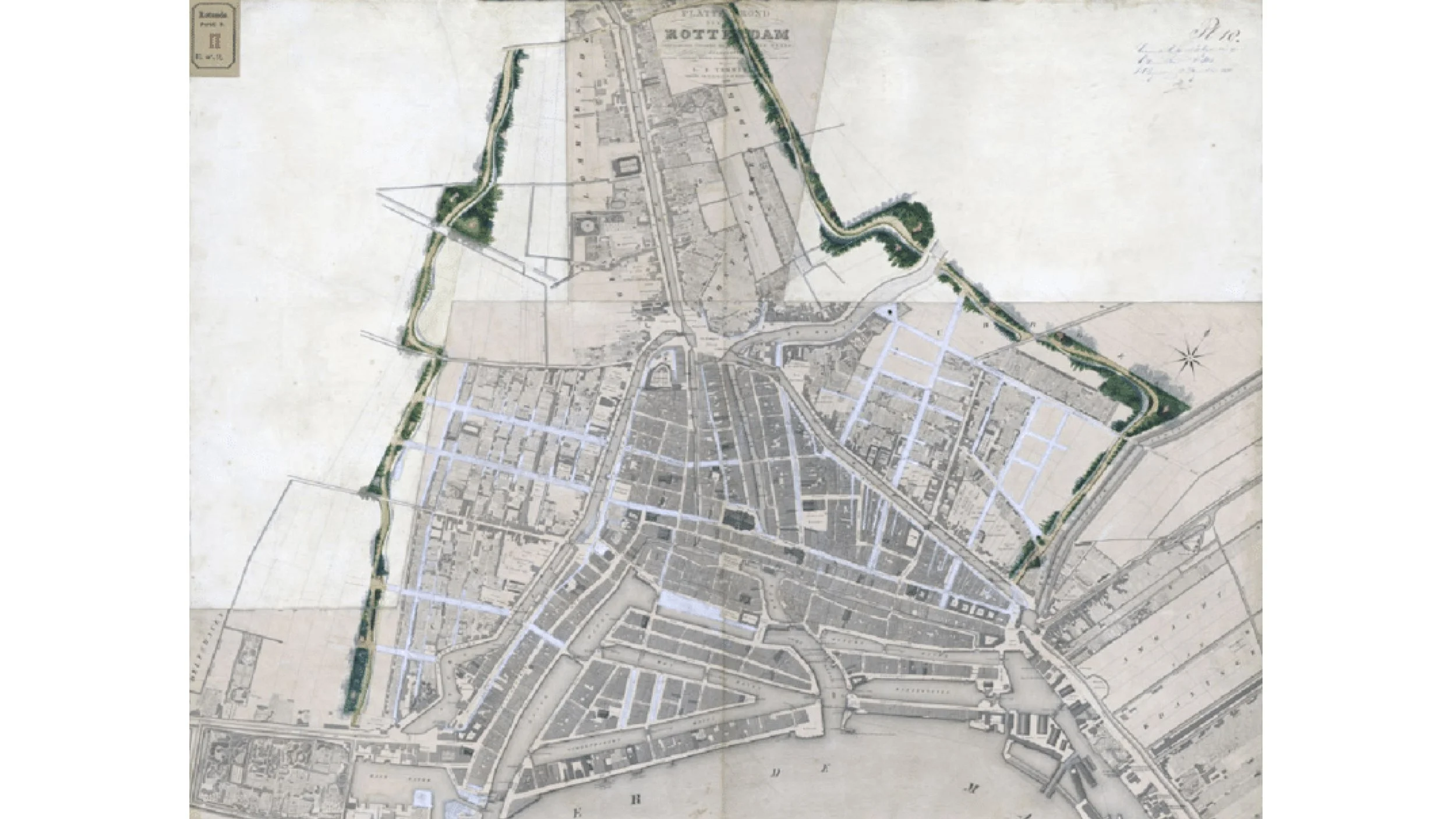
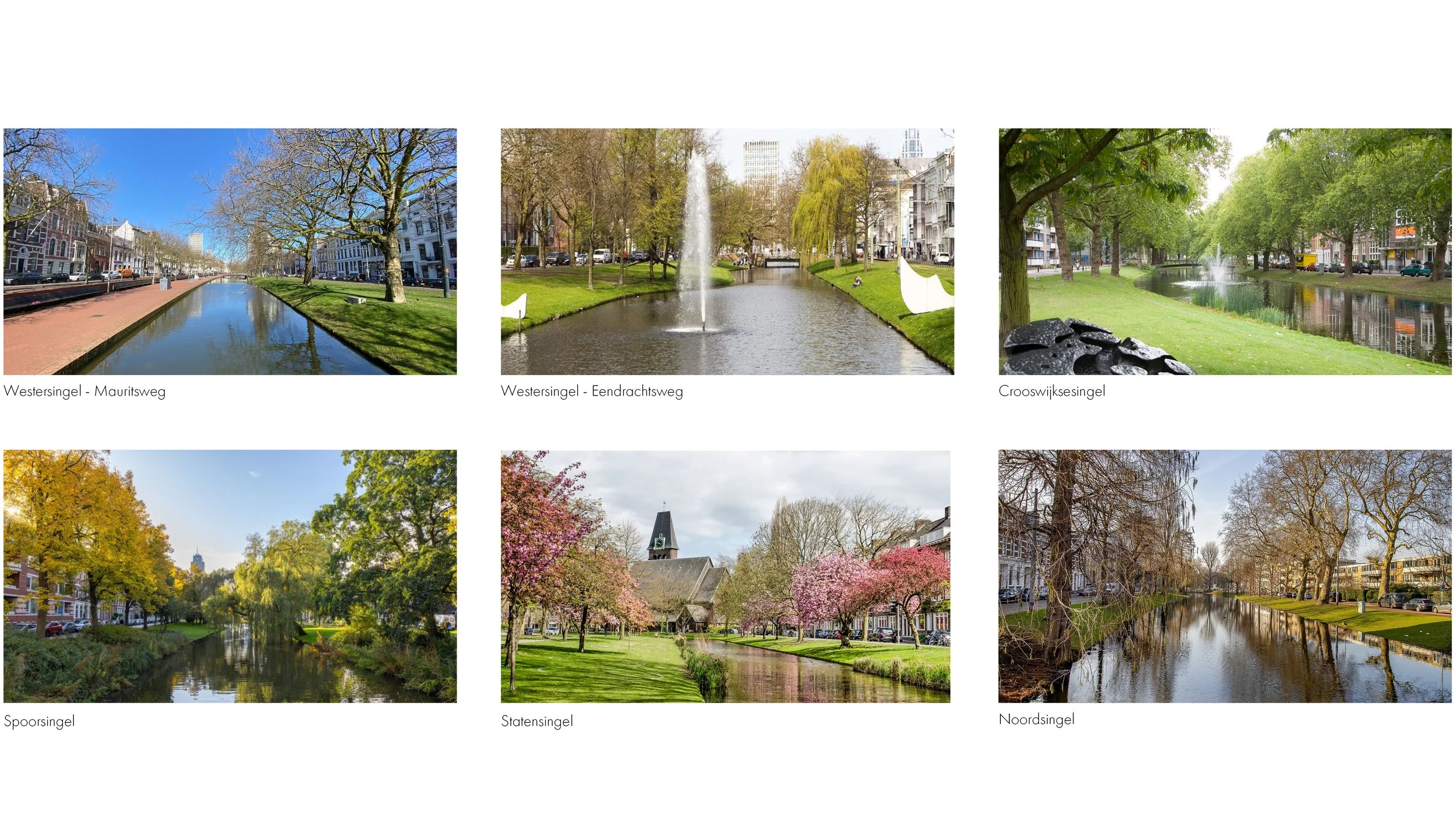
Rotterdamse singels
Rotterdam’s singels originate from W.N. Rose’s Second Water Project (1854), an ambitious plan to improve the city’s water quality and management. This new water system greatly enhanced urban hygiene and public health. Developed in collaboration with landscape architect J.D. Zocher, the Singel Plan integrated engineering, water management, urban design, and landscape architecture, reshaping the city with attractive canals and public green spaces
Singelplan and climate change
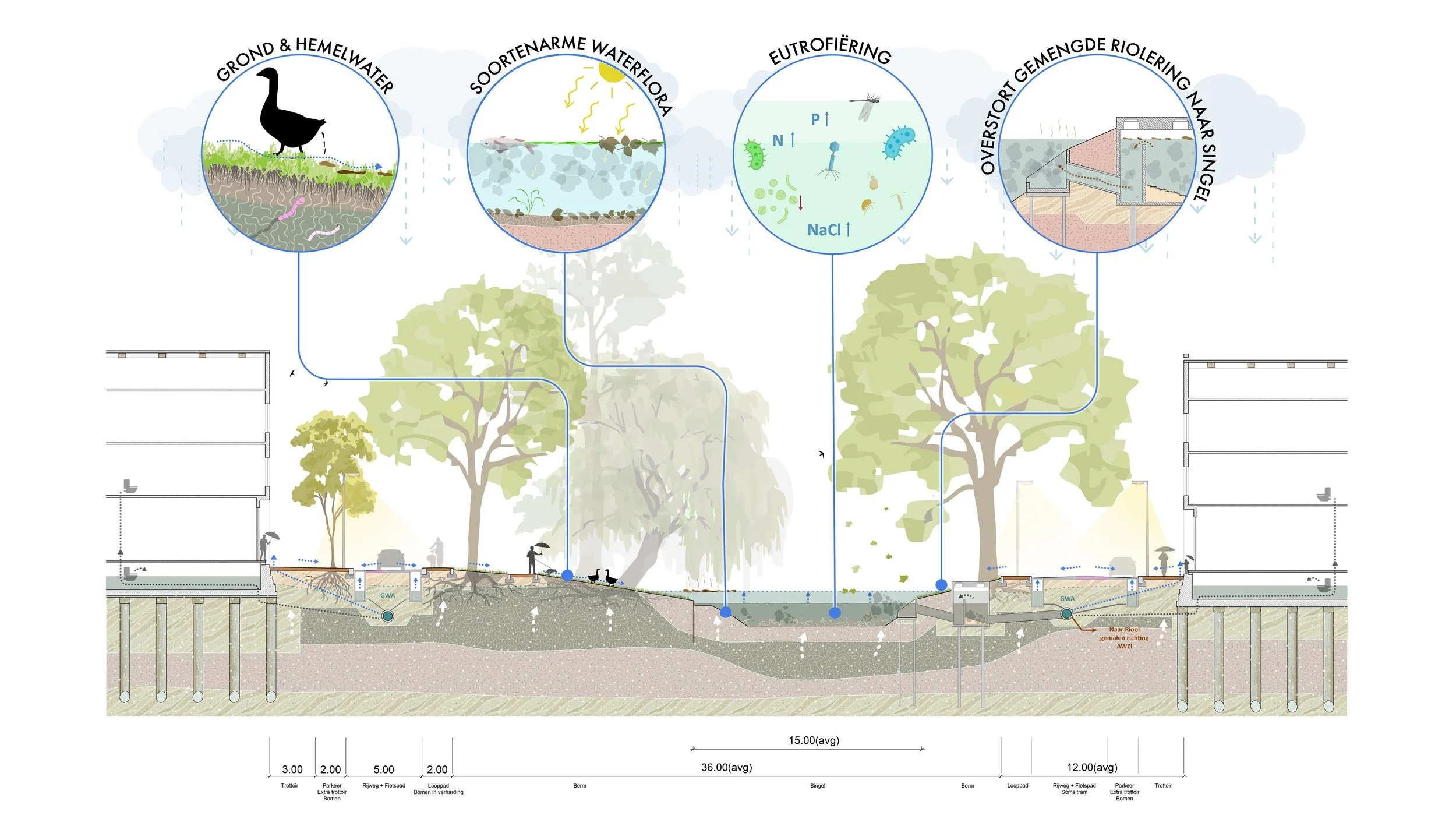
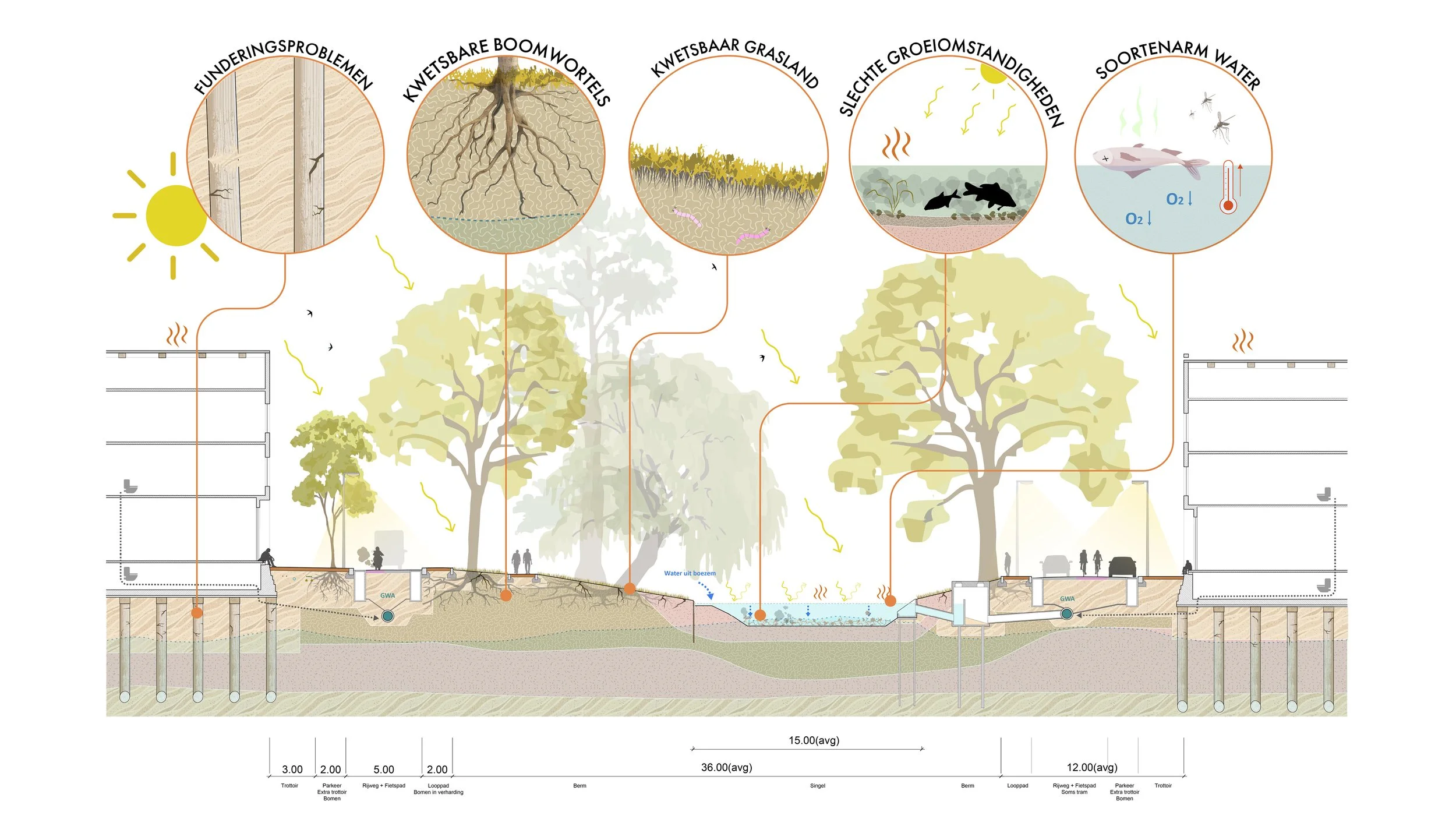
Today, the singels remain an essential green-blue urban infrastructure and valued public spaces, yet climate change is placing the system under growing pressure. Heavy rainfall causes sewer overflows and water quality degradation, while heatwaves lead to warming, algal growth, odor nuisance, and biodiversity loss. Drought and sea-level rise further strain the system through water scarcity and groundwater salinization. In its current form, the singel system lacks the resilience needed to meet future climate challenges
Rotterdam, sponge city
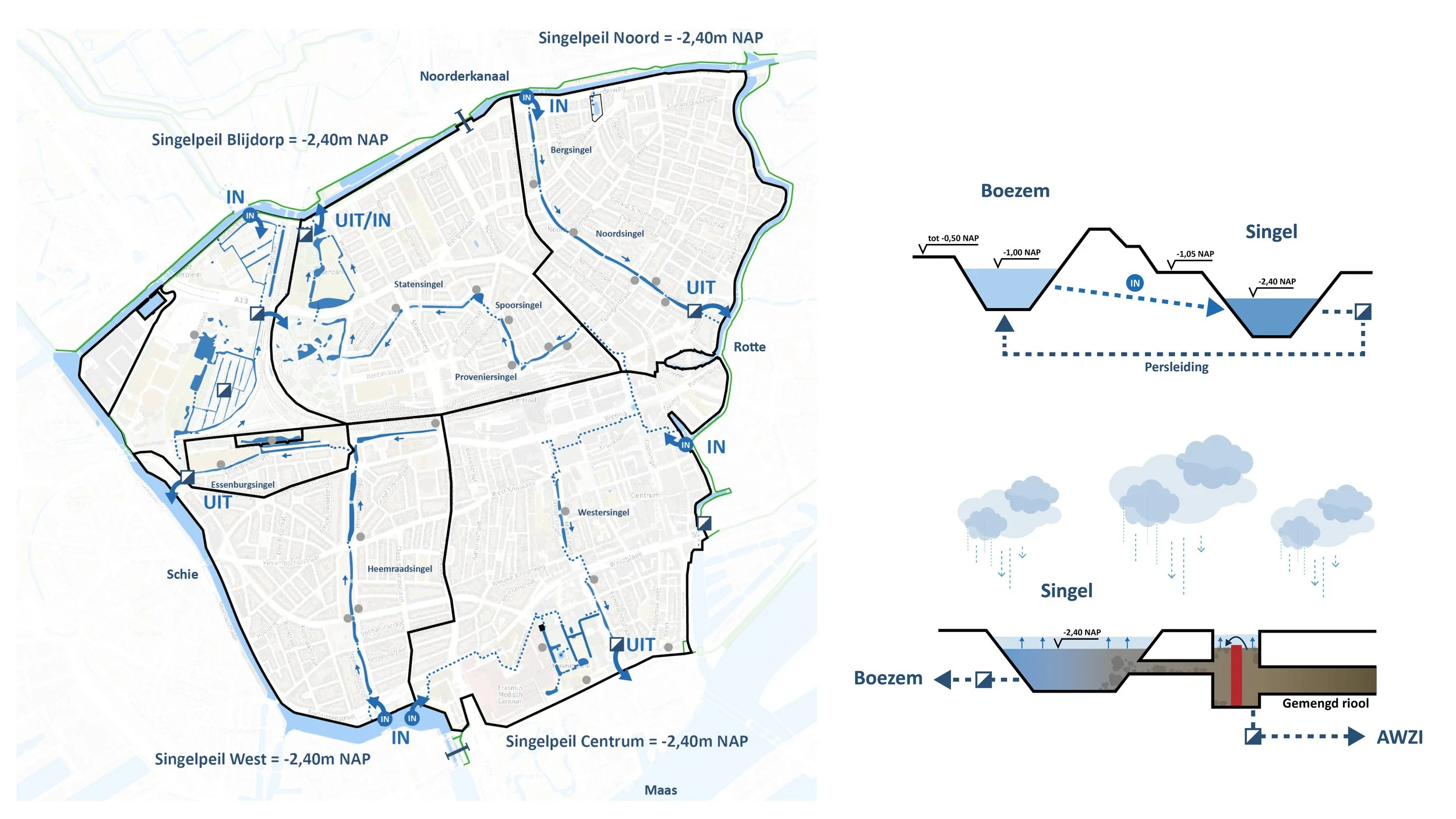
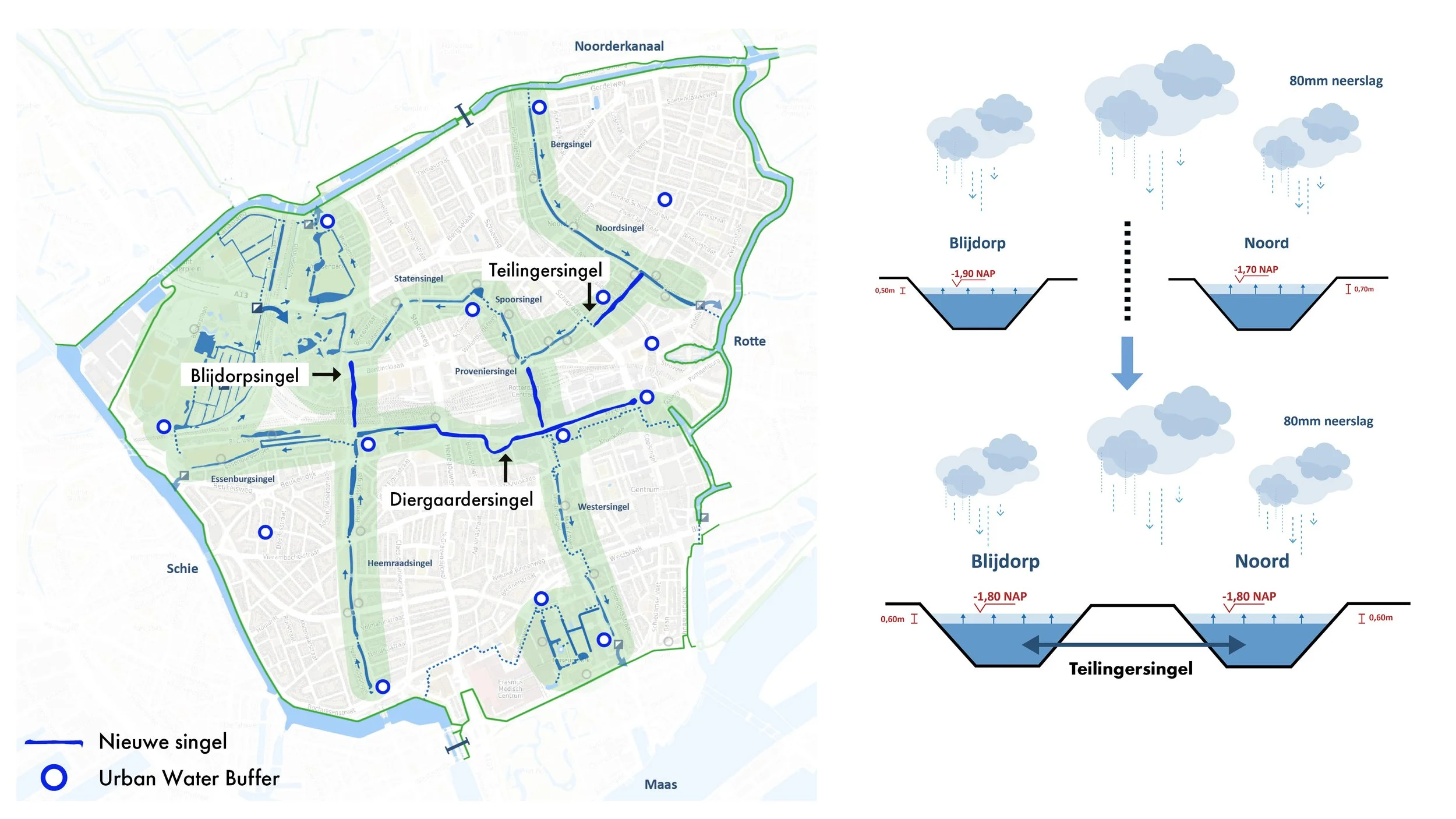
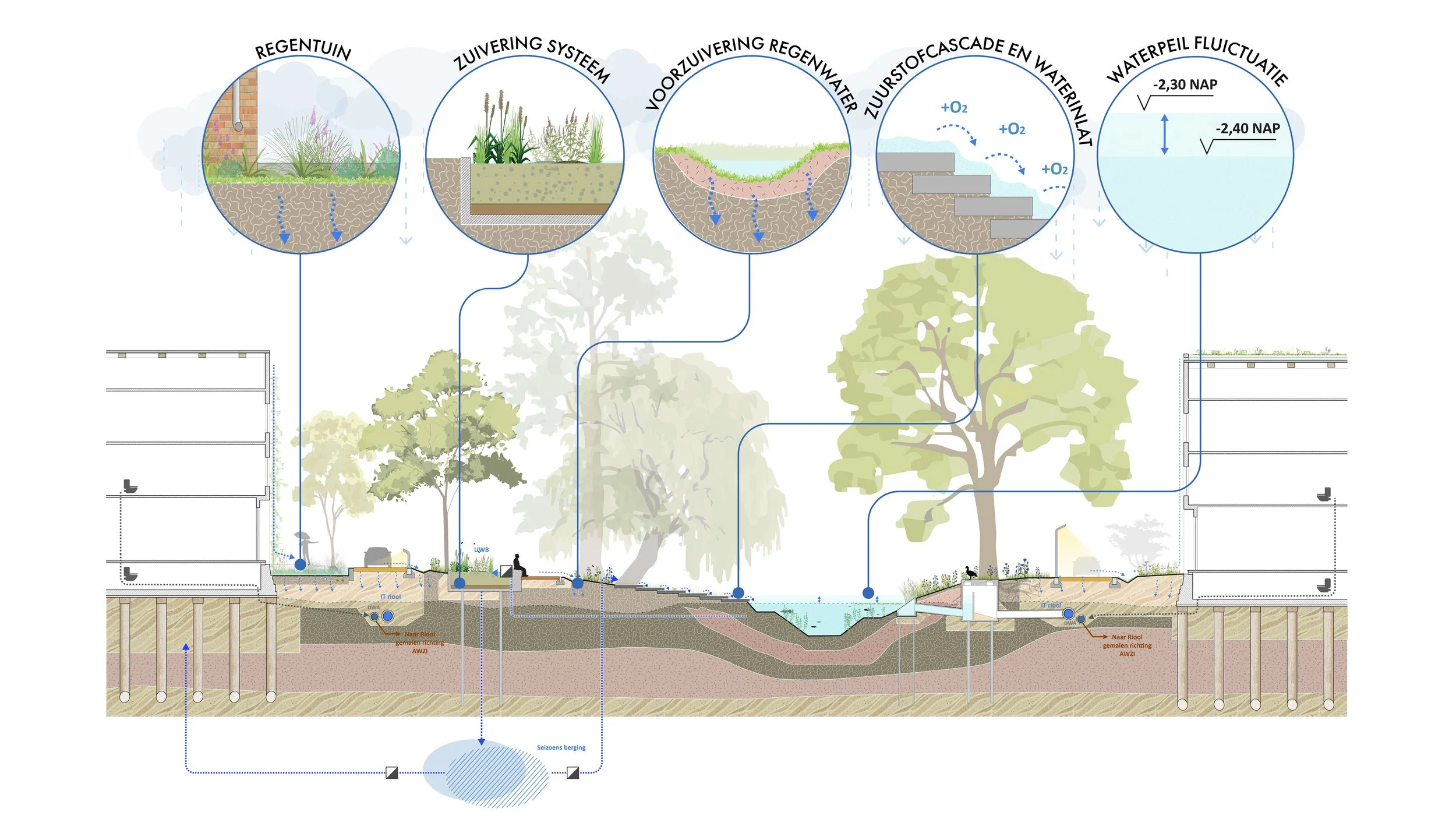
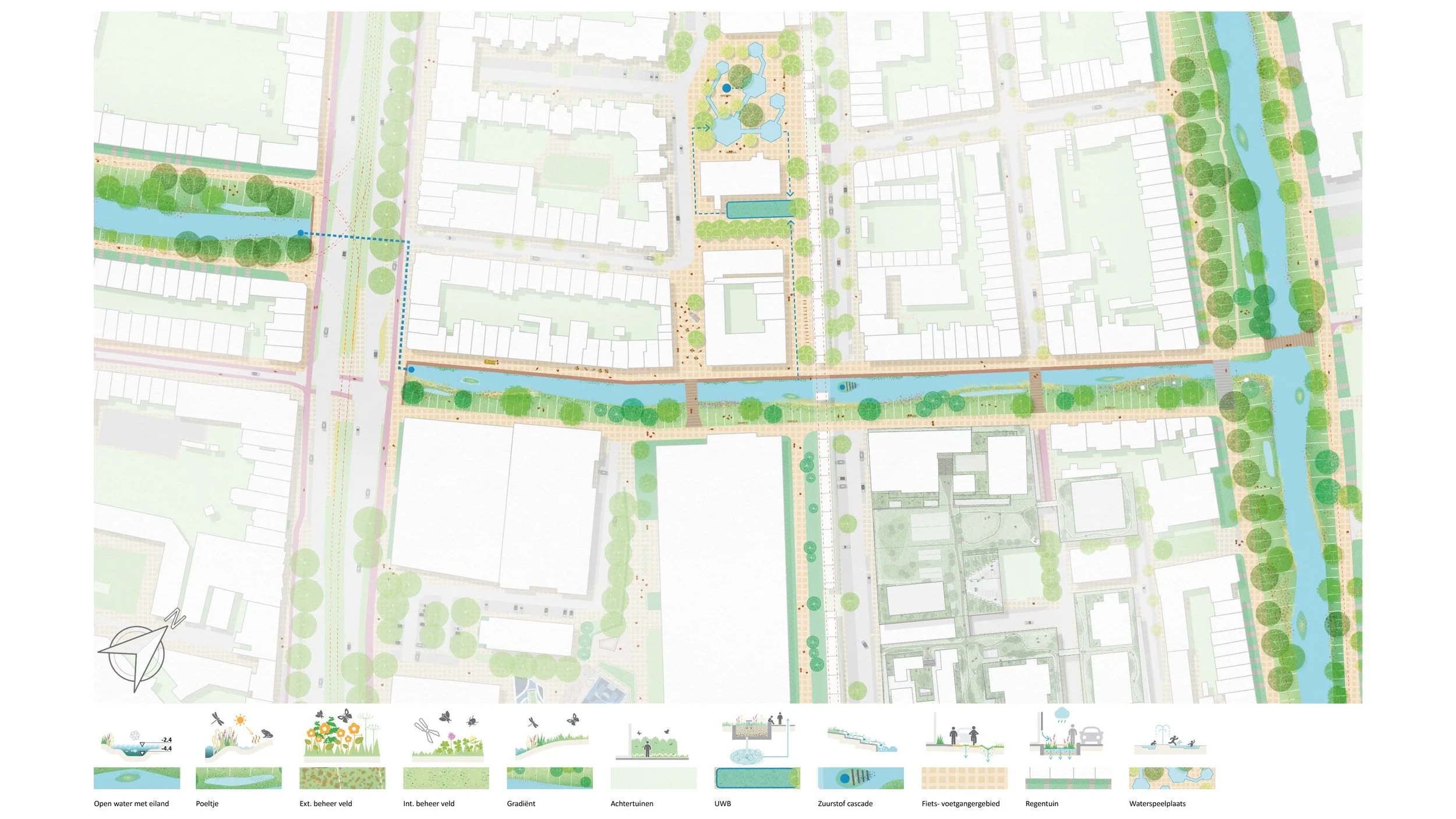
Singelplan 2.0 is proposed to deal with vulnerabilities both in terms of water quantity and quality. A key feature is the creation of new canals, including the Teilingersingel. To increase water storage but, more importantly, to connect separated drainage areas whose singels share the same water level of NAP -2.40 meter. If linked, they can sustain each other making the entire system more robust. The Teilingersingel illustrates this: it connects the Noordsingel and Provenierssingel, merging the Noord and Blijdorp water systems. Since Blijdorp has more capacity, the connection strengthens the overall network.
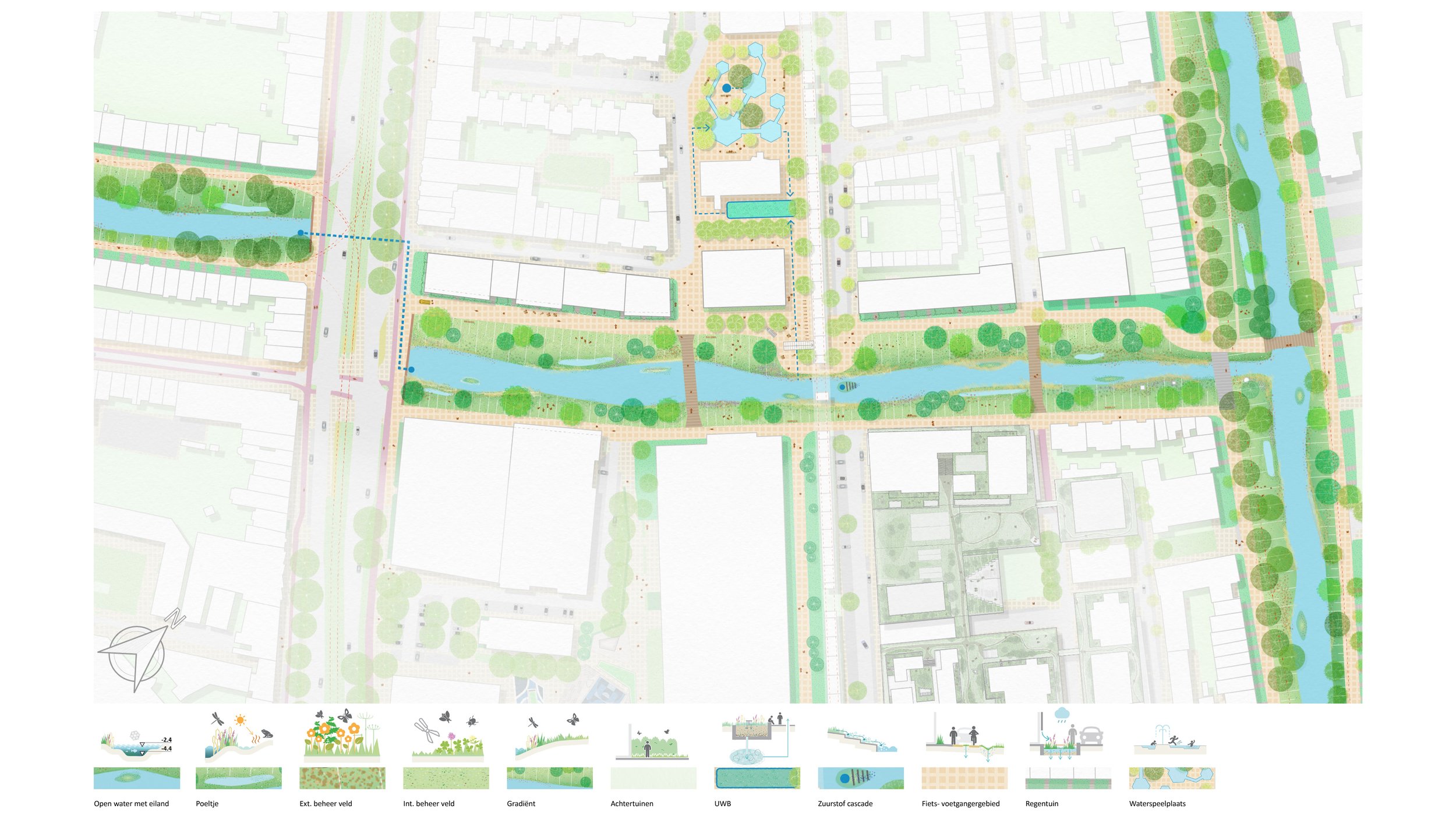
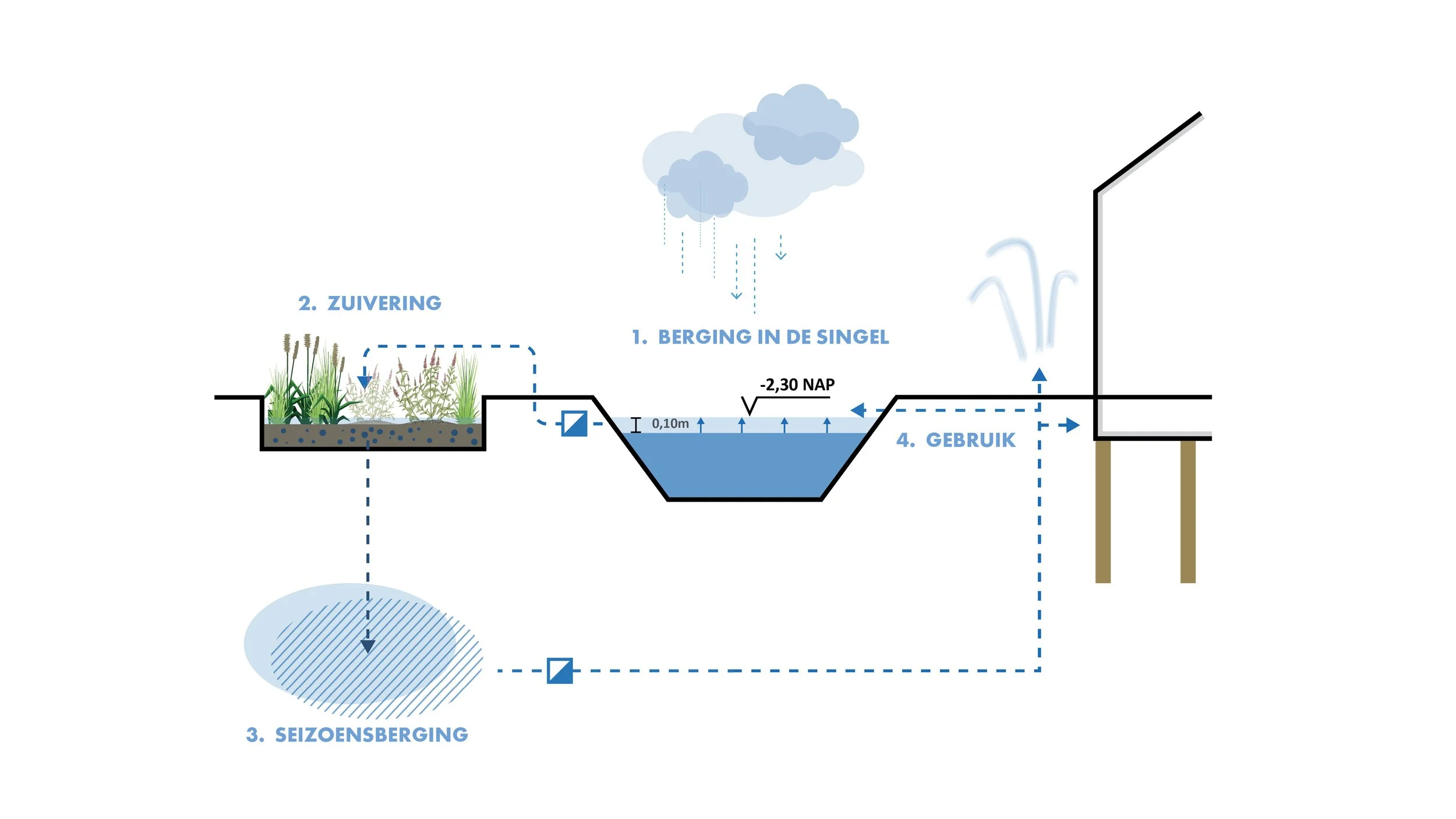
Urban Water Buffers are also introduced: deep aquifers where biologically purified rainwater previously collected in the singels can be stored. During dry periods, this clean, cool water can be pumped back to replenish the canals, reducing dependence on river inflows.
Climate singels
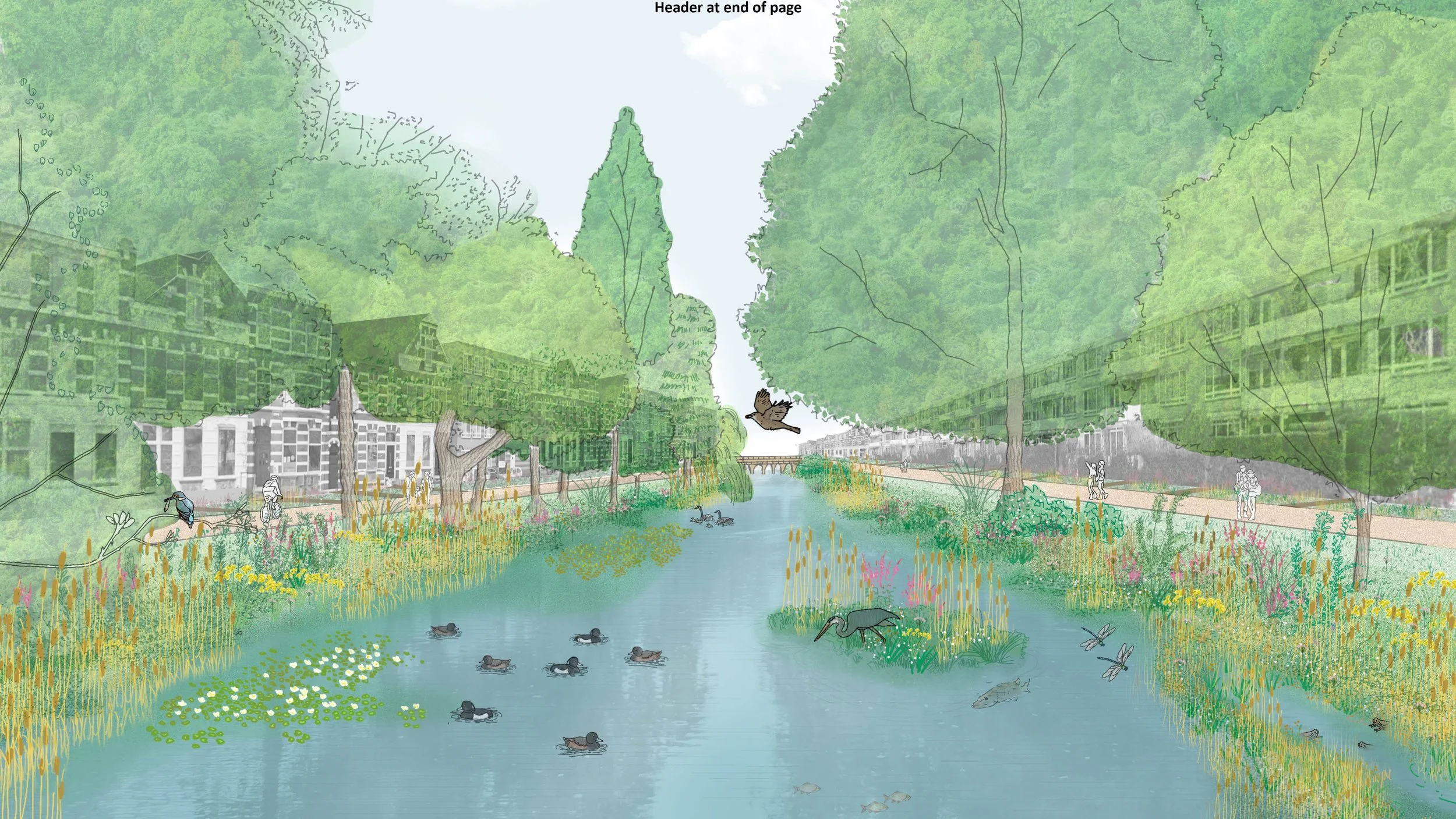
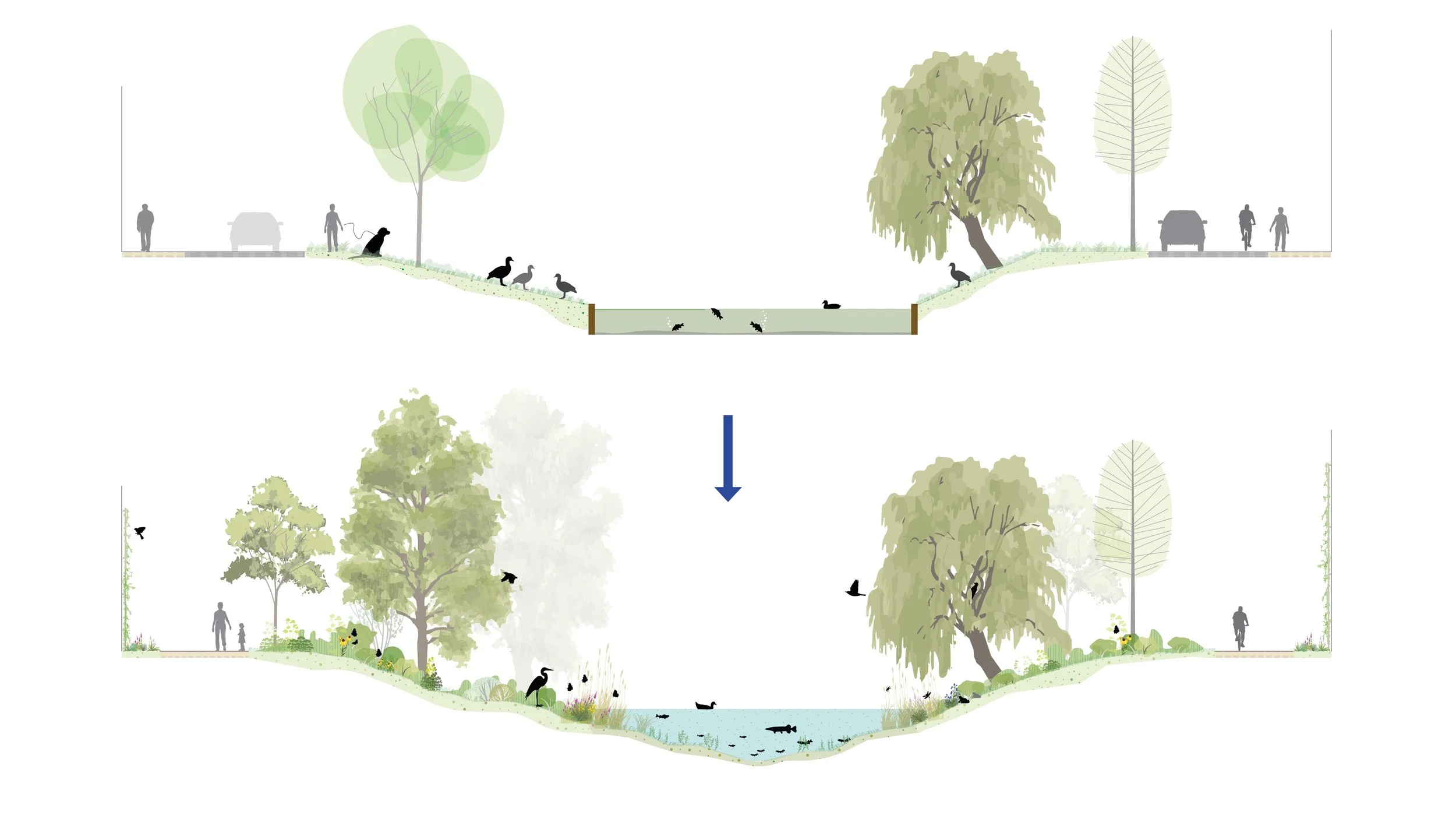
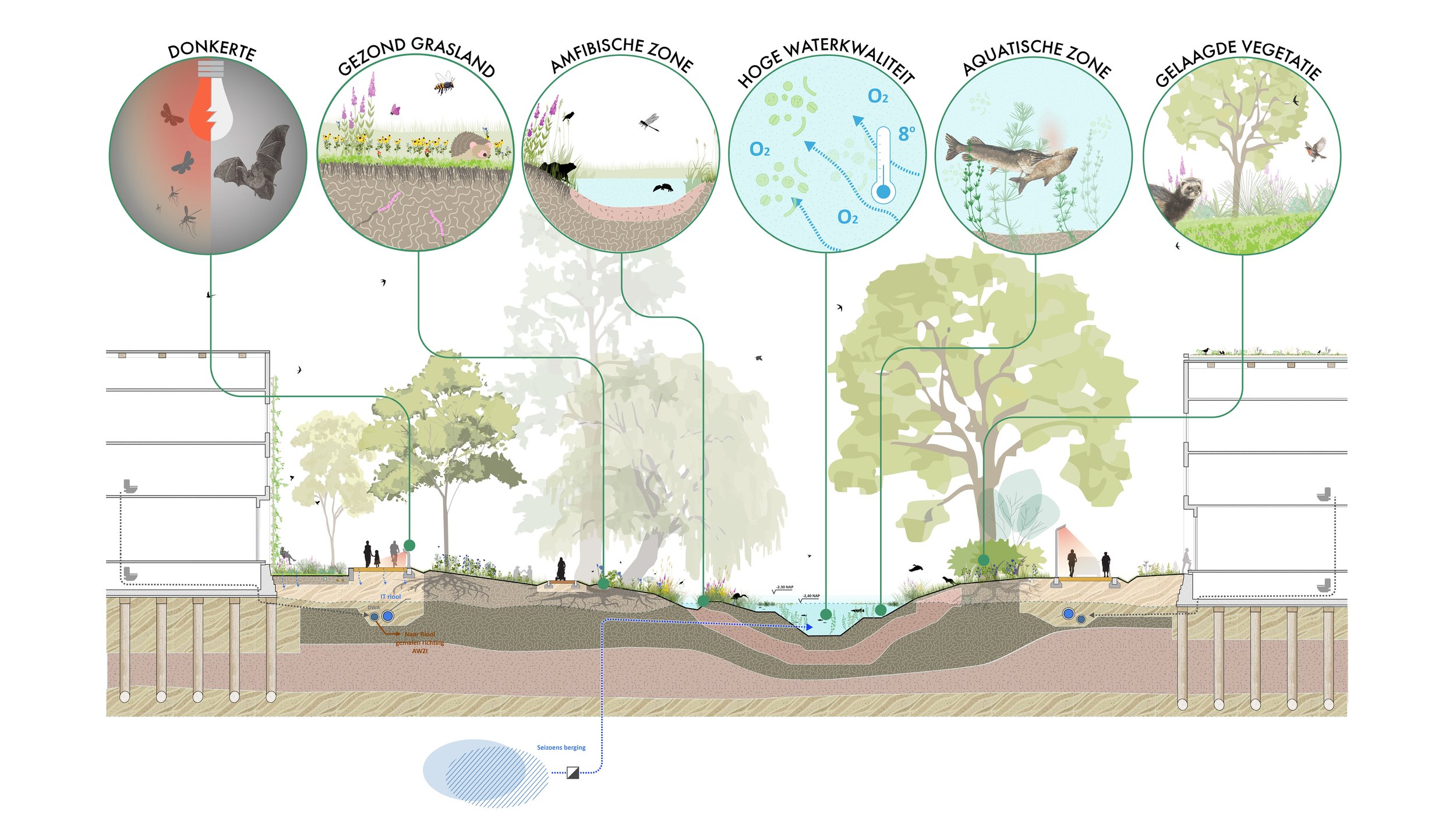
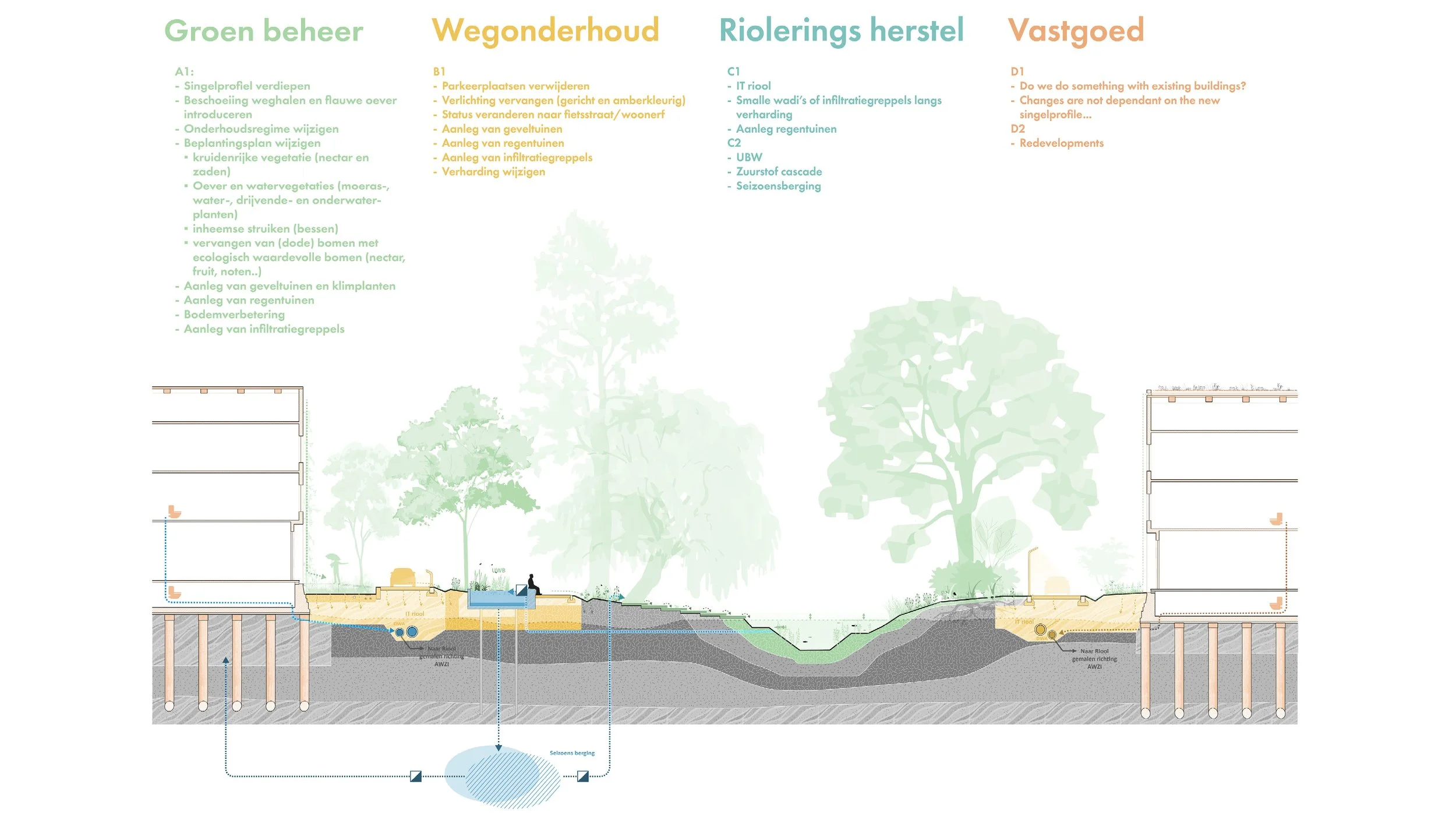
Singel Plan 2.0 also improves water quality and increases the ecological value of Rotterdam’s singels. De Urbanisten elaborate on the current prototypical profile, proposing a redevelopment of the existing singels following a new, climate-sensitive profile.
The prototypical climate singel key features are:
• A façade-to-façade approach with less paving and wider, more diverse planted banks
• More space for water through deeper sections and wet–dry gradients
• Natural riparian zones with wetlands and varied vegetation
• A layered landscape with meadows, shrubs, climate-resilient trees, and room for natural growth
• Ecological maintenance that supports spontaneous nature
These adjustments increase water quality and invite animals such as pikes, frogs and salamanders, water bats, dragonflies, butterflies and the kingfisher, contributing to a richer, more biodiverse environment.
A gradual transition starting today
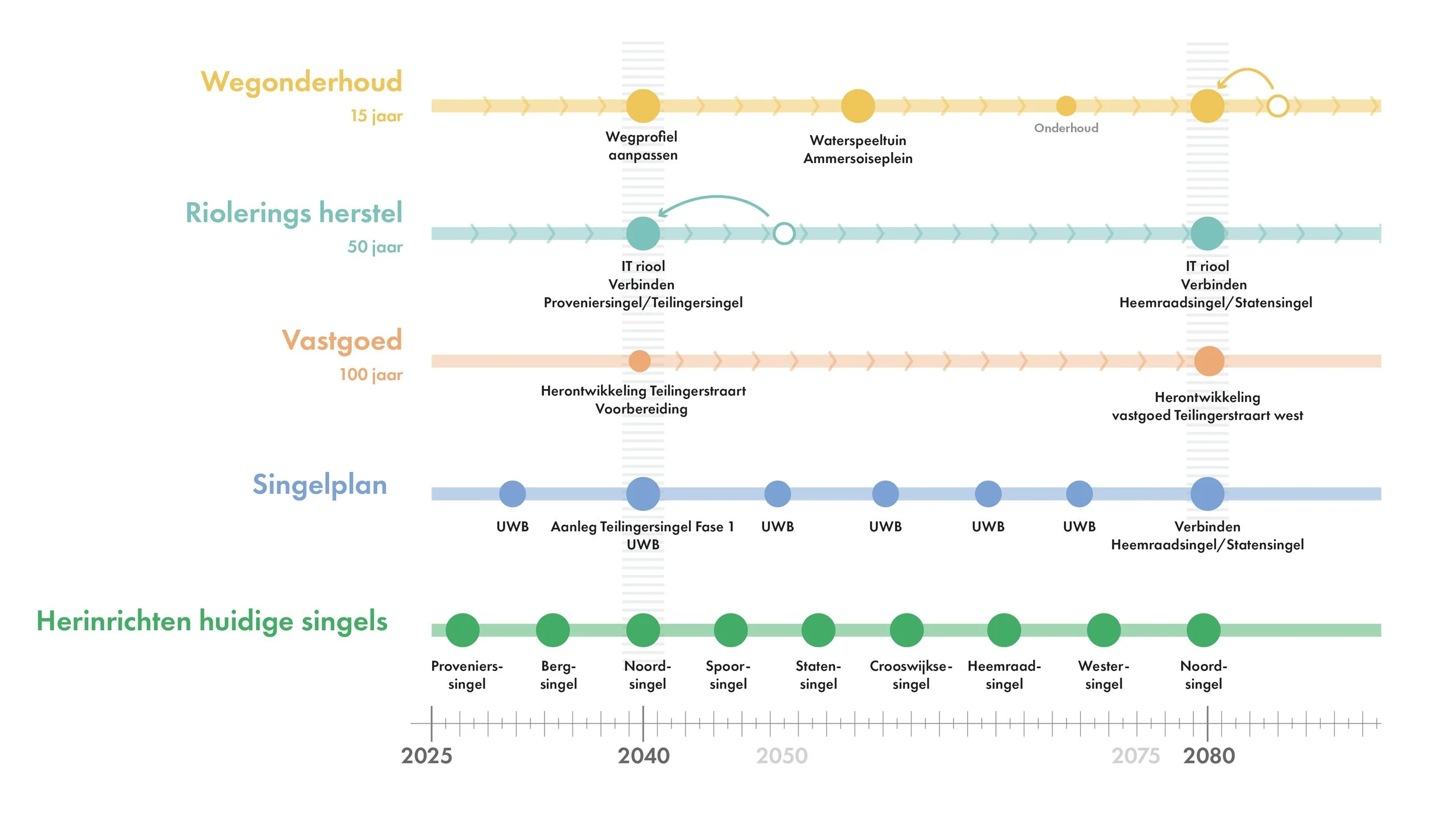
Because the improvement of the Singels involve both water quantity and water quality, an integrated approach is needed. While the robustness of the watersystem is increased by adding new singels and urban water buffers, water quality can already be improved today. By upgrading the profiles and maintenance of existing singels, climate adaptation and ecological measures can be carried out during regular sewer and road works, without waiting for new canals to be built.
Teilingerstraat
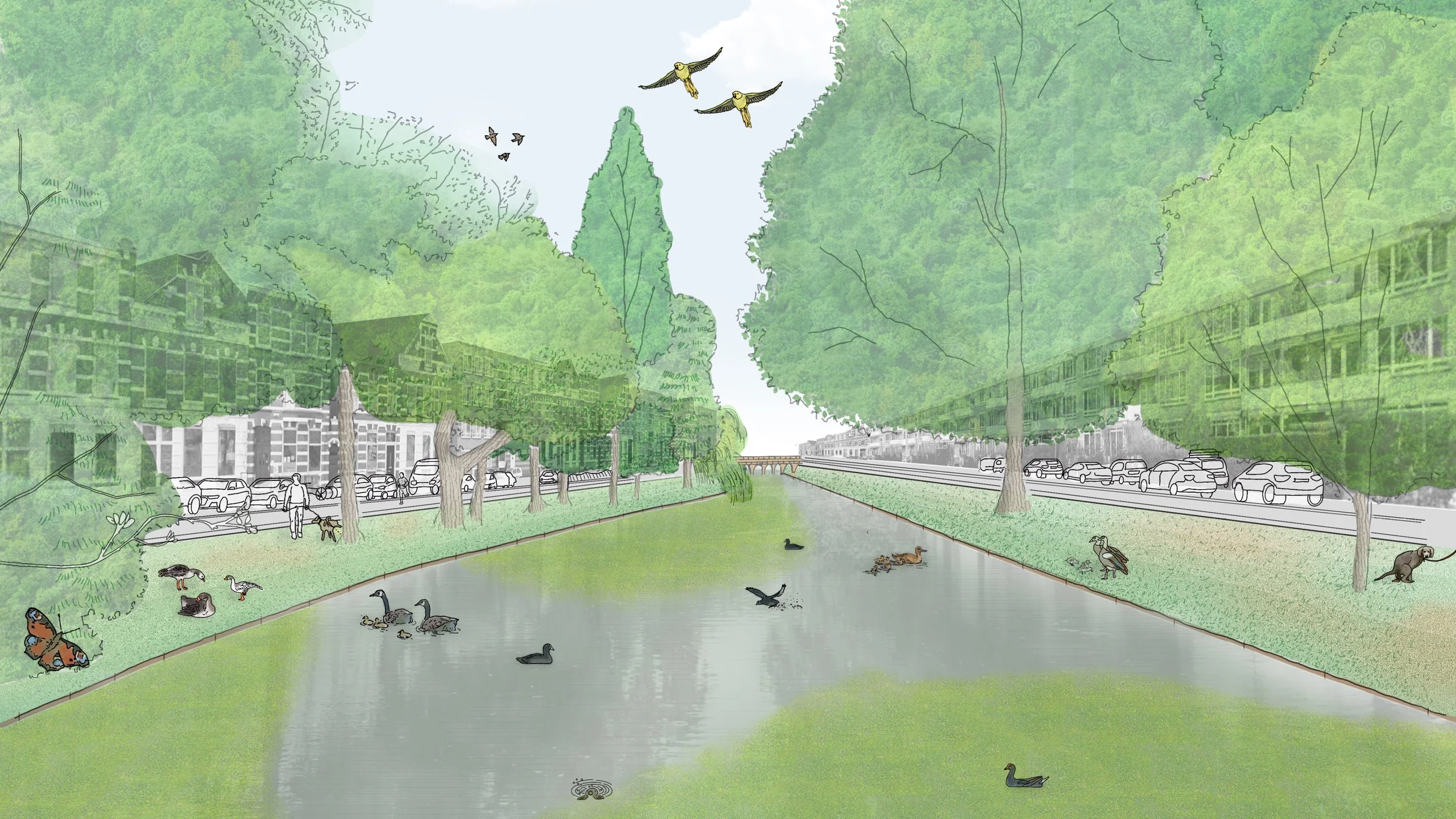
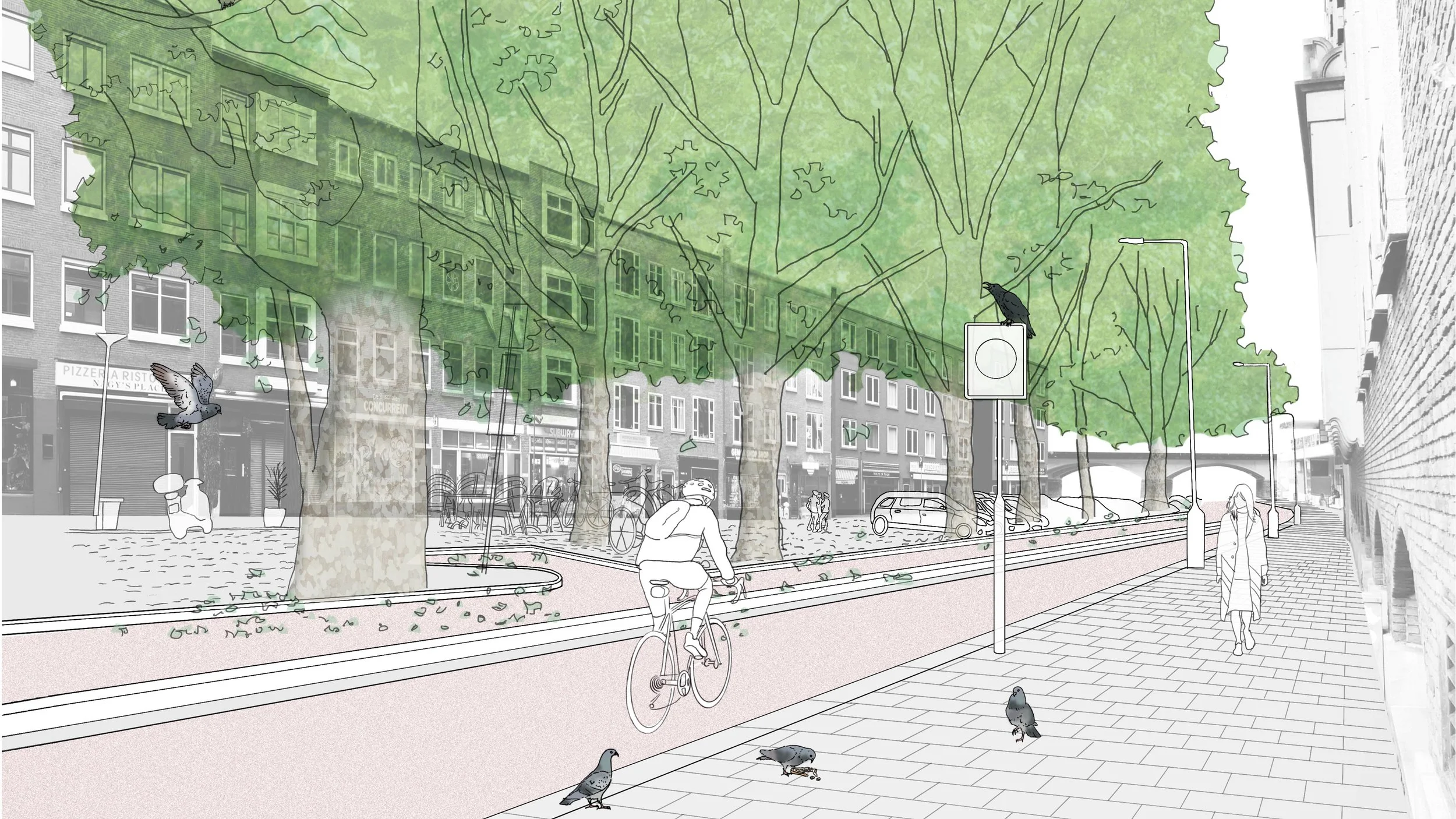
Teilingerstraat links Noordsingel and Schiekade. It is almost entirely paved, and characterised by a double row of large plane trees and a rich variety of buildings, explained by the presence of the Brandgrens (May 1940) and post-war urban development. With a 30 meters wide profile, the Teilingerstraat is too narrow for the prototypical new Rotterdam Singel profile, with a size of about 60 meters.
Teilingersingel 2040
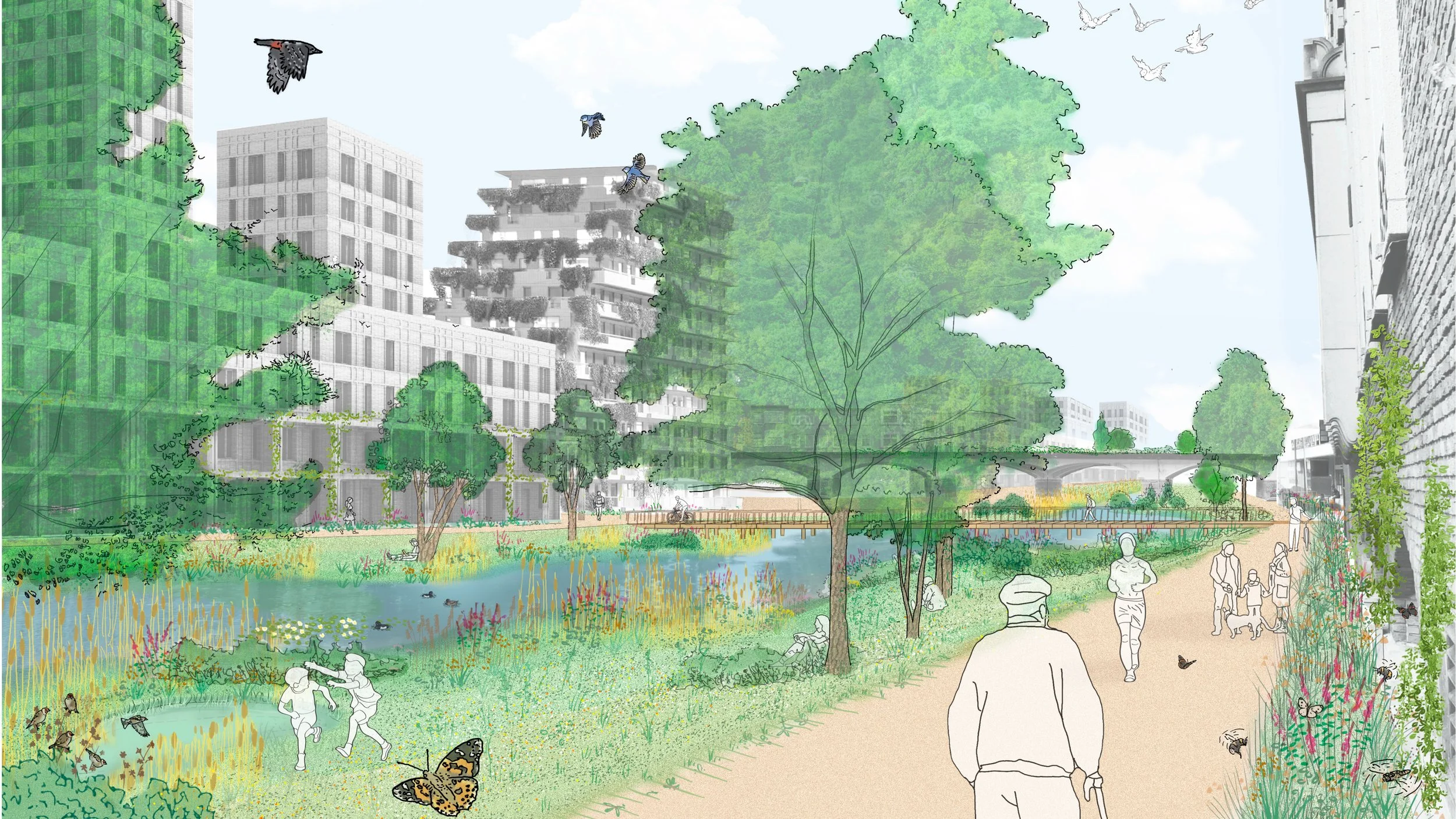
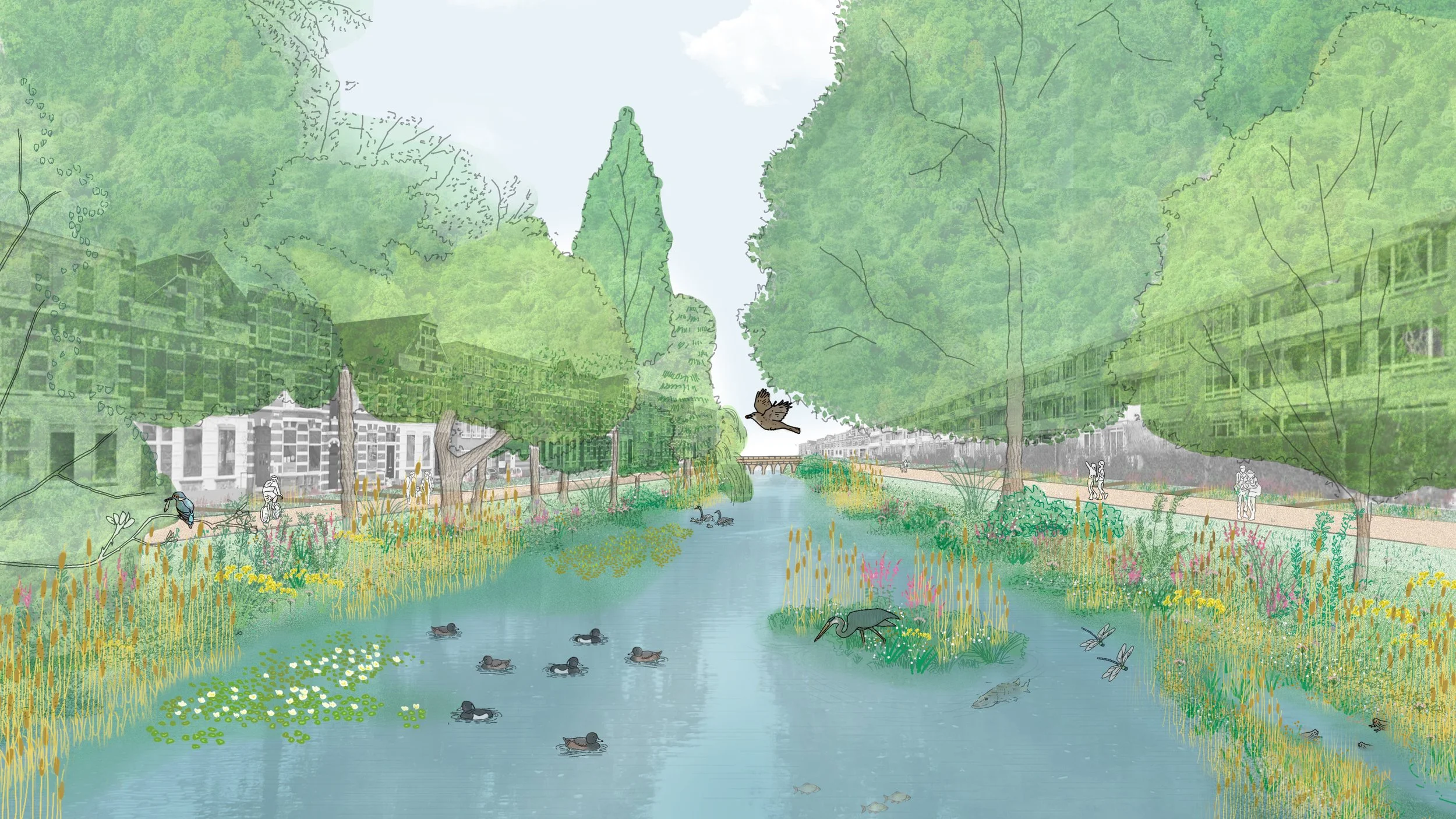
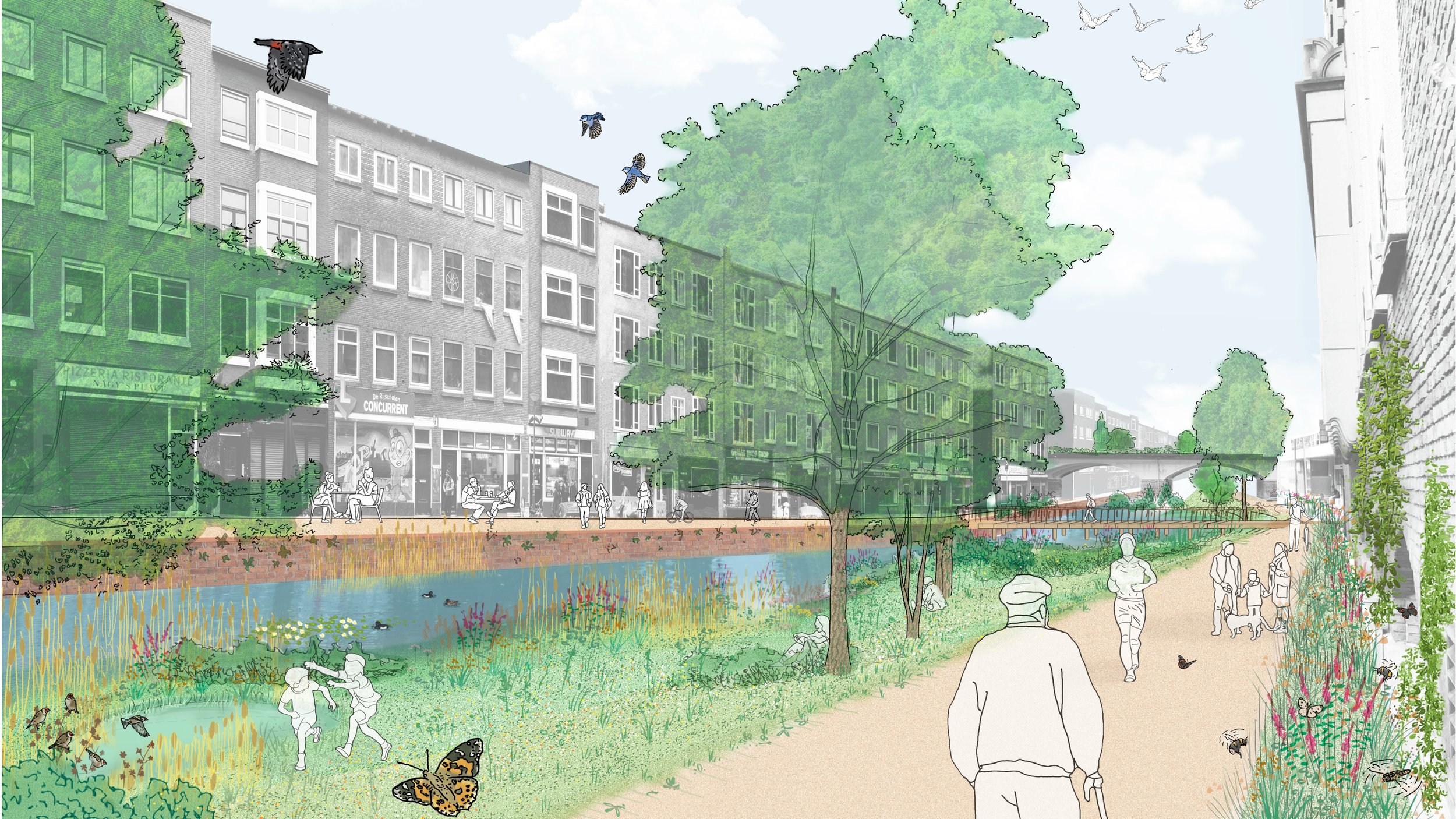
To make the connection between Noordsingel and Provenierssingel, a low-impact singel–quay combination is proposed. The south side becomes a shared space for cyclists and pedestrians, with façade gardens and a walking route along generous vegetated banks and a 10-metre-wide water body, with wetland zones and gradual depth transitions. On the north side, a quay is introduced that can later evolve into a wider Teilingersingel, while space along the façades remains available for street-level activities and existing horeca. An Urban Water Buffer is added, directing rainwater to a natural treatment system and aquifer storage, from where it can be reused for the canal and a natural water playground at Ammersooise Square.
Teilingersingel 2080
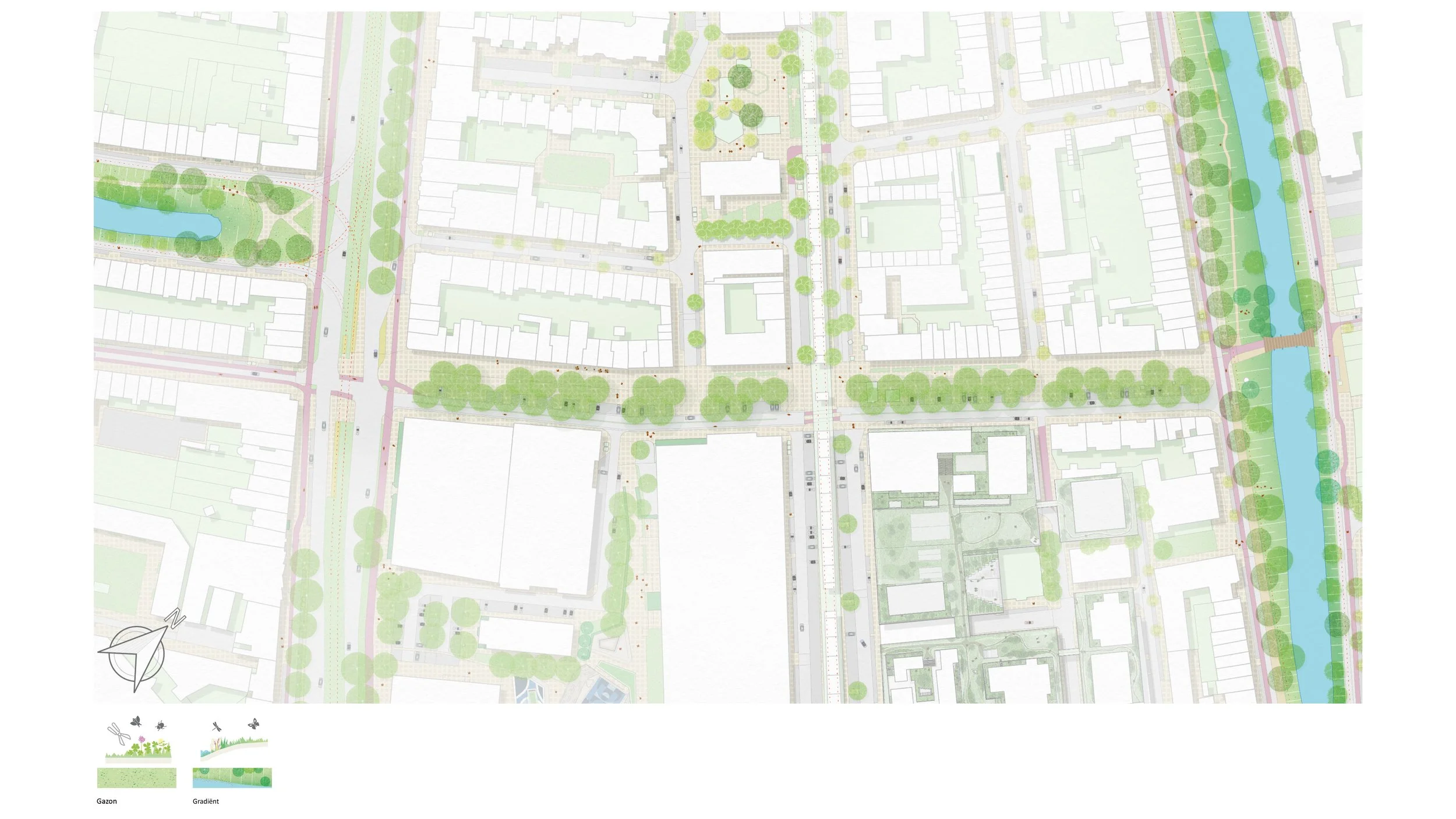
A full-sized singel requires demolition and redevelopment on the north side, which can be carried out in phases. The south-side vegetation, including existing trees, can be retained within the wider profile, while the north side accommodates a gently sloping riparian zone. Bridges aligned with the surrounding streets connect both sides of the canal, and adjacent streets are redesigned with softened profiles, wadis, generous planting areas, and trees.